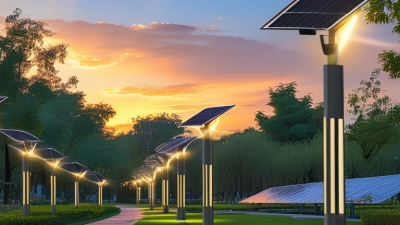


Temporary & Portable Solar Lighting

10 Solar Hanging Lights Buying Tips for Global Buyers

Solar Hanging Lights are moving from niche garden décor into practical outdoor lighting. They now appear above patios, balconies, restaurant terraces, and remote walkways. Buyers want beauty, but they also need dependable performance after cloudy afternoons and winter nights.

Grand View Research valued the global solar lighting market at approximately USD 10.89 billion in 2023. Its report projects strong growth through 2030, supported by lower photovoltaic costs and wider off-grid adoption. The GOGLA and Lighting Global market reports also show continuing demand for affordable solar products in underserved regions. However, these figures rarely isolate hanging lights. That limitation matters. Market growth does not guarantee product quality.

A reliable buying decision requires more than checking lumen claims. Battery chemistry, panel size, charging time, waterproofing, mounting strength, and replacement support deserve equal attention. A light that shines brightly for two hours may disappoint during a long winter evening. Small details matter.

Dr. Ashok Gadgil, a respected energy-access engineer, has said, “The poor need energy, not charity.” His principle also fits solar lighting: buyers should seek useful, durable performance rather than attractive promises. This guide applies that mindset to Solar Hanging Lights for global purchasers.

Expect trade-offs. Larger panels improve charging but can change the design. Higher brightness may shorten runtime. A lower price may conceal weak batteries or limited warranty coverage. Even professional buyers can overlook local weather patterns and installation habits. The following ten tips connect technical specifications with real purchasing conditions, helping importers, distributors, hospitality managers, and homeowners make more defensible choices.
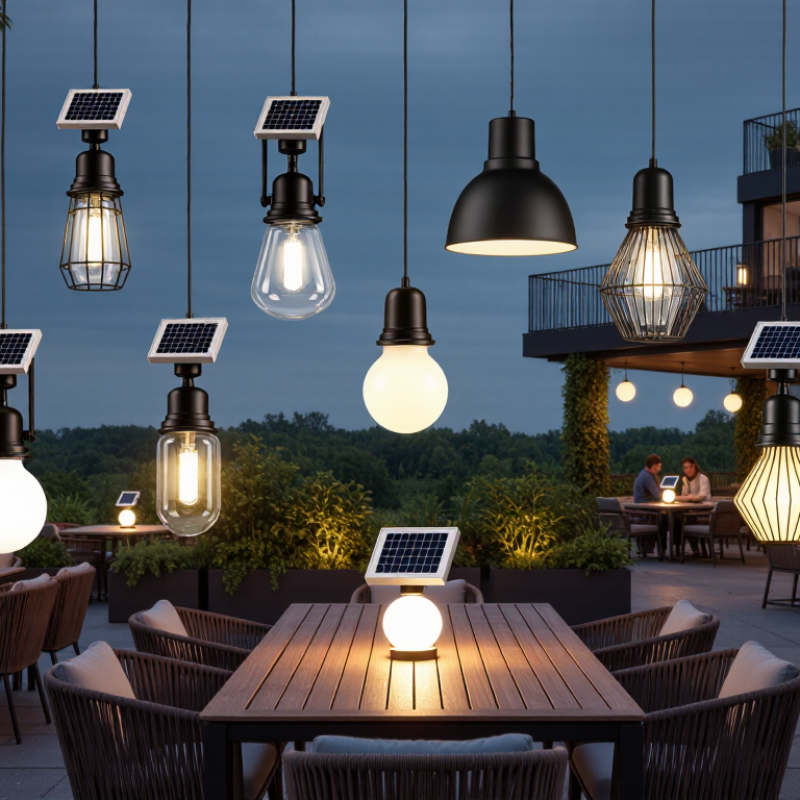
10 Solar Hanging Lights Buying Tips for Global Buyers

Define Your Outdoor Lighting Needs and Installation Setting

Before choosing solar hanging lights, define what your outdoor space must accomplish. A dining patio needs gentle, downward light. A garden path needs clearer visibility and wider coverage. Measure the area, ceiling height, and hanging points before comparing products. A light suspended 1.8 meters above a table feels different from one mounted beside a tall gate.

Watch the sunlight for a full day. A shaded balcony may not charge enough during winter. Dust, leaves, and nearby walls can also reduce panel performance. Tip: Mark the sunniest mounting position before installation. Avoid placing the solar panel under roof edges, thick branches, or decorative covers. The lights may look attractive there, but nighttime brightness could disappoint.

Installation conditions matter as much as appearance. For exposed terraces, select weather-resistant construction and secure hooks against strong wind. In coastal areas, inspect metal parts regularly because salt air can accelerate corrosion. Use a stable support for heavier fixtures. Keep moving branches away from the light and panel. Check local building requirements before drilling into shared walls or permanent structures. I have found that buyers often focus on brightness first, then discover the cable-free design still needs careful positioning. That is an easy mistake to make. Consider access for cleaning, battery replacement, and seasonal adjustment. A practical location usually performs better than the most visually dramatic one.

Solar Hanging Light Planning Benchmarks by Outdoor Setting

Use the recommended lumen output as a starting point when defining your lighting needs. Pathways generally need softer illumination, while entrances and outdoor dining areas require higher brightness. Before purchasing, also confirm mounting height, weather protection, sunlight exposure, and whether the fixture is easy to access for seasonal maintenance. These figures are practical planning benchmarks, not statutory requirements.

Compare Solar Panel Types, Battery Capacity, and Charging Performance

Solar hanging lights look simple, but their performance depends on three linked parts: panel type, battery capacity, and charging conditions. Monocrystalline panels usually deliver higher efficiency in limited space, while polycrystalline panels may cost less. The U.S. National Renewable Energy Laboratory’s efficiency records show commercial silicon modules can exceed 20% efficiency, but outdoor product performance is lower after heat, dust, and shading. That difference matters under a small panel.

Tip: Check watt-hours, not only milliamp-hours. Battery energy equals voltage multiplied by amp-hours. A 3.7-volt, 2,000-mAh battery stores about 7.4 watt-hours. A larger battery does not guarantee longer lighting if the panel cannot recharge it. The International Energy Agency reported that solar PV supplied most new renewable capacity in recent years, yet small devices still face weak winter sunlight and short charging windows. Real conditions are less perfect.

Tip: Ask for charging results under defined conditions. A useful specification should state panel power, test sunlight, charging time, and expected runtime. Look for lithium batteries with protection against overcharging and deep discharge. Temperature also deserves attention. The U.S. Department of Energy notes that battery performance changes with temperature, especially in cold environments. I would not trust “all-night lighting” without a runtime test. Even a clear afternoon can fail when leaves cover the panel or rain leaves water spots.

10 Solar Hanging Lights Buying Tips for Global Buyers - Compare Solar Panel Types, Battery Capacity, and Charging Performance

Buying Factor What to Compare Typical Data Range Effect on Performance Global Buyer Checklist
1. Solar Panel Type Monocrystalline, polycrystalline, or amorphous silicon panel Monocrystalline: approximately 18–23% efficiency; polycrystalline: approximately 15–18%; amorphous: approximately 7–12% Higher-efficiency panels generally produce more electricity from the same surface area, especially where the lamp housing is compact. Choose a panel type that matches the available installation area, local sunlight, and target price level.
2. Panel Rated Power Rated output in watts and panel surface area Common hanging-light panels: approximately 0.5–5 W; larger decorative or security-style units may use higher ratings Higher wattage can shorten charging time or support longer operation, provided the battery and charging circuit can accept the output. Ask for the rated power under standard test conditions and confirm that the rating is not only the LED power.
3. Battery Chemistry Battery type, nominal voltage, cycle life, and temperature tolerance Common options include lithium-ion, LiFePO4, and NiMH; LiFePO4 typically uses a 3.2 V nominal cell voltage, while many lithium-ion cells use 3.6–3.7 V LiFePO4 generally offers strong thermal stability and long cycle life; lithium-ion usually provides high energy density in a compact size. Check safety protection, replacement availability, transport requirements, and operating temperature limits.
4. Battery Capacity Capacity in mAh and watt-hours, not mAh alone Small hanging lights often use approximately 600–3,000 mAh; energy can be estimated as Wh = Ah × nominal voltage A larger battery can provide longer runtime, but only if the solar panel can fully recharge it under local sunlight conditions. Request both battery voltage and capacity. For example, a 2,000 mAh battery at 3.7 V stores about 7.4 Wh before system losses.
5. Charging Performance Charging time, charging current, and energy collected per day Typical full charging time is approximately 6–10 hours of strong direct sunlight; cloudy or shaded conditions may require much longer Charging performance depends on panel wattage, sunlight intensity, panel angle, battery state, controller efficiency, and temperature. Request measured charging results rather than relying only on a claim such as “fast charging.” Test under representative regional weather conditions.
6. Expected Lighting Runtime Runtime at the stated brightness level and operating mode Many products provide approximately 8–12 hours at low or medium brightness; high-brightness runtime is normally shorter Runtime is affected by battery capacity, LED power, dimming mode, ambient temperature, and charging conditions. Confirm whether the advertised runtime is measured continuously, with a timer, or with motion or dusk-to-dawn control.
7. LED Power and Brightness LED wattage, lumens, color temperature, and dimming options Decorative hanging lights may produce approximately 20–150 lumens; functional outdoor lights may produce more, depending on design Lumens indicate visible light output, while wattage indicates energy consumption. A higher lumen output usually reduces runtime when the battery is unchanged. Compare lumen output at the same measurement condition and select 2,700–3,000 K for warm light or about 4,000–6,500 K for cooler light.
8. Weather Resistance Ingress Protection rating, sealing quality, and corrosion resistance IP44 protects against splashing water; IP65 provides dust protection and resistance to water jets; IP67 adds temporary immersion protection A higher IP rating can improve reliability in rain and dusty environments, but it does not automatically guarantee resistance to salt spray or freezing weather. For exposed outdoor use, verify the IP rating for the complete assembled product and check testing documentation where required.
9. Temperature and Climate Suitability Operating temperature, battery performance in cold weather, and heat management Many outdoor products are specified around −20°C to 50°C, but the actual range varies by battery and enclosure design Cold temperatures can temporarily reduce battery capacity and charging performance; excessive heat can accelerate battery aging. Match the specification to the destination climate, especially for high-altitude, desert, tropical, and winter markets.
10. Controls, Installation, and Compliance Light sensor, power switch, timer, motion sensor, mounting method, and required certifications Common functions include dusk-to-dawn control, 2–8 hour timers, multiple brightness levels, and optional motion activation Automatic controls can reduce unnecessary energy use and help preserve nighttime runtime; mounting angle also affects daily solar collection. Check installation instructions, packaging requirements, battery transport documentation, recycling obligations, and applicable electrical or radio regulations.

Note: Actual performance varies with latitude, season, shading, panel orientation, weather, battery age, operating temperature, and product design. Request test data under conditions similar to the target market before placing a bulk order.

Evaluate Brightness, Light Coverage, and Lighting Modes

When comparing solar hanging lights, treat brightness as a measured feature, not a visual promise. Check the lumen rating and compare similar product types. More lumens are not always better. Excessive brightness can create glare beneath a porch roof. For reading, dining, or detailed outdoor tasks, choose stronger output. For pathways and relaxed seating, softer light usually feels more comfortable.

Light coverage depends on mounting height, shade design, and beam direction. A downward-facing fixture may illuminate a table well but leave nearby steps dark. A wider diffuser can spread light across several chairs. I test coverage at dusk by placing the light at its intended height. Then I walk around the area and look for dark patches. Measure the dark spots. They often reveal more than the product photograph.

Lighting modes also affect practical performance. A steady mode suits dinners, while motion or dimming modes can reduce battery use. Flashing effects may look attractive online but feel distracting in quiet spaces. Solar output changes with weather, season, and shade. I once planned a layout using a bright midday test, then found the light noticeably weaker after cloudy afternoons. That mistake taught me to assess brightness after charging and again late at night. Let the setting decide the mode, not the packaging.

Check Weather Resistance, Materials, Safety, and Product Lifespan

When buying solar hanging lights for global markets, weather resistance deserves close inspection. Look for an IP rating suited to the installation area, not just attractive packaging. IP65 can resist rain and dust, while exposed coastal sites may need stronger protection. Check the charging panel, battery compartment, cable joints, and hanging hook separately. Water often enters through small gaps.

Material choice affects safety and lifespan. Powder-coated aluminum resists rust better than untreated steel. UV-stabilized plastic helps prevent cracking under strong sunlight. Glass shades look refined, but they need careful packaging and impact testing. I once underestimated the hook strength. The light looked durable, yet its thin metal loop bent under wind movement. That was a useful warning.

Check whether the battery can be replaced safely. Sealed batteries may simplify installation, but they can shorten the product’s useful life. Confirm charging performance in cloudy conditions and ask for test records, not vague promises. A reliable supplier should provide details about battery cycles, operating temperatures, insulation, and quality inspection. Keep the light away from flammable materials. Do not modify the wiring. Also, review local installation requirements before importing large quantities. A product may pass one market’s testing process but still need different documentation elsewhere. Small oversights become expensive later.

Verify Certifications, Supplier Reliability, Pricing, and After-Sales Support

10 Solar Hanging Lights Buying Tips for Global Buyers

When comparing ten solar hanging lights, verify every certification before discussing price. Ask for current certificates, test reports, and matching product numbers. Check the issuing laboratory through its official online database. A logo printed on a carton proves very little. Confirm battery safety, charging performance, weather resistance, and electrical compliance for your target market. Requirements can differ between countries, even for similar products. Keep copies of all documents.
Supplier reliability needs evidence, not friendly promises. Request factory photos, production records, quality-control procedures, and recent inspection results. A video call can reveal storage conditions and assembly details. Ask how defective units are recorded and replaced. Clear answers matter. Speak with two recent buyers when possible. Pricing should include samples, tooling, packaging, freight, duties, spare parts, and inspection fees. The lowest quotation may become expensive after delivery. Calculate the landed cost per usable light, not merely the unit price.
After-sales support deserves written terms. Confirm response times, replacement procedures, warranty limits, and available components. Ask whether batteries, panels, hooks, and switches can be purchased separately. Test a small order before committing to a large shipment. This exposes weak charging, loose cables, or disappointing brightness. I have seen buyers focus heavily on appearance and overlook battery aging. That mistake is easy to repeat. A supplier may also provide excellent documents but poor communication after payment. Review performance at each stage, and leave room for changing assumptions.
(214) 838-7010