How to Choose the Best Industrial Solar Lights for Your Business Needs?
In the evolving landscape of business sustainability, choosing the right Industrial Solar Lights is critical. According to David Bright, an expert in renewable energy solutions, “The right solar lighting can transform the efficiency of your operations.” His insights highlight the importance of selecting quality solar lights that meet specific industrial needs.
Industrial Solar Lights offer numerous advantages, including cost savings and environmental benefits. However, not all products are created equal. Businesses often face challenges in identifying lights that provide the best illumination and energy efficiency. Factors such as durability, battery life, and light output are essential.
Selecting the best Industrial Solar Lights requires careful consideration. It's not just about lower costs; investing in high-quality solutions ensures longevity and performance. Reflecting on past decisions can help refine the selection process. Organizations sometimes overlook expert guidance, leading to missed opportunities for improvement. The journey to optimal lighting is complex but rewarding.
Understanding Different Types of Industrial Solar Lights Available
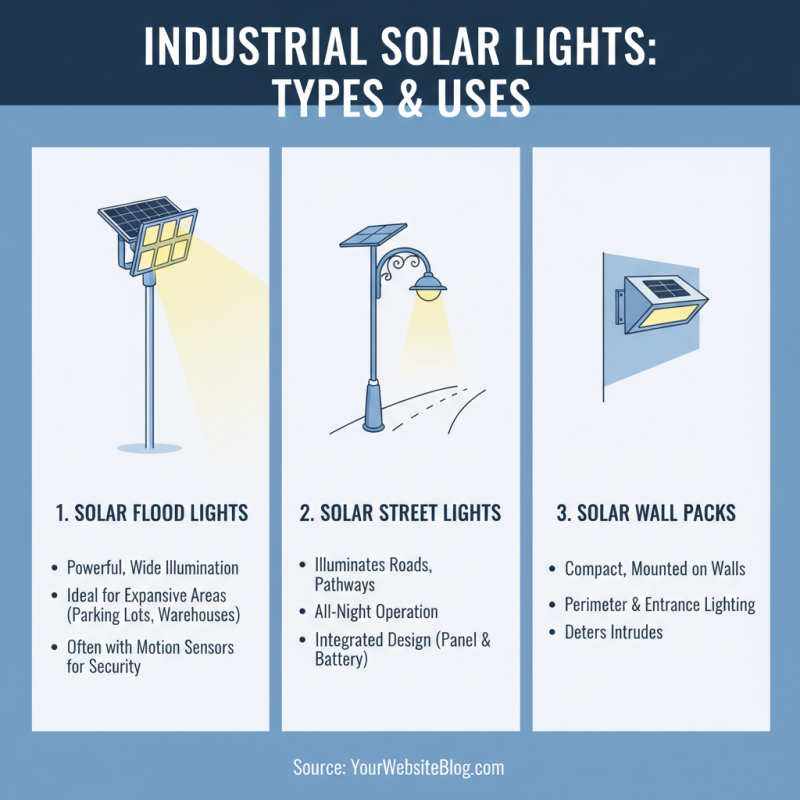
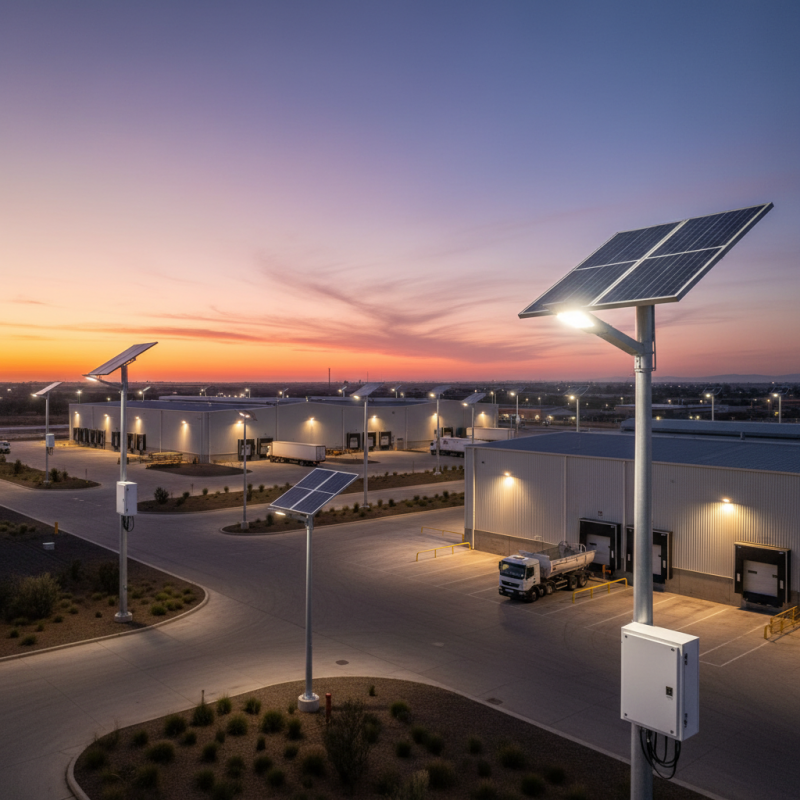
When choosing industrial solar lights, it’s crucial to understand the different types available. Solar flood lights are popular for their powerful illumination. They are ideal for expansive areas and provide bright light during the night. These lights often come with motion sensors, enhancing security at your facility.
Solar street lights offer another solution. They are designed to mimic traditional street lights but operate solely on solar energy. Their sleek design improves aesthetics while providing efficient lighting. Consider their installation requirements. Some models may need professional setup, which could impact your budget.
Another type is solar wall lights. These compact fixtures can illuminate pathways or building exteriors. They are easy to install and require minimal maintenance. However, their brightness may not be sufficient for large spaces. Evaluating your specific needs will help you decide which type is right. Without careful assessment, you may invest in inadequate lighting solutions.
Evaluating Your Business Lighting Requirements and Space Dimensions
Evaluating your business lighting needs starts with understanding your space dimensions. Consider the height of your ceilings and the overall area. For example, a warehouse may require brighter lights spaced farther apart compared to a smaller retail shop. Adequate illumination levels are essential, especially in work environments. The Illuminating Engineering Society recommends specific light levels based on the task. In warehouses, 30-50 foot-candles may be necessary, while areas for customer interaction may demand up to 70 foot-candles.
Energy efficiency is another factor to think about when choosing solar lights. According to the U.S. Department of Energy, solar lights can reduce electricity costs significantly. On average, businesses can save up to 75% on their lighting bills with solar solutions. However, not all solar lights are created equal. It's crucial to assess the quality of solar panels and batteries.
Lastly, consider the placement of lights. Proper positioning can eliminate shadows and improve visibility. However, there's often a trade-off between pleasing aesthetics and functional lighting. Focusing too much on design may overlook critical lighting needs. Make sure you balance both aspects to create a safe and welcoming environment. Consider potential challenges as you plan your lighting strategy.
How to Choose the Best Industrial Solar Lights for Your Business Needs?
| Lighting Requirement |
Recommended Brightness (Lumens) |
Ideal Space Dimensions (sq ft) |
Suggested Solar Light Type |
| Warehouse |
10,000 - 20,000 |
1,000 - 2,500 |
High-Output LED Floodlights |
| Parking Lot |
2,000 - 10,000 |
500 - 1,500 |
Solar Street Lights |
| Construction Site |
5,000 - 15,000 |
700 - 1,800 |
Portable Solar Work Lights |
| Outdoor Storage Area |
3,000 - 8,000 |
300 - 1,000 |
Solar Wall Lights |
| Loading Dock |
7,000 - 12,000 |
600 - 1,200 |
Solar Pole Lights |
Factors to Consider for Optimal Brightness and Efficiency
When selecting industrial solar lights, brightness and efficiency are crucial. An optimal brightness level typically falls between 3000 to 6000 lumens for outdoor areas. According to a report by the Solar Energy Industries Association, solar technology has advanced, allowing for high-output lights that last longer. Yet, many businesses still underestimate the wattage needed for their specific environment.
Consider the environment where lights will be installed. For instance, areas with heavy foot traffic may need brighter lights to ensure safety. In contrast, poorly lit zones may require focused lighting. Efficiency also hinges on battery capacity and the solar panel's ability to harness sunlight. The U.S. Department of Energy suggests looking for solar lights with at least a 20% efficiency rate for maximum power conversion.
Lastly, understanding light distribution is vital. Poor-quality fixtures may produce uneven lighting. This can lead to dark spots and increased safety hazards. Some businesses report a noticeable difference after reassessing their lighting plans, emphasizing the need for data-driven decisions in illumination strategies.
Assessing Durability and Weather Resistance for Industrial Environments
When choosing industrial solar lights,
durability and weather resistance are key factors.
Industrial environments often expose equipment to harsh elements, including extreme temperatures, moisture, and UV rays.
Research indicates that solar lights in these settings require robust materials.
According to a 2022 report from the Solar Energy Industries Association,
70% of failures in solar lighting systems are due to inadequate weatherproofing.
Selecting lights with materials such as tempered glass and corrosion-resistant aluminum can extend longevity.
Testing for an IP68 rating is advisable, indicating total dust ingress protection and immersion in water.
Many systems also feature anti-UV coatings to prevent degradation over time.
A 2023 industry survey highlighted that 85% of businesses prioritize weather resistance,
as it directly impacts maintenance costs.
Regular maintenance and assessment of operational efficiency can prevent unexpected failures.
Businesses must consider how the region's climate affects their equipment.
For instance, lights should function well below freezing.
Inconsistent performance often stems from overlooked environmental factors.
By focusing on durability, businesses can ensure their solar lighting systems meet their needs effectively.
Cost-Effectiveness: Comparing Initial Investment and Long-Term Savings
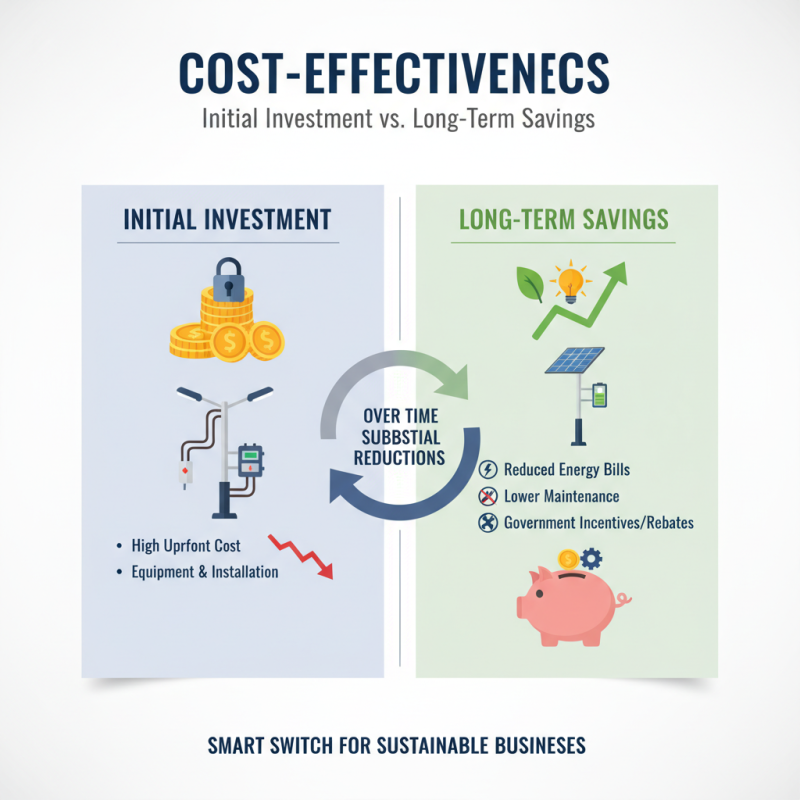
When considering industrial solar lights, the initial investment is often a key concern. Many businesses hesitate to switch due to upfront costs. However, exploring long-term savings can shift that perspective. Solar lights typically require less maintenance than traditional lighting solutions. This reduces ongoing expenses significantly. Over time, the reduction in energy bills can be substantial.
It’s important to analyze not just purchase prices but also energy savings. For instance, businesses in sunny areas may see faster returns. However, those in regions with less sunlight might need more time. A thorough evaluation helps to determine if solar lights are a fitting choice.
Moreover, the reliability of solar technology can vary. Some systems perform well, while others fall short. Researching efficiency ratings is essential. Understanding the local climate's impact on performance is crucial too. It’s not just about the lights; it's about the overall return on investment. Choosing wisely can enhance both sustainability and cost-effectiveness.