

Temporary & Portable Solar Lighting

2026 Best Types of Solar Lighting Systems for Buyers

Choosing a Solar Lighting System in 2026 means balancing brightness, battery life, installation needs, and local weather. A compact garden light may suit a short path, while a high-output streetlight needs a larger panel and dependable storage. The right choice depends on the job. It is not always the most powerful model.

Solar lighting engineer Elena Brooks puts it this way: “A light is only as reliable as the balance between its panel, battery, and daily workload.” That balance matters on cloudy weeks, when a small panel may not fully recharge a battery. Check the rated runtime, charging conditions, battery type, and replacement options—not just the advertised lumen figure. Look closely at the fittings, too. A sealed housing and sturdy mounting bracket can make a real difference outdoors.

This guide compares the main system types buyers may encounter in 2026, including pathway lights, security floodlights, streetlights, and integrated all-in-one units. It also considers split systems, where the panel sits apart from the lamp, and portable options for temporary use. Some specifications still leave room for doubt. Real performance can vary with shade, temperature, placement, and maintenance. A little caution helps. Compare products against your actual site, and treat unusually generous runtime claims as a reason to ask more questions.
2026 Best Types of Solar Lighting Systems for Buyers

How Solar Lighting Systems Generate and Store Power

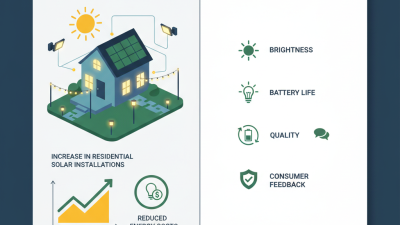
Solar lighting begins with a photovoltaic panel, which converts sunlight into direct-current electricity. A charge controller manages the flow and helps prevent battery overcharging. During the day, stored energy builds quietly. At dusk, a sensor or timer can switch on the light. Not magic.

In integrated systems, the panel, battery, and LED are housed in one fixture. They are compact and simple to install, but the panel’s position may be limited by the fixture’s location. Split systems use a separate panel connected by cable. This allows better sun exposure, though wiring and mounting need more care. Either way, shade from a roof edge or tree can reduce charging noticeably.

Battery capacity, measured in watt-hours, affects how long a light can run after sunset. Panel output and local daylight matter too; a cloudy afternoon may leave less reserve than expected. For a garden path, compare the stated runtime with the brightness you actually need, not just the product’s maximum setting. There is no perfectly tidy sizing rule. In winter, shorter days and cold conditions can complicate performance, so a little extra capacity may be sensible. Oversizing everything, however, adds cost without guaranteeing better light.

How a Solar Lighting System Generates and Stores Power

Illustrative system: a 100 W solar panel receiving 5 peak sun hours produces about 375 Wh per day after an assumed 25% system loss. A 20 W LED running for 10 hours uses 200 Wh. A 12.8 V, 30 Ah lithium iron phosphate battery stores 384 Wh nominally; at an assumed 80% usable depth of discharge, that is about 307 Wh of usable storage. Actual output and runtime depend on sunlight, weather, equipment, and system settings.

The Main Types of Solar Lighting Systems

Solar lighting systems differ by how they store energy, distribute light, and serve a site. Common types include pathway lights, garden lights, parking-area lights, streetlights, security floodlights, and portable task lights. IRENA’s Renewable Capacity Statistics 2024 reports that global solar photovoltaic capacity reached 1,419 GW at the end of 2023. That growth signals a larger solar industry, but it does not make every fixture suitable for every location.

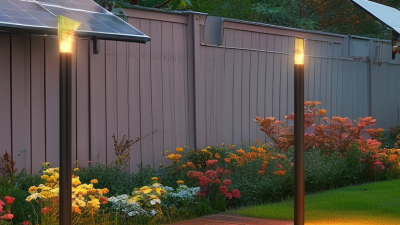
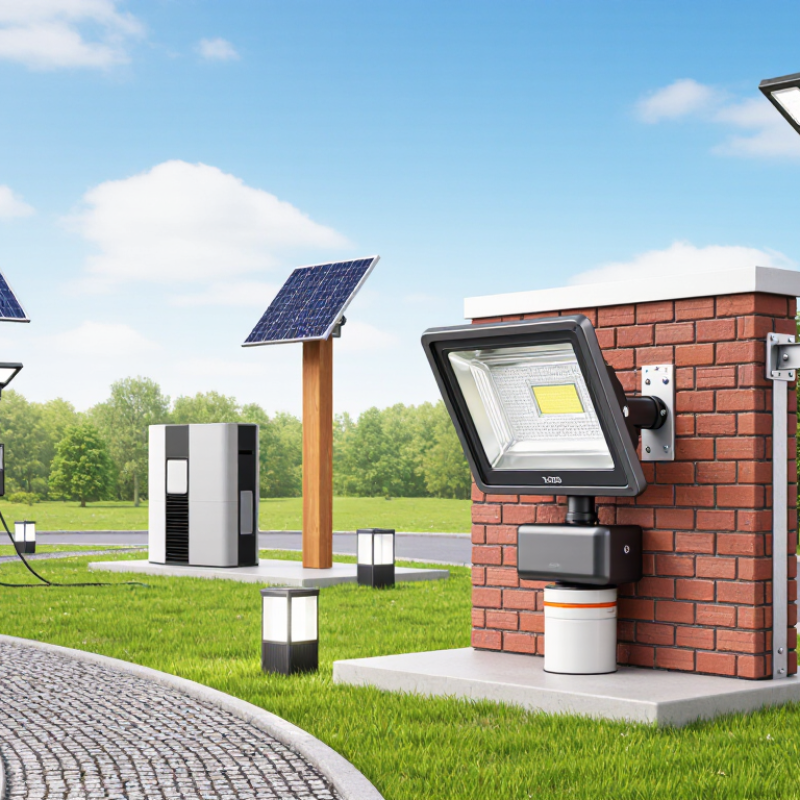
Pathway and garden lights usually provide low-level guidance along steps, beds, and walkways. Area lights cover wider spaces, such as driveways or parking areas, and need careful pole placement to limit dark gaps. Streetlights are built for road and public-space illumination; some use a separate panel, while others integrate it above the lamp. Security floodlights deliver brighter, motion-triggered coverage near entrances or garages. Portable solar task lights suit temporary work, though their output and runtime vary widely.

Check shadows. Nearby trees, walls, and winter sun angles can reduce charging time. In a site assessment, compare the fixture’s stated output, battery capacity, panel size, and autonomy rating against the hours of darkness required. A bright lamp is not automatically a dependable one. If a site needs steady overnight illumination, undersizing the battery can disappoint, even when the panel receives good midday sun. Real conditions are messier than a product specification.

Where Each Solar Lighting Type Works Best

Solar Lighting Types: Where Each Works Best

Solar path lights suit garden edges, short walkways, and entry routes where low-level guidance is enough. Place panels in open sun, not beneath dense branches or beside tall walls. They create soft pools of light, but rarely illuminate steps evenly. For stairs, choose shielded fixtures and check the beam after dark. Small details matter.

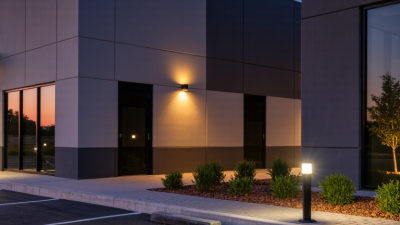
Solar wall lights work well beside doors, gates, and sheds. Motion-sensing models can reserve battery power for brief, brighter bursts. Solar floodlights fit driveways and wider yards, especially where wiring is difficult. Aim them at the ground or target area; poor placement can send light into windows instead. U.S. Department of Energy guidance notes that LEDs use at least 75% less energy than incandescent lighting, helping reduce the load on a solar system. That comparison is useful, but it does not predict a fixture’s winter runtime.

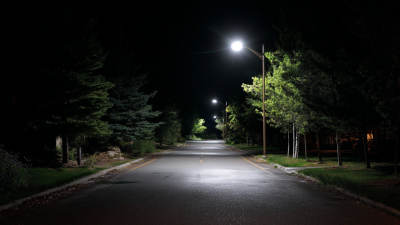
For streets, parking areas, and long shared paths, integrated solar area lights combine a panel, battery, and LED head on one pole. Separate-panel systems may suit sites where the luminaire sits in shade but the panel can reach sun. NREL’s PVWatts tool estimates solar production from location and system inputs; its results are a planning aid, not a guarantee of nightly performance. Check winter shade, required hours, and battery capacity before buying. A sunny summer test can mislead. U.S. DOE, “LED Lighting”; NREL, PVWatts Calculator.

How to Compare Solar Lights by Performance and Cost

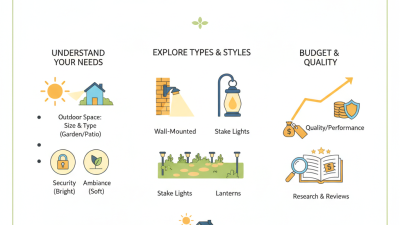
Solar lighting systems serve different jobs, so compare them by use before comparing prices. Path lights mark a garden edge, while security lights need stronger output and responsive motion sensors. Area lights can cover a driveway or work zone, but often need a larger panel and battery. A separate solar panel helps when the fixture sits in shade. Small details matter.

Compare brightness in lumens, expected hours of operation, battery capacity, and panel size. Advertised runtime usually assumes a full charge and limited activation; cloudy days and winter shade can reduce it. Check the stated water-resistance rating and whether the battery can be replaced. A cheaper fixture may cost more over time if its battery is sealed or its panel is undersized. I would treat any single runtime figure cautiously. Real sites are rarely ideal.

Tips: Test the proposed location at different times of day. Keep the panel clear of roof shadows and leaves, and compare total ownership cost, including likely battery replacement. For motion lights, check detection range and adjustable settings. A bright beam can still leave dark patches. Look closely at the coverage pattern before buying.

2026 Best Types of Solar Lighting Systems for Buyers - How to Compare Solar Lights by Performance and Cost

Solar Lighting System Typical Light Output Typical Runtime After a Full Charge Indicative Unit Cost (USD) Best For Performance and Cost Considerations
Pathway and Garden Lights 5–100 lumens per light 6–10 hours; some models dim after several hours $15–$60 per light Marking walkways, garden borders, and steps Low purchase and installation costs, but generally intended for guidance rather than bright task lighting. Spacing, shade, and winter sunlight affect coverage and runtime.
Motion-Sensor Security Lights 300–2,000 lumens Typically 6–12 hours in standby; motion-triggered operation varies with activity $30–$150 per fixture Entrances, garages, side yards, and small security areas Motion activation helps conserve battery power. Compare sensor range, adjustable settings, panel placement, and whether the light can operate reliably in shaded locations.
Solar Floodlights 500–3,000 lumens About 4–10 hours, depending on brightness and battery capacity $40–$250 per fixture Driveways, patios, sheds, and wider outdoor areas Higher output usually requires a larger panel and battery. Remote panels can help when the fixture location does not receive direct sunlight; check cable length and mounting options.
Solar Street and Area Lights 1,000–8,000 lumens for common small-area systems Usually designed for overnight operation; actual performance depends on battery sizing and local sunlight $150–$800+ per light Private roads, parking areas, pathways, and larger properties Higher upfront cost reflects larger panels, batteries, poles, and mounting hardware. Compare light distribution, battery autonomy, pole height, and any required foundation or installation work.
Solar Wall Lights 20–300 lumens About 6–10 hours; motion-sensing models may last longer between activations $20–$100 per fixture Porches, fences, entrances, and exterior walls Often a practical low-cost option for localized lighting. Integrated panels are easy to install but need a sunny mounting position for consistent charging.
Solar String and Decorative Lights Approximately 1–10 lumens per bulb, depending on bulb type About 6–10 hours under suitable charging conditions $20–$100 per set Decks, balconies, gardens, and outdoor entertaining areas Designed mainly for ambience rather than functional illumination. Compare total string length, bulb spacing, replaceable bulbs, and whether the panel can be placed in full sun.
Solar Shed and Utility Lights 100–1,000 lumens About 2–8 hours at high output; low or sensor modes may extend use $30–$180 per system Sheds, workshops, storage spaces, and small outbuildings A separate panel can be mounted outdoors while the light is installed indoors. Check panel cable length, switch or sensor options, and whether the battery is replaceable.

Costs and performance figures are indicative ranges for common consumer systems in 2026, not guaranteed specifications. Prices are in U.S. dollars and generally exclude installation. Actual output and runtime vary with product design, battery condition, temperature, panel orientation, shading, and seasonal sunlight. Compare lumen output, battery capacity, weather-resistance rating, warranty, and replacement-part availability before buying.

What Buyers Should Check Before Installation and Use

Before installation, match the light’s output and battery capacity to the actual task. A gate, path, and security area need different brightness and operating hours. Check the site at dusk for tree shade, wall shadows, and winter sun exposure. Small details matter. A panel that looks well placed at noon may lose useful sunlight later.

Ask how the system handles cloudy days, cold temperatures, and battery replacement. The U.S. Department of Energy says LEDs use at least 75% less energy than incandescent lighting, but efficient LEDs still need adequate stored power. NREL’s review of photovoltaic field studies found median panel degradation near 0.5% per year. That figure is a broad benchmark, not a guarantee for compact lighting panels. Check the manufacturer’s stated battery and panel warranties instead.

Before fixing the unit, test its sensor range and beam direction after dark. A sensor aimed at passing traffic may trigger repeatedly and drain the battery. Confirm that mounting hardware suits the wall or pole, and keep the panel accessible for cleaning. NREL’s PVWatts tool can estimate solar production from location and weather data, though its estimates do not predict a small light’s exact performance. One overlooked issue: nearby foliage grows. Recheck the site seasonally, and record runtime during the first cloudy week.

(214) 838-7010