


Temporary & Portable Solar Lighting
10 Tips for Choosing Solar Powered LED Lights
Choosing Solar Powered Led Lights is not as simple as comparing brightness or picking the lowest price. A light that looks impressive online may perform poorly beside a shaded doorway or beneath a dense tree. Panel exposure, battery capacity, sensor settings, and weather resistance all affect everyday results. Small details matter.
Before buying, consider where the light will sit and what it needs to illuminate. A path, porch, and security area call for different brightness levels and beam patterns. Check the product’s stated lumens, runtime, charging conditions, and water-resistance rating, then compare those details with the manufacturer’s guidance. A larger solar panel may help in limited sunlight, but it cannot overcome every cloudy day or poor placement. That can disappoint.
This guide introduces ten practical checks, from matching light output to the space to reviewing battery replacement options and warranty terms. It also explains why installation height and seasonal daylight can change performance. Specifications are useful, but they do not tell the whole story; real conditions vary from one yard to another. Some choices involve trade-offs. A brighter setting may shorten runtime, while a motion sensor may conserve energy but feel less convenient. The best option is the one suited to your location, routine, and expectations—not necessarily the most expensive model.
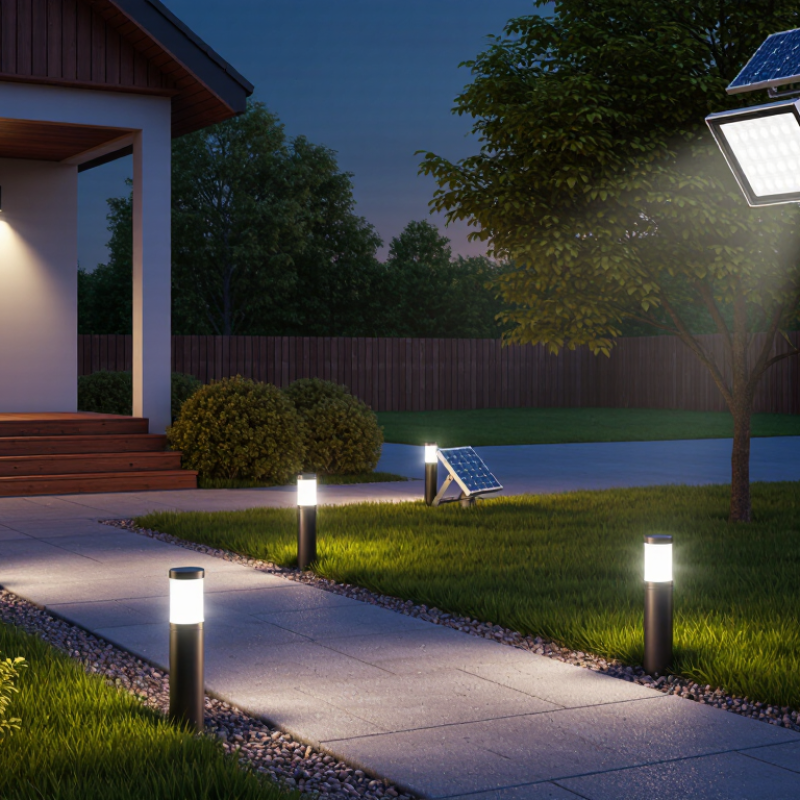
How Solar-Powered LED Lights Work and Where They Fit
A solar-powered LED light turns daylight into stored electricity, then releases it after dark. Photovoltaic cells produce direct current, while a charge controller regulates battery charging. At dusk, a light sensor switches on the LEDs, drawing energy from the battery. No grid connection is needed. That matters.
Performance depends on more than panel size. Shade from a porch roof, winter sun angles, cloudy days, and dirty surfaces can all reduce charging. Place the panel where it receives unobstructed daylight, even if the lamp sits elsewhere. Treat the stated runtime as a guide, not a promise; cold weather and aging batteries can shorten it. Small details count. The IEA’s Renewables 2024 report counted 510 GW of renewable capacity additions worldwide in 2023. Solar PV supplied about three-quarters of that total, but large-scale growth does not guarantee steady output from a small garden light.
LEDs suit this setup because they need relatively little power. The U.S. Department of Energy’s Energy Saver guidance says LEDs use at least 75% less energy than incandescent bulbs and can last up to 25 times longer. Those comparisons describe the bulbs, not the whole fixture. Battery capacity and panel exposure still determine nightly runtime. Path markers, shed entrances, and low-use garden corners often fit well. A shaded security entrance may not.
10 Tips for Choosing Solar Powered LED Lights - How Solar-Powered LED Lights Work and Where They Fit
| # | Choosing Tip | What to Check | How the Solar LED Light Works | Where It Fits |
|---|---|---|---|---|
| 1 | Check the available sunlight. | Look for a location with several hours of unobstructed daylight. Trees, walls, and roof overhangs can shade the solar panel; seasonal sunlight also affects charging. | The photovoltaic panel converts sunlight into electricity, which a charge controller uses to charge the light’s battery. | Sunny paths, open yards, and fences are generally easier locations than deeply shaded areas. |
| 2 | Choose a panel that can be positioned well. | For a separate-panel model, check cable length and mounting options. In the Northern Hemisphere, a panel commonly receives strong exposure when oriented toward the south; in the Southern Hemisphere, toward the north. Local shading and roof angles matter. | Good panel placement helps the system collect daylight for battery charging, even when the LED fixture itself is installed in a shaded spot. | Useful for covered entrances, shaded porches, or locations where the fixture and panel need different positions. |
| 3 | Compare battery capacity and replacement options. | Check the battery type, stated capacity, replacement availability, and the maker’s guidance for replacement. Runtime varies with battery condition, sunlight, temperature, and light settings. | The battery stores energy collected during the day and supplies power to the LEDs after dark. | Important for security lights and other fixtures expected to operate through long nights or periods of cloudy weather. |
| 4 | Use lumens to compare brightness. | Compare the stated lumen output and beam coverage rather than relying on LED wattage alone. Check whether the output is a continuous setting or a short-duration boost. | LEDs turn electrical energy from the battery into light; their low power use can help extend battery runtime. | Lower-output lights often suit decorative borders, while brighter, wider-beam models may better suit entrances and work areas. |
| 5 | Match the beam to the area. | Review beam angle, mounting height, and whether the light has adjustable heads. A narrow beam concentrates light; a wider beam covers more ground but spreads it out. | The LED optics direct the light, so beam shape affects how much of a path, wall, or entrance is illuminated. | Choose a focused beam for a gate or doorway and broader coverage for a patio or walkway. |
| 6 | Select a suitable color temperature. | Check the color-temperature rating in kelvins (K). Lower values appear warmer; higher values appear cooler and more blue-white. | Color temperature describes the perceived color of the LED light, not its brightness or energy use. | Warm white can suit seating areas and gardens; cooler white may be preferred for task or security lighting. |
| 7 | Consider motion sensing and light modes. | Check whether the fixture offers a motion sensor, adjustable detection range, timer, or dim-to-bright mode. Confirm which mode determines overnight runtime. | A sensor can keep the light dim or off until movement is detected, reducing energy use between activations. | Good for driveways, side entrances, and other areas where full brightness is needed only occasionally. |
| 8 | Choose weather protection for the installation site. | Read the IP rating and installation instructions. Under IEC 60529, IP65 indicates dust-tight protection and protection against water jets; it does not mean the product is suitable for immersion. | The enclosure protects electrical parts from dust and water to the level specified by its rating. | Use an appropriately rated fixture outdoors, and follow the stated limits for rain exposure, mounting, and maintenance. |
| 9 | Check sensor placement and glare. | Make sure the motion sensor has a clear view of the approach area and is not aimed at moving branches or a busy street. Consider shielding the LED from direct view. | The sensor detects changes in its field of view and signals the controller to change the light’s output. | Useful at entrances and paths; careful aiming can reduce unwanted activations and harsh glare. |
| 10 | Plan for installation and upkeep. | Check mounting hardware, panel-cleaning instructions, battery access, and whether the light can be adjusted after installation. Keep the panel free of leaves, dust, and snow when practical. | Clean panel surfaces and unobstructed exposure help the photovoltaic cells receive light; the controller manages charging and switching. | Choose an accessible position for routine cleaning and battery service, especially for wall-mounted or higher fixtures. |
Related Posts
-

Discover Premium Outdoor Solar Panel Lights Crafted by Top Chinese Manufacturers
-
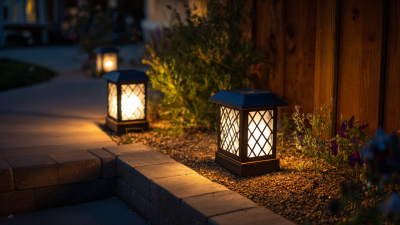
Illuminate Your Nights: The Ultimate Guide to Choosing Solar Powered Outdoor Lights for Every Space
-
What is Solar Hanging Lights and Why You Need Them?
-
Top 10 Benefits of Solar Street Lights You Must Know Today
-
Unveiling the Technical Specifications that Make the Best Solar Light for Home a Must Have
-

Discover the Advantages of Solar Powered Parking Lot Lights for Sustainable Energy Solutions
