

Temporary & Portable Solar Lighting

What Are Solar Yard Lights and How Do They Work?

Solar Yard Lights are compact outdoor fixtures that collect sunlight by day and produce light after dusk. Each unit usually combines a photovoltaic panel, rechargeable battery, LED, controller, and light sensor. The panel converts sunlight into electricity. The battery stores part of that energy for nighttime use. At dusk, the sensor activates the LED automatically.

The technology reflects a broader shift toward distributed solar power. IRENA’s Renewable Capacity Statistics 2024 reported that global solar photovoltaic capacity reached about 1,419 gigawatts by the end of 2023. Solar yard lighting is much smaller, but it uses the same basic conversion principle. The U.S. Department of Energy also reports that LEDs use at least 75% less energy and last up to 25 times longer than incandescent bulbs. That helps explain their value in garden paths, driveways, and patios.

No outlet is required.

However, performance depends on details that product labels often simplify. A shaded panel, winter weather, dirty glass, or a weak battery can reduce nighttime brightness. A lamp rated for “up to” several hours may not deliver that result every night. This is where practical experience matters. Place the panel toward the strongest available daylight, keep it unobstructed, and inspect the battery periodically. The National Renewable Energy Laboratory’s solar resource tools show why sunlight varies by location and season. Therefore, Solar Yard Lights are not miniature replacements for every wired system. They are convenient, low-voltage tools for suitable spaces, provided buyers assess weather exposure, lighting needs, battery quality, and realistic operating conditions.
What Are Solar Yard Lights and How Do They Work?

Solar Yard Lights: Definition, Components, and Main Types

Solar yard lights are outdoor fixtures that convert sunlight into stored electrical energy. During daylight, a photovoltaic panel charges a rechargeable battery. After dusk, a light sensor activates an LED, using that stored power. Their value is practical: they can illuminate paths, borders, steps, and small garden features without underground wiring.

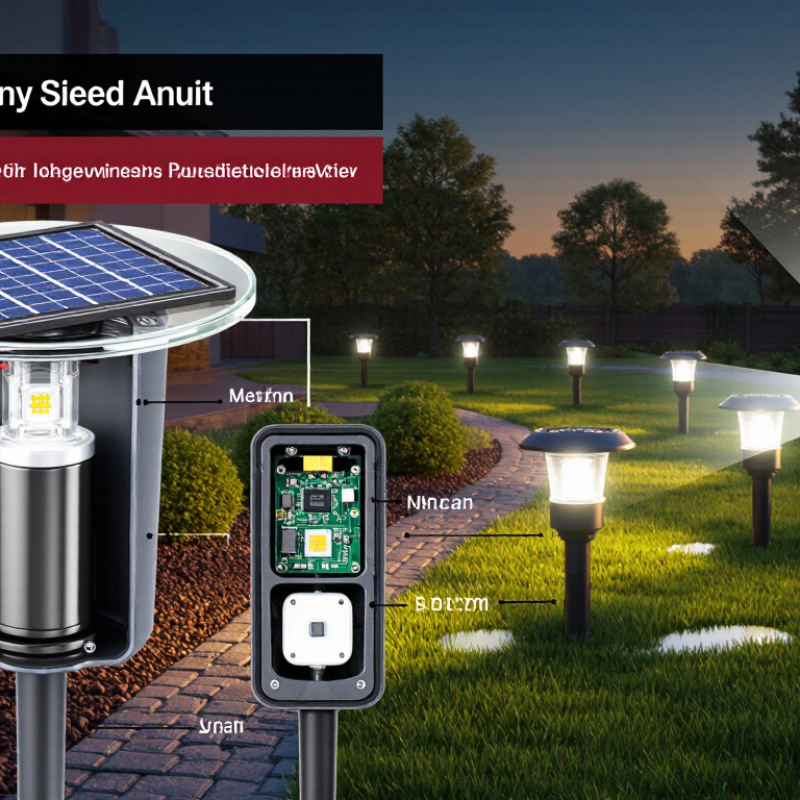
A typical unit contains a solar panel, battery, LED module, charge controller, light sensor, and weather-resistant housing. Some models add motion detection or adjustable brightness. Common types include pathway lights, spotlights, floodlights, wall lights, deck lights, and decorative lanterns.

Pathway models spread soft light near the ground. Spotlights create narrower beams for trees or entrances. Floodlights provide wider coverage, but they usually consume more stored energy.

Solar yard lights reflect the wider growth of photovoltaic technology. IRENA’s Renewable Capacity Statistics 2024 reported 1,419 gigawatts of global solar capacity at the end of 2023. That figure does not measure garden lighting directly, but it shows the expanding foundation behind small solar products. In practical installations, performance depends on panel exposure, seasonal daylight, battery quality, and shade from branches. Cloudy weather matters. Dirt matters too. A south-facing position often helps in the Northern Hemisphere, although local conditions can change the result. LED lighting is efficient, yet compact batteries still limit brightness and runtime. Some advertised operating times feel optimistic. Careful placement remains more important than decorative design.

Photovoltaic Panels: How 18–23% Module Efficiency Converts Sunlight

What Are Solar Yard Lights and How Do They Work?

Photovoltaic Panels: How 18–23% Module Efficiency Converts Sunlight

Solar yard lights use a small photovoltaic module, rechargeable battery, controller, and LED. During daylight, photovoltaic cells absorb photons and create direct current. The controller manages charging, while the battery stores energy for evening use. At dusk, a light sensor usually activates the LED automatically. No wiring trench is needed. Their simple design suits paths, garden beds, and steps, but placement still matters.

An 18–23% module efficiency means the panel converts that share of incoming sunlight into electricity under standard test conditions. It does not mean the lamp delivers 23% of sunlight as visible light. Losses occur in wiring, charging, battery storage, and LED conversion. A 100-square-centimeter panel receiving 1,000 watts per square meter gets about 10 watts of sunlight. At 18–23% efficiency, that becomes roughly 1.8–2.3 watts before system losses.

In practical garden checks, shade from a fence can reduce charging more than expected. Shade matters. Dust and a low winter sun angle also lower output. A clean, tilted surface can outperform a larger panel hidden under leaves. Still, daily performance changes. Cloudy weather exposes limits. A suitable design should match battery capacity, local sunlight, and desired nighttime brightness, rather than efficiency alone. I once assumed a brighter lamp always needed a better panel, but battery size and shading proved equally important.

Charge Controllers and Batteries: 500–2,000 Cycle Energy Storage

Solar yard lights use a small photovoltaic panel, a rechargeable battery, and an automatic light sensor. During daylight, the panel converts sunlight into electrical energy. A charge controller regulates that energy before it reaches the battery. This prevents excessive charging and reduces stress on delicate cells.

The battery stores power for nighttime use. Many outdoor lights use nickel-metal hydride or lithium-based cells. Their service life may range from 500 to 2,000 charge cycles. One cycle usually means using and restoring the battery’s available capacity. However, cycle ratings are not guarantees. Deep discharge, freezing temperatures, summer heat, and poor charging conditions can shorten performance.

The controller also decides when the lamp turns on. At dusk, it directs stored energy to the LED. At dawn, it stops the output and resumes charging. A shaded panel may provide only a weak charge, even when the battery is new. I have found that dirt on the panel can noticeably reduce evening brightness after several cloudy days. Small details matter. A light placed beneath dense branches may never reach its expected cycle life. Battery replacement can also be confusing, because identical-looking cells may have different voltage and charging requirements. Checking the original specifications is safer than choosing by size alone.

What Are Solar Yard Lights and How Do They Work? - Charge Controllers and Batteries: 500–2,000 Cycle Energy Storage

System Element Typical Specification How It Works Typical Service or Cycle Range Important Considerations
Solar Panel Approximately 0.5–5 W for common decorative and pathway lights Converts sunlight into direct-current electricity to recharge the battery during daylight. Generally 10–20 years of useful output, with gradual efficiency loss Output varies with sunlight intensity, panel angle, shading, dirt, and seasonal daylight.
Charge Controller Usually a compact PWM controller; some systems use basic constant-voltage charging Regulates current and voltage from the panel, limits overcharging, and controls when the light turns on. Electronic component life commonly ranges from several years to more than 10 years, depending on heat and moisture exposure A suitable controller must match the battery chemistry and voltage; incorrect charging can reduce battery life or create a safety risk.
Nickel-Metal Hydride (NiMH) Battery Common nominal voltage: 1.2 V per cell; frequently used in small solar lights Stores daytime solar energy and supplies power to the LED after the ambient light level falls. Approximately 500–1,000 charge cycles under suitable operating conditions Performs well in many low-power applications but can lose capacity faster in high heat or with repeated deep discharge.
Lithium-Ion Battery Common nominal voltage: about 3.6–3.7 V per cell; higher energy density than NiMH Provides a relatively high amount of stored energy in a compact, lightweight package. Approximately 500–1,000 cycles, depending on chemistry, temperature, and depth of discharge Requires protection against overcharge, over-discharge, short circuit, and excessive temperature.
Lithium Iron Phosphate (LiFePO₄) Battery Common nominal voltage: about 3.2 V per cell; stable lithium-based chemistry Stores solar energy efficiently and can support frequent cycling with relatively low capacity loss. Approximately 1,000–2,000 cycles in many practical applications Typically offers longer cycle life and better thermal stability than conventional lithium-ion cells, but requires a compatible controller.
LED Light Source Usually 0.1–3 W for pathway, decorative, and small security lights Uses stored battery energy to produce light after the controller detects darkness. Often rated for approximately 25,000–50,000 operating hours Brightness and runtime depend on LED power, optics, battery capacity, and the selected operating mode.
Light Sensor or Photocell Automatic dusk-to-dawn control Measures ambient light and signals the controller to switch the LED on at night and off during the day. Typically designed for repeated daily switching over several years Nearby artificial lighting or dirt on the sensor can delay activation or cause irregular switching.
Battery Capacity Common small-light range: approximately 300–3,000 mAh Determines how much electrical energy is available for nighttime illumination. Capacity gradually declines as the battery completes charge and discharge cycles A larger capacity can extend runtime, but it also needs more solar energy and longer charging time.
Nighttime Runtime Commonly about 6–12 hours after a sufficiently sunny day The battery powers the LED from dusk until the stored energy reaches the controller’s low-voltage cutoff. Varies daily rather than representing a fixed service life Cloudy weather, winter conditions, shade, battery aging, and higher brightness settings reduce runtime.
Energy Conversion Path Sunlight → solar panel → charge controller → battery → LED The panel generates electricity, the controller manages charging, and the battery supplies regulated power to the LED at night. Designed for one charge-and-discharge cycle per day when sunlight is adequate The complete system is limited by the component with the shortest useful life, most often the rechargeable battery.

Note: Cycle-life figures are typical engineering ranges, not guarantees. Actual results depend on battery chemistry, charge voltage, depth of discharge, temperature, charging quality, storage conditions, and daily sunlight availability.

LED Lighting Systems: How 80–150 lm/W Efficiency Produces Illumination

What Are Solar Yard Lights and How Do They Work?

Solar yard lights use a small photovoltaic panel to convert daylight into electricity. A rechargeable battery stores that energy for evening use. When darkness arrives, a light sensor activates the LED, often for six to ten hours. The system sounds simple, but shade, winter weather, and dirty panels reduce performance quickly.

LED Lighting Systems: How 80–150 lm/W Efficiency Produces Illumination

Efficiency describes how many lumens of light come from one watt of electricity. The U.S. Department of Energy’s Solid-State Lighting R&D Opportunities report identifies LED technologies exceeding 100 lm/W. Outdoor LED systems commonly operate near 80–150 lm/W after accounting for optics, wiring, and driver losses.

This means a five-watt system could theoretically produce 400–750 lumens. Real output is usually lower. Battery voltage, heat, and lens design matter. Lumens measure visible brightness, not lighting quality. A narrow beam may look brighter than a wider beam with the same lumen rating.

Tips:

Place the panel where it receives several hours of direct sunlight. Keep it away from porch lights, which can confuse the sensor. Clean dust from the panel every few months. Check the battery after cloudy weeks. Manufacturer figures often use ideal laboratory conditions, so treat them as guidance, not a promise. In my view, slightly lower brightness with stable runtime is often more useful than impressive packaging numbers. Real gardens are messier than lab charts.

Outdoor Performance: IP65 Protection, Runtime, and Seasonal Limitations

Solar yard lights convert daylight into stored electrical energy. A small panel charges a rechargeable battery, usually powering an LED after dusk. A light sensor controls this change automatically. In practice, installation matters more than many product listings suggest. Place the panel where branches, walls, or porch roofs cannot shade it. Even a few hours of strong sun may outperform a full day of weak winter light. The system is simple. Its results are not always consistent.

IP65 protection means the enclosure is dust-tight and resists water jets from any direction. It does not mean the light can sit underwater. Avoid puddles, close-range sprinklers, and poorly sealed cable joints. I check the housing after heavy rain, especially around screws and the battery compartment. Condensation can still appear inside. That detail is easy to miss. A damaged seal may not cause immediate trouble, making routine inspection worthwhile.

Runtime depends on battery capacity, charging conditions, LED brightness, and temperature. A light advertised for eight hours may run far less after cloudy weather. Cold nights can reduce available battery performance. Summer usually brings longer charging periods, but growing foliage may block the panel. Winter adds shorter days, low sun angles, snow, and repeated overcast skies. Treat runtime figures as estimates, not guarantees. My expectation is modest: dependable path lighting, not all-night brightness every night.

What Are Solar Yard Lights and How Do They Work?

Outdoor Performance: IP65 Protection, Runtime, and Seasonal Limitations

Solar yard lights use photovoltaic cells to convert daylight into electricity, store it in a rechargeable battery, and power LEDs after dark. The chart shows representative overnight runtime after a full charge under typical mid-latitude conditions. Longer summer daylight generally provides more charging energy, while shorter winter days, cloud cover, snow, and shaded panels can significantly reduce runtime.

An IP65 enclosure is dust-tight and protected against water jets from any direction, but it is not designed for submersion. Proper panel positioning, clean surfaces, and drainage remain important for reliable outdoor performance.

(214) 838-7010