


Choosing a 2 Door Electric Truck can reshape how a business handles daily transport. For local deliveries, maintenance work, landscaping, and facility services, its compact cabin and open cargo area offer practical flexibility. Drivers can enter narrow streets, park beside loading zones, and carry tools without managing a large passenger cabin. That matters when every minute affects route efficiency.
Electric power also changes the driving experience. Instant torque helps the truck move smoothly from traffic lights, while regenerative braking can reduce brake wear during repeated urban stops. A quieter motor may improve communication at busy work sites. However, the benefits depend on real operating conditions. Battery range can drop in cold weather, heavy rain, steep areas, or when the truck carries a full payload. Charging access must be checked before purchase, not after delivery.
A responsible fleet decision should compare payload capacity, charging time, warranty coverage, service support, and expected annual mileage. Review manufacturer data, then test the vehicle on a normal business route. A short demonstration drive may reveal turning limits, seat comfort, or storage problems that brochures overlook. The truck may lower fuel and maintenance costs, but its purchase price can remain challenging for smaller companies. Careful planning matters.
This article examines where a 2 Door Electric Truck performs well, where it may disappoint, and how businesses can judge its long-term value with practical evidence.
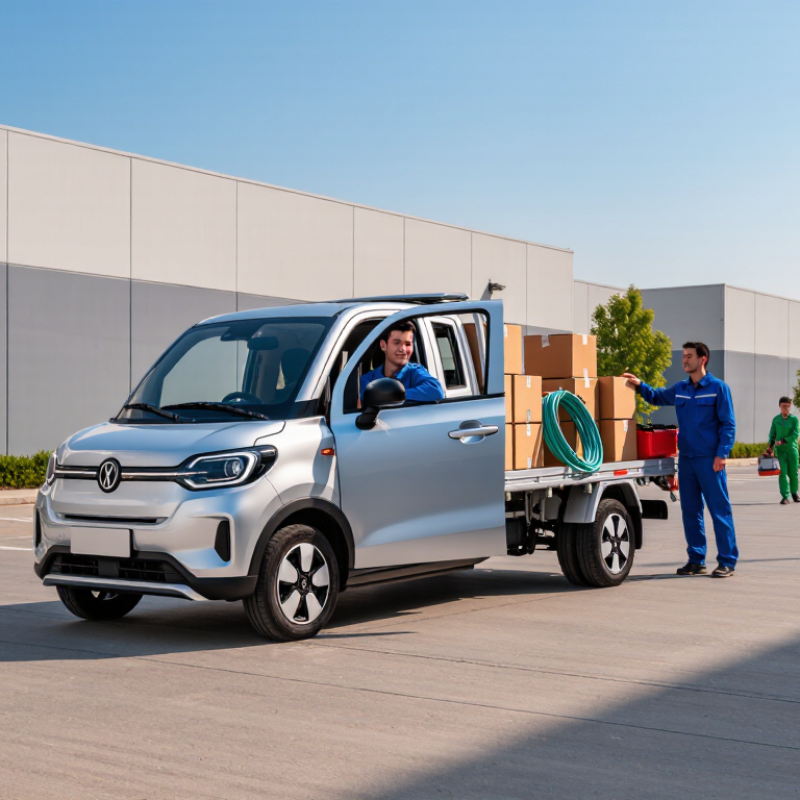
A 2-door electric truck is a compact commercial vehicle with two entry doors, an electric motor, and a rechargeable battery pack. Its cab usually seats two or three people, depending on the interior layout. Behind the cab, a flatbed, box, or specialized cargo body supports daily business work.
The design keeps the cabin short and leaves more space for useful equipment. A wider door opening can make repeated entry easier at delivery sites. The low cabin floor may also reduce climbing effort during busy shifts. In practice, drivers often notice quieter operation, smoother acceleration, and less vibration than with conventional trucks. That matters near offices, warehouses, and residential streets.
Battery size, payload, weather, traffic, and driving habits affect real-world range. Charging access matters just as much. A business should compare its route length with overnight charging capacity and local electrical limits. Payload ratings deserve careful attention too. A larger cargo body does not always mean a higher safe load. This is where assumptions can fail. Fleet managers should review manufacturer specifications, service records, warranty terms, and operating data before purchase. A short test route with the actual cargo can reveal uncomfortable seating, limited visibility, or slower charging than expected. Practical details often matter more than a clean brochure.
A two-door electric truck can make daily business work more controlled. Its compact cab helps drivers enter narrow streets, loading yards, and crowded service lanes. Fewer doors also reduce cab complexity and may simplify cleaning after dusty deliveries. The U.S. Department of Energy’s Alternative Fuels Data Center reports that electric vehicles convert over 77% of grid energy into movement. Conventional gasoline vehicles convert only about 12–30%. That efficiency can support lower energy costs, especially on predictable urban routes. Quiet operation also helps early-morning deliveries near homes and offices.
The operational value depends on disciplined planning. A fleet manager can assign the truck to fixed routes, schedule depot charging, and monitor battery use through telematics. The International Energy Agency’s Global EV Outlook 2024 recorded almost 160,000 electric truck sales worldwide in 2023, showing stronger commercial adoption. Still, the two-door layout may limit passenger access and storage flexibility. That matters when crews change frequently. Payload can also fall in cold weather or with heavy equipment. The trade-off is real. Measure the route. Before purchasing, compare daily mileage, charging time, payload, and local electricity rates. A small depot may not yet support overnight charging reliably. Driver feedback should influence the decision too, because a specification sheet cannot reveal every awkward step, tight turn, or repeated loading delay.
A two-door electric truck fits businesses that carry tools, materials, or compact equipment rather than several passengers. Its shorter cabin can leave more room for a usable bed, while electric drive helps reduce noise near homes, farms, and commercial sites. This layout suits mobile maintenance crews, landscape teams, local delivery work, and small construction jobs. A technician can load cable reels, hand tools, safety cones, and a locked case without climbing through a rear seat area. That saves small amounts of time repeatedly.
These trucks work best on routes with predictable distances and regular charging access. Property managers can move mowers between buildings, while electricians can visit several nearby service calls in one shift. Municipal grounds crews may carry signs, soil bags, or pruning equipment. The quiet motor helps at early work sites. Still, payload matters more than appearance. Weigh the driver, cargo, passengers, and accessories before choosing a vehicle. Cold weather, steep roads, towing, and heater use can reduce driving range. Charging must be planned carefully.
A two-door model is less suitable for teams carrying several workers, bulky cargo, or long-distance loads. Test the turning radius, bed dimensions, access height, and charging time with real equipment. A spreadsheet may predict efficiency, but a loaded road test reveals awkward lifting and wasted trips. It may expose a poor fit. Businesses should also review service support, battery warranty terms, and expected daily mileage with qualified vehicle specialists.
For many small businesses, a two-door electric truck can lower daily operating costs. Its shorter cabin leaves more room for tools, parcels, or compact equipment. During urban routes, instant torque helps the truck move smoothly between frequent stops. Electricity often costs less per mile than fuel, although local energy rates vary. Keep records from real routes, not brochure estimates.
Maintenance can also be simpler. Electric drivetrains use fewer moving parts and avoid oil changes, exhaust repairs, and many engine-related services. Regenerative braking may reduce brake wear on hilly or stop-and-go routes. A fleet manager should compare the purchase price, charging installation, insurance, tires, and battery coverage. That calculation shows total ownership costs more clearly. It sounds technical, but a spreadsheet is enough.
Efficiency depends on daily discipline. A fully loaded truck may use more energy, while winter temperatures can reduce driving range. A business without reliable overnight charging could lose time or require a larger battery. Route tests sometimes fail because charging is treated as an afterthought. The two-door layout is practical, but access may feel tight for crews carrying bulky items. Test the truck with actual tools, payloads, hills, and delivery stops before committing.
Choosing a 2-door electric truck starts with your daily work, not its appearance. Map each route, delivery stop, and loading area. Measure the payload, cargo dimensions, and towing needs carefully. A compact cab may improve parking access, but it can limit storage and driver comfort. Check the usable battery capacity, not only the advertised range. Hills, cold weather, heating, and heavy loads can reduce distance. Request documented battery warranty terms and charging requirements from the seller.
Tips: Ask for a supervised test drive with a typical load. Compare home, depot, and public charging times. Inspect the bed height, tie-down points, turning radius, and door access. Check whether local technicians can service the high-voltage system. Small details matter.
Review safety equipment, visibility, camera quality, braking performance, and seat adjustment. Two doors can support quick entry, but repeated climbing may become tiring during long shifts. Estimate total operating costs using electricity prices, maintenance schedules, insurance, financing, and expected downtime. Independent inspections can reveal practical issues that a brochure misses. My first range estimate would probably be too optimistic, especially on winter routes. Recheck it with real route data from experienced drivers. A short pilot period may expose charging delays, awkward loading, or weak cabin storage before the full fleet changes.
| Business Requirement | Recommended Vehicle Profile | Typical Payload Target | Practical Driving Range | Battery Capacity | Charging Requirement | Why a 2-Door Electric Truck Fits |
|---|---|---|---|---|---|---|
| Urban delivery and service calls | Compact 2-door cab, short wheelbase, enclosed or small dropside cargo area | 500–1,000 kg | 100–200 km per charge | 20–50 kWh | 7–11 kW AC charging; overnight charging is generally suitable | Low operating noise, zero tailpipe emissions, and easy maneuverability on narrow city streets |
| Construction and maintenance work | Reinforced chassis, durable suspension, dropside bed, and optional towing equipment | 800–1,500 kg | 100–180 km per charge | 40–80 kWh | 11 kW AC recommended; higher-power DC charging can reduce downtime | Strong low-speed torque supports loaded starts, while the open cargo bed carries tools and materials |
| Warehouse, airport, and campus operations | Small turning radius, speed-limited configuration, compact cargo body | 300–800 kg | 60–150 km per charge | 15–40 kWh | 3.6–7 kW AC charging; opportunity charging may be used during scheduled breaks | Quiet operation improves working conditions and helps reduce disturbance in populated facilities |
| Rural routes and utility inspection | Higher ground clearance, weather protection, long-wheelbase option, and robust underbody protection | 700–1,200 kg | 150–250 km per charge | 50–80 kWh | 11 kW AC at the depot; DC charging is useful when daily routes exceed available range | Predictable daily routes can make energy costs easier to control than fuel costs |
| Refrigerated or temperature-sensitive delivery | Insulated cargo box with a battery-efficient auxiliary refrigeration system | 500–1,000 kg | 80–160 km per charge | 40–80 kWh | Dedicated charging schedule and sufficient electrical capacity for refrigeration loads | Lower cabin and exterior noise can improve neighborhood deliveries, but auxiliary loads must be included in range calculations |
| High-utilization fleet operation | Durable commercial chassis, telematics, driver-access controls, and fast-charge capability | 800–1,500 kg | 150–300 km per charge | 50–100 kWh | 11 kW AC for depot charging; DC charging may support multiple shifts | Fleet managers can monitor energy use, route efficiency, charging status, and maintenance needs |
| Daily route planning | Choose a vehicle with usable range above the longest normal route | Match payload to actual cargo weight | Required range = route distance × 1.2–1.3 | Size the battery for route, payload, weather, and auxiliary loads | Confirm charger availability before deployment | A 20–30% operating buffer helps account for cold weather, traffic, hills, payload changes, and battery aging |
| Total cost of ownership | Evaluate purchase price, energy, maintenance, financing, insurance, and residual value | Do not pay for payload capacity that is rarely used | Higher annual mileage generally improves the payback case | Compare usable rather than gross battery capacity | Include charger installation, electricity tariffs, and possible demand charges | Electric drivetrains typically have fewer moving parts and can reduce routine powertrain maintenance |
| Safety and compliance | Vehicle with appropriate crash protection, load restraint points, lighting, braking, and stability systems | Never exceed the certified payload or axle limits | Verify range under the intended operating conditions | Confirm battery protection and thermal management systems | Use compliant charging equipment installed by qualified professionals | Correct loading, braking performance, battery protection, and driver training are essential for commercial use |
| Final selection rule | Prioritize the smallest vehicle that meets payload, range, body, and route requirements | Target at least 10–15% payload headroom | Keep a 20–30% range reserve for normal operating uncertainty | Balance battery size against purchase price and useful cargo capacity | Match charging speed to the vehicle’s daily schedule | A right-sized 2-door electric truck can improve maneuverability, operating efficiency, and fleet utilization |
Note: The figures above are typical planning ranges for light commercial 2-door electric trucks. Actual payload, range, battery capacity, charging time, and towing limits vary by vehicle configuration, road conditions, weather, payload, body design, and local regulations. Always verify certified specifications before purchase.
USA / Americas
1507 Capital Ave, Suite 102
Plano, TX 75074
+1 (214) 838-7010
8:00am – 5:00pm (GMT-6)
Australia / Asia Pacific
503 Cross Keys Rd,
Cavan SA 5094
+61 8 7200 3909
9:00am – 5:00pm (ACDST)
© 2025 Green Frog Systems. | Privacy Policy | Terms & Conditions


