


Choosing the right Acrylic Led Sign Board is more than selecting a bright panel for your storefront. It affects visibility, brand credibility, energy use, and customer experience. A carefully chosen sign should remain readable during midday glare, evening traffic, and rainy weather. It should also match your building, logo, installation space, and maintenance capacity.
This guide presents 10 practical tips for making a more confident purchase. The recommendations reflect common sign-buying concerns, including acrylic thickness, LED quality, color accuracy, brightness, power consumption, weather resistance, mounting methods, warranty coverage, and supplier communication. A reliable manufacturer should provide clear specifications, realistic product images, electrical details, and installation guidance. Ask for samples when possible. Small differences matter.
Look closely.
For example, uneven illumination may appear only after the sign is installed. Thin acrylic can also flex, crack, or show unwanted shadows under strong sunlight. I have found that buyers often focus on the initial price and overlook wiring, brackets, repairs, or replacement modules. That mistake can make a “cheap” sign expensive later. Still, no checklist can predict every site condition. Wall materials, local weather, viewing distance, and business hours change the decision. You may also discover that the most attractive design is not the easiest to clean or repair.
A thoughtful buying process combines technical evidence with practical observation. Measure the installation area, inspect the supplier’s previous work, and confirm performance expectations in writing. These steps cannot remove every risk, but they can reduce disappointing surprises and support a durable, professional result.
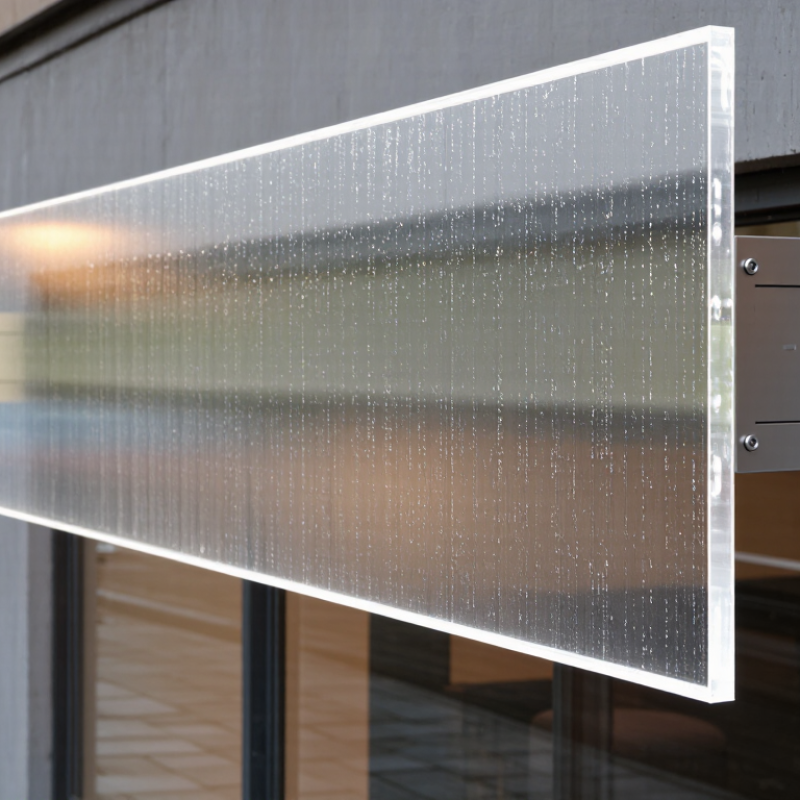
Before buying an acrylic LED sign board, define its purpose in practical terms. Is it guiding visitors, identifying a storefront, or promoting a service? A directional sign needs fast readability, while a promotional sign can use more visual detail. Identify your audience, too. Commuters may view the sign for three seconds. Visitors in a lobby may stand much closer. Measure the typical viewing distance before choosing letter height and brightness.
Tip: Write the sign’s main message in one short sentence. Remove words that do not help people act or understand. I once underestimated reading distance in a busy entrance, and the lettering looked attractive but felt too small. That mistake was avoidable.
Study the installation environment carefully. Record wall material, available power, sunlight direction, rain exposure, and nearby lighting. An outdoor sign may need sealed components and strong mounting hardware. An indoor sign might need lower brightness to prevent glare on polished floors. Check whether people will approach from one direction or several. The viewing angle can affect visibility, especially with shallow lettering. Leave space for cables and maintenance access. A neat installation is easier to inspect and safer to service.
Tip: Photograph the proposed location at different times. Morning glare can reveal problems that an afternoon inspection misses. Your first plan may not be perfect. Revise it after checking real traffic, shadows, and weather conditions.
Choosing the right acrylic material is the foundation of a dependable LED sign board. Clear acrylic provides bright, even light for illuminated lettering. Opal acrylic softens harsh points from LEDs and reduces visible hotspots. For outdoor signs, use UV-resistant acrylic with sealed edges. Indoor signs may need less protection, but humidity still matters.
Measure the installation area before selecting the size. A sign that looks attractive on a worktable may appear weak above a wide entrance. Keep enough space around logos, mounting holes, and electrical components. Rectangular boards suit storefronts and directories. Round or custom shapes can create stronger visual interest. However, unusual shapes may increase cutting time and material waste.
Thickness affects both appearance and stability. Three-millimeter acrylic works for small, lightweight panels. Larger boards often need five millimeters or more to resist bending. Heavy signs may require internal supports, not simply thicker plastic. I once underestimated how visible fingerprints could become on a glossy surface. A matte finish would have been more practical. Check the viewing distance, LED brightness, mounting method, and local weather exposure together. A perfect size on paper can still feel wrong in the actual space.
| Tip | Buying Factor | Recommended Choice or Data | Why It Matters | Practical Checklist |
|---|---|---|---|---|
| 1 | Acrylic Material | Choose cast acrylic when optical clarity, precise cutting, and polished edges are important. Choose extruded acrylic when consistent thickness and lower material cost are priorities. | Cast and extruded acrylic are both lightweight and weather-resistant, but they differ in fabrication performance, thickness tolerance, and cost. | Ask for the acrylic type, light-transmission information, surface finish, and a material sample before ordering. |
| 2 | Acrylic Color and Finish | Use clear or translucent acrylic for light transmission. Use opaque acrylic or an acrylic face with a separate diffuser when you need stronger contrast and reduced LED hot spots. | The face material controls brightness, color appearance, diffusion, and daytime readability. | Check the sign in both daylight and darkness. Confirm whether the surface is glossy, matte, frosted, transparent, translucent, or opaque. |
| 3 | Overall Sign Size | Measure the available wall or mounting area first. Include the frame, mounting brackets, cable exit, ventilation space, and clearance from doors or walkways. | A sign that is too small may be difficult to read, while an oversized sign can create installation, structural, and permitting problems. | Record the maximum width, height, depth, mounting height, viewing distance, and required setback before requesting a quotation. |
| 4 | Letter and Graphic Scale | For early planning, a common readability guideline is approximately 25 mm of letter height for every 3 m of viewing distance, then verify the result with an actual-size or digital mock-up. | Font style, stroke width, contrast, lighting conditions, and viewing angle can change readability significantly. | Test the longest word, smallest character, logo details, and viewing distance from the main approach direction. |
| 5 | Shape and Edge Design | Rectangular panels are efficient for text. Custom-cut circles, logos, rounded corners, and freeform outlines can improve visual identity but may require more precise fabrication. | The outline affects material usage, internal LED layout, mounting complexity, and the final visual balance. | Confirm the finished outline, corner radius, minimum internal angles, edge polishing, mounting points, and cable-routing position. |
| 6 | Acrylic Thickness | For many small indoor panels, 3–5 mm acrylic may be suitable. Larger, freestanding, or outdoor signs commonly require 5–10 mm or a reinforced frame, depending on size and wind exposure. | Greater thickness can improve rigidity and impact resistance, but it also increases weight, cost, and edge depth. | Have the fabricator confirm deflection, support spacing, wind load, fixing method, and whether a metal or acrylic frame is needed. |
| 7 | Lighting Method | Use edge-lit acrylic for slim, clean-looking graphics and shallow signs. Use face-lit or internally illuminated construction when higher brightness and more even illumination are required. | The LED position, diffuser, cavity depth, and spacing determine brightness uniformity and visible hot spots. | Request a lit sample or illumination layout and check for dark corners, bright dots, shadows, and uneven gradients. |
| 8 | LED Color and Brightness | Warm white is commonly around 2700–3500 K, neutral white around 3500–4500 K, and cool white around 5000–6500 K. Select brightness for the ambient light and viewing distance rather than maximum output alone. | Color temperature changes the appearance of the acrylic and printed graphics, while excessive brightness can cause glare and poor nighttime visibility. | Specify color temperature, dimming capability, nighttime brightness, color consistency, and whether automatic photocell control is required. |
| 9 | Power and Electrical Safety | 12 V and 24 V LED systems are common. Select a power supply with at least approximately 20% spare capacity and use the correct wire size, connectors, fusing, and ventilation. | Correct power planning reduces voltage drop, overheating, flicker, premature LED failure, and maintenance problems. | Obtain the total wattage, operating voltage, estimated current, power-supply rating, cable length, control method, and electrical compliance information. |
| 10 | Outdoor Protection and Maintenance | For outdoor use, specify sealed construction, UV-resistant materials, weather-protected cable entries, and appropriately rated LED modules and power supplies. IP65 is commonly used for dust-tight, water-jet-resistant enclosures, but the exact rating must match the installation. | Sunlight, rain, condensation, temperature changes, dirt, and impact can affect acrylic appearance, electrical safety, and service life. | Confirm the intended environment, UV protection, drainage, cleaning method, access for repairs, warranty terms, local permits, and installation requirements. |
When buying an acrylic LED sign board, start by comparing brightness for its actual location. A shaded lobby may need only 800 to 1,500 nits. Direct sunlight requires stronger output. Ask for measured brightness, not vague “super bright” claims. View a sample from the planned distance. Glare matters too. Excessive brightness can wash out pale acrylic lettering. Test the sign at noon and after dusk.
Color options affect readability and atmosphere. Single-color white often delivers clearer text, while RGB supports changing displays and seasonal designs. Check whether colors remain even across the panel. Uneven LEDs may create visible stripes behind the acrylic. Ask about dimming and scheduling. Energy use depends on LED quantity, power supply efficiency, and operating hours. Compare wattage, not only estimated monthly costs. A timer or light sensor can prevent unnecessary overnight use. Small setting, real savings.
Lifespan depends on heat control, construction quality, and daily brightness. Ask whether the stated hours reflect normal operating conditions. A claimed 50,000-hour lifespan is not a guarantee. Heat buildup can shorten it. Check ventilation, replacement access, and warranty terms. During one early project, I focused too much on brightness and overlooked power consumption. The sign looked excellent, but the operating cost was higher than expected. That mistake changed how I compare specifications.
10 Tips for Buying an Acrylic LED Sign Board
Visibility starts with contrast, not brightness alone. The U.S. Department of Transportation’s sign research shows that letter size, viewing distance, contrast, and glare affect recognition. Ask for a nighttime visibility test from the road. A bright panel can still look muddy through rain or tinted glass. I would also inspect a physical sample, because product photos often hide uneven illumination.
Weather resistance deserves hard evidence. Acrylic can resist moisture and ultraviolet exposure, but its performance depends on thickness, additives, seals, and installation. NOAA’s 2023 climate report recorded 28 U.S. billion-dollar weather disasters, showing why wind and heavy rain deserve attention. Request an enclosure rating verified under IEC 60529, plus temperature and UV test results. Do not trust “weatherproof” as a complete specification. It is too vague.
Safety and maintenance affect ownership costs. The U.S. Department of Energy reports that LED lighting can use at least 75% less energy and last up to 25 times longer than incandescent lighting. However, heat buildup can shorten real service life. Check electrical certification, cable protection, grounding, and accessible power components. A six-month cleaning schedule usually helps preserve acrylic clarity, especially near roads. Use a soft cloth and approved cleaner; abrasive products can create fine scratches. I have seen owners overlook drainage holes. That small mistake can become an expensive repair.
10 Tips for Buying an Acrylic LED Sign Board
Acrylic LED signs should match your space, not only your logo. Check the acrylic thickness, edge finish, color accuracy, and viewing distance. Request a digital proof before production. Ask whether the lettering is laser-cut, printed, or layered. These choices affect brightness and durability. Confirm the exact dimensions, mounting holes, cable exits, and power requirements. A small sample can reveal uneven lighting. It may feel unnecessary, but it prevents expensive changes.
Compare pricing by reviewing the full quotation, not only the headline figure. Include design, materials, wiring, packaging, delivery, installation, and taxes. Ask about dimming controls and replacement parts. A low price may hide thin acrylic or weak LED modules. I once underestimated mounting costs on a small project. That mistake changed how I read quotations. Request a written warranty covering LEDs, power supplies, fading, and workmanship. Check its duration, exclusions, response time, and claim process.
Installation needs careful planning. Confirm wall strength, weather exposure, electrical access, lifting equipment, and local approval requirements. Ask for a wiring diagram and clear maintenance instructions. The supplier should explain who handles damage during delivery and installation. Strong supplier support includes one named contact, progress updates, spare-part availability, and realistic lead times. Test the sign after installation, both at night and in daylight. Take photos and keep all documents. Promises made by phone are easy to misunderstand.
Indicative planning ranges for custom acrylic LED sign boards by face area. Actual pricing varies with thickness, illumination method, lettering complexity, mounting structure, installation location, shipping, and warranty coverage.
Use the lower and upper ranges as an initial budget guide, then request a written quotation that clearly lists customization, materials, LED specifications, installation, warranty duration, maintenance access, delivery time, and supplier support.
USA / Americas
1507 Capital Ave, Suite 102
Plano, TX 75074
+1 (214) 838-7010
8:00am – 5:00pm (GMT-6)
Australia / Asia Pacific
503 Cross Keys Rd,
Cavan SA 5094
+61 8 7200 3909
9:00am – 5:00pm (ACDST)
© 2025 Green Frog Systems. | Privacy Policy | Terms & Conditions


