


The National Development and Reform Commission is one of China’s central government agencies. It works under the State Council and helps shape national economic strategy. Its responsibilities reach far beyond simple economic forecasting. The commission coordinates development plans, investment policies, regional priorities, and selected price matters. It also studies reforms that can influence energy, infrastructure, innovation, and public services.
Its influence becomes clearer through everyday examples. A large railway project may reflect national investment priorities. A change in energy pricing may involve wider concerns about supply and affordability. Regional development plans can direct attention toward inland cities, coastal areas, or less-developed communities. The commission also contributes to long-term planning, including China’s Five-Year Plans. These documents connect broad targets with measurable areas, such as transport capacity, energy efficiency, and technological development.
This role is substantial. Yet it is easy to misunderstand. The National Development and Reform Commission does not manage every company or make every economic decision. Its authority often operates through coordination, planning, policy guidance, and administrative measures. Public information can also appear technical, fragmented, or difficult to compare across years. That limitation deserves attention. A careful explanation should distinguish official responsibilities from outside interpretations. It should also recognize that policies may change as economic conditions, demographic pressures, and global markets shift. This article examines the commission’s origins, structure, major functions, and practical influence. It considers both its policy importance and the limits of its power. The goal is a clear, evidence-based introduction for readers seeking reliable context.
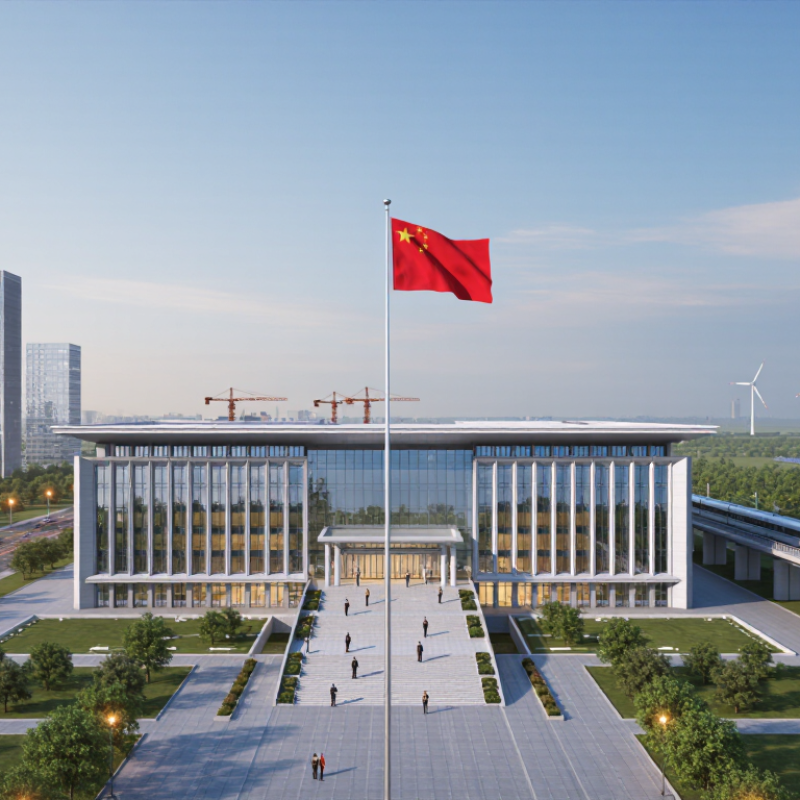
What Is the National Development and Reform Commission?
The National Development and Reform Commission is a central government department in China. Its institutional role is broader than ordinary economic administration. It studies national economic trends, prepares development strategies, and coordinates major reforms across government departments. Its work often connects annual plans with long-term goals, such as regional development, infrastructure capacity, energy security, and public investment.
The commission also reviews selected investment projects and helps guide the use of public resources. In practice, this may involve examining a proposed railway, an energy facility, or a large regional development plan. It can coordinate different interests before a project moves forward. It also monitors important prices and supports policies designed to maintain stable economic conditions. These responsibilities require data, consultation, and careful judgment.
Its role is powerful, but not always easy to observe. Policy documents may explain targets clearly while offering fewer details about local implementation. That gap deserves attention. A useful assessment should compare official plans with measurable results, funding arrangements, and effects on households or businesses. The commission is therefore both a planning institution and a coordination mechanism. Its effectiveness depends on accurate information, realistic timelines, and cooperation between national and local authorities. Mistakes can happen. They should be examined openly rather than hidden behind broad economic language.
Economic reform changed its responsibilities. In 1998, the State Planning Commission became the State Development Planning Commission. This adjustment reflected a gradual move from detailed production control toward strategic guidance. In 2003, the present commission was created through a broader administrative restructuring. Its role expanded to include macroeconomic planning, major investment projects, price management, and regional development.
The evolution was not perfectly linear. Some functions moved between departments as markets became more influential. The commission increasingly worked with provincial governments, financial authorities, and sector regulators. Its five-year plans began to emphasize innovation, infrastructure, urbanization, energy security, and environmental goals. These plans were not simple schedules. They became policy frameworks linking national targets with local implementation.
In practice, the commission operates between political direction and economic evidence. Officials examine growth data, investment risks, regional differences, and public needs before recommending policies. That process can be difficult. Targets may conflict with local conditions, and administrative approval can slow decisions. Still, the commission’s history shows a clear transformation: from direct economic planning toward broad coordination in a more complex market system.
The National Development and Reform Commission, or NDRC, coordinates China’s economic and social planning. Its work connects national strategies with decisions on investment, prices, energy, regional development, and public services. It helps prepare medium- and long-term plans. It also monitors whether major projects support national priorities. The 14th Five-Year Plan links economic growth with innovation, urban development, and resource efficiency.
Its influence appears in major economic indicators. China’s National Bureau of Statistics reported 5.0% GDP growth in 2024. Fixed-asset investment increased by 3.2% during the same year. These figures show the scale of policy coordination. They do not explain every local outcome. The NDRC also guides pricing reforms and reviews large investment proposals. The International Energy Agency identifies China as the world’s largest electricity consumer. Energy planning therefore remains highly consequential.
Still, measurement is imperfect. A project may meet its budget but miss local social needs. Numbers need context. Policy targets can also encourage narrow performance reporting. Careful analysis should compare official targets, implementation data, and public outcomes.
What Is the National Development and Reform Commission?
Organizational Structure and Policy Coordination Mechanisms
The National Development and Reform Commission is China’s central economic planning and coordination body. Its structure links macroeconomic planning, investment approval, regional development, energy policy, and price management. Specialized departments examine different policy areas, while the commission’s general offices connect research, implementation, and monitoring. This arrangement gives policymakers a wider view of economic trade-offs.
Coordination happens through five-year plans, annual economic assessments, project reviews, and interdepartmental policy meetings. The commission also works with local governments and sector regulators before major measures are implemented. This matters when investment, employment, energy security, and regional inequality overlap. The World Bank’s December 2024 China Economic Update projected 4.5% growth for 2025. Such a forecast shows why policy timing and coordination remain important.
Data must move across administrative levels.
The commission often uses economic indicators, including fixed-asset investment, consumer prices, industrial output, and employment trends. The National Bureau of Statistics reported that China’s fixed-asset investment increased by 3.2% in 2024, excluding rural households. That figure may look modest, but its policy meaning differs across regions and industries. The OECD Economic Outlook, released in late 2024, also emphasized weaker domestic demand and continuing property-sector pressures. Coordination can reduce contradictory signals, yet it is not flawless. Local implementation may vary, and some policies need revision after real-world feedback. That practical gap deserves closer study.
What Is the National Development and Reform Commission?
The National Development and Reform Commission shapes China’s investment priorities, reform agenda, and long-term development strategies. It coordinates national plans, reviews major infrastructure projects, and guides capital toward transport, energy, technology, and regional development. Its influence is often visible at construction sites: new rail lines, industrial parks, and energy facilities reflect broader policy decisions.
Investment is not only about spending more. It is about directing funds toward higher productivity. Official data showed fixed-asset investment grew by 3.0% in 2023, while private investment weakened. This contrast highlights a difficult policy balance. Public projects can support demand, but excessive dependence may reduce market efficiency. The Commission therefore promotes reforms that improve private participation, infrastructure quality, and resource allocation.
Its strategic role also matters during slower growth. The International Monetary Fund projected China’s growth at 4.6% in 2024 and 4.5% in 2025. The World Bank gave a similar warning about weaker domestic demand and property-related pressure. These reports make reform more urgent. The Commission must connect short-term investment with longer-term goals, including innovation, urban development, and lower-carbon growth. Results are uneven. Policy coordination can be powerful, yet implementation differs across regions. That gap deserves closer scrutiny.
| Data Dimension | Verified Fact or Indicator | Role and Practical Significance | Reference Period or Legal Basis |
|---|---|---|---|
| Institutional status | 国家发展和改革委员会 (National Development and Reform Commission, NDRC) is a macroeconomic management department under the State Council of the People’s Republic of China. | It coordinates national economic and social development policies and acts as an important link between long-term strategy, annual planning, and implementation. | Current institutional framework |
| Establishment | The NDRC was established in March 2003 during the restructuring of the State Council. | Its formation consolidated major national planning and macroeconomic coordination functions into a central government department. | March 2003 |
| Institutional predecessor | The NDRC succeeded the former State Planning Commission, which was established in 1952 and later renamed the State Development Planning Commission in 1998. | The institutional evolution reflects a shift from a predominantly planning-based system toward broader development coordination and market-oriented reform management. | 1952, 1998, and 2003 milestones |
| National development planning | The commission participates in drafting national economic and social development plans, including Five-Year Plans and annual national development plans. | These plans set strategic priorities for economic growth, regional development, public services, infrastructure, innovation, and environmental objectives. | Five-Year planning system |
| Investment management | The NDRC manages investment approval, verification, and record-filing procedures for projects within the scope prescribed by national regulations. | Its investment-management role helps align major projects with national strategies, industrial policies, land-use requirements, energy objectives, and public-interest considerations. | Government investment and enterprise investment regulations |
| Government investment | The Government Investment Regulations provide a legal framework for the administration of government-invested projects, including project proposals, feasibility studies, and investment decisions. | The framework is intended to improve project quality, strengthen budget discipline, and reduce inefficient or unnecessary public investment. | Regulations effective from July 2019 |
| Private and social investment | The commission promotes the participation of private and other social capital in areas encouraged by national policy, subject to applicable laws and sector requirements. | This supports the expansion of investment channels and encourages market-based participation in infrastructure and public-service projects. | Public-private cooperation and investment-promotion policies |
| Price regulation | The NDRC and its price authorities are responsible for important price-monitoring, price-policy, and price-supervision functions within the national administrative system. | Price-related policies can affect household costs, public utilities, energy markets, transportation services, and market expectations. | Price Law and related administrative rules |
| Market-oriented reform | The commission researches and coordinates reforms relating to economic institutions, investment systems, pricing mechanisms, and market access. | Its influence extends beyond direct administration because reform measures can change the operating environment for investment, resource allocation, and competition. | Ongoing national economic reform agenda |
| Regional development | The NDRC coordinates or participates in major regional strategies, including coordinated regional development and the development of designated economic regions. | Regional strategies guide infrastructure connectivity, public-service coordination, industrial distribution, and balanced development between regions. | National regional development policies |
| Economic security and resilience | The commission contributes to policy coordination concerning important economic and strategic resources, supply security, and national economic resilience. | This function supports the assessment of external risks, critical supply conditions, and the stability of major economic systems. | Current macroeconomic governance framework |
| Energy and climate policy | The NDRC participates in national energy planning, energy-transition coordination, and implementation of major carbon-reduction strategies. | Its policies influence energy efficiency, renewable-energy development, emissions reduction, and the structure of long-term investment. | National carbon-peaking and carbon-neutrality strategy announced in 2020 |
| Public consultation and transparency | The commission publishes policy documents, investment information, price information, development plans, and selected consultation materials through official government channels. | Public disclosure improves policy visibility and helps investors, researchers, local authorities, and the public understand regulatory direction. | Government information disclosure framework |
| Influence on investment decisions | NDRC policies and procedures can affect project eligibility, approval pathways, strategic alignment, construction timing, and policy expectations. | Investors commonly assess national plans, sector guidance, regional strategies, and project-management rules before committing capital. | Applicable policy and project category |
| Overall strategic impact | The commission combines planning, reform coordination, investment management, price-policy, and regional-development responsibilities. | This combination gives the NDRC substantial influence over the direction, sequencing, and policy environment of national development, although implementation is shared with other central departments and local governments. | Summary of institutional functions |
USA / Americas
1507 Capital Ave, Suite 102
Plano, TX 75074
+1 (214) 838-7010
8:00am – 5:00pm (GMT-6)
Australia / Asia Pacific
503 Cross Keys Rd,
Cavan SA 5094
+61 8 7200 3909
9:00am – 5:00pm (ACDST)
© 2025 Green Frog Systems. | Privacy Policy | Terms & Conditions


