


Electricity networks are under pressure from rising demand, renewable generation, and new industrial loads. The International Energy Agency’s Electricity 2025 report says global electricity demand grew by 4.3% in 2024. Its World Energy Investment 2024 report also says annual grid investment needs to exceed $600 billion by 2030. These figures make substation planning a practical priority, not just a procurement task.
A Prefabricated Substation combines equipment such as transformers, switchgear, protection systems, and controls within a factory-built enclosure. For a utility, factory, mine, or renewable-energy site, this format can simplify transport and installation. But the right choice depends on actual site conditions. A unit that fits neatly on a drawing may still be difficult to deliver, ventilate, or maintain once installed.
This guide explains how to assess capacity, voltage levels, environmental ratings, safety provisions, and future expansion. It also covers standards, supplier capability, commissioning support, and lifecycle costs. Check details such as cable-entry direction, crane access, ambient temperature, and room for maintenance. Small omissions matter. IEC standards provide useful technical benchmarks, but they do not replace project-specific engineering or local requirements. There is no universal best configuration; sometimes, the simplest-looking option carries hidden compromises. The goal is a dependable substation that suits the load today and leaves sensible room for tomorrow.
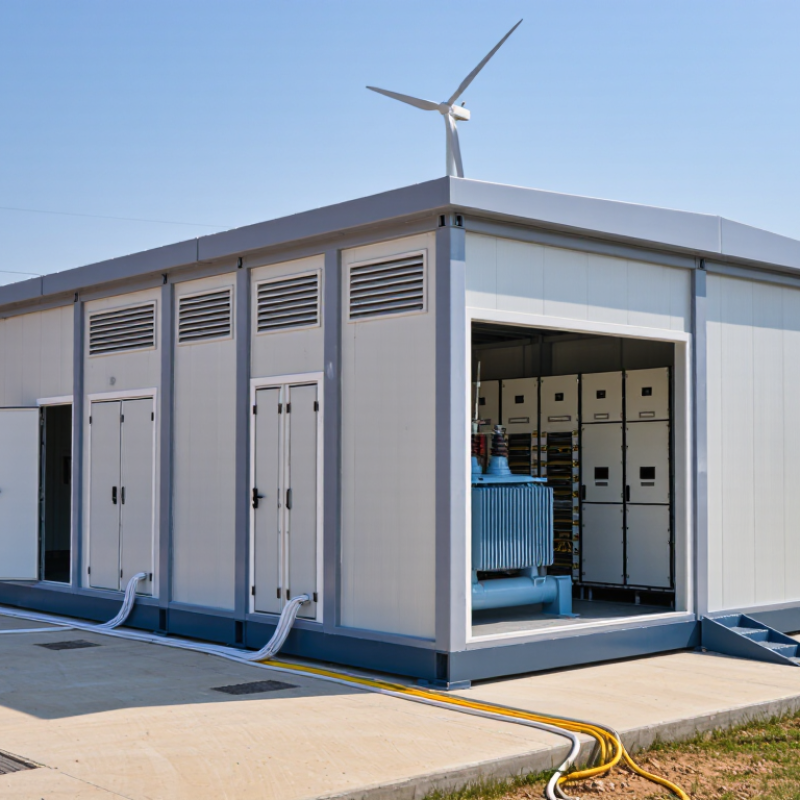
Before comparing prefabricated substations, define what the project must deliver. Record the required voltage levels, peak demand, expected load growth, and allowable outage time. A small workshop with seasonal machinery has different needs from a round-the-clock water facility. Check the short-circuit level and protection requirements with the project engineer; an incorrect assumption can affect equipment ratings and coordination.
Operating conditions matter just as much. Note the highest and lowest temperatures, altitude, humidity, dust, and exposure to salt or chemicals. A coastal site may need stronger corrosion protection, while a dusty agricultural site may require careful ventilation and filtration. Measure the available footprint, cable-entry direction, foundation level, and route for delivery vehicles. A site walk often catches details drawings miss, such as a narrow gate or a drainage channel beside the proposed pad. Small details matter.
Also define how technicians will inspect and service the unit. Specify safe working clearances, access doors, lighting, and whether maintenance must happen without interrupting nearby loads. Leave room for realistic expansion, but avoid paying for capacity the project may never use. Early load estimates are sometimes optimistic—or simply wrong. Recheck them against measured data where possible, and document any assumptions that remain uncertain.
How to Choose a Prefabricated Substation?
Match the Substation’s Capacity, Voltage, and Configuration
Start with the actual load, not a catalogue rating. List connected equipment, peak demand, motor-starting current, and expected expansion. Convert kilowatts to kilovolt-amperes using the site’s power factor, then check whether the transformer can handle short peaks without overheating. The IEA’s Electricity 2024 report forecast average global electricity-demand growth of 3.4% annually from 2024 to 2026. That figure is context, not a site forecast; local load data should drive the design. Leave a sensible growth margin, but avoid paying for capacity that may never be used.
Voltage must match both the utility supply and the facility’s equipment. Confirm primary and secondary voltages, grounding arrangements, and protection requirements with the utility and project engineer. Then select a configuration for the site: radial or loop feed, indoor or outdoor installation, and the required metering and switching access. A compact enclosure may fit a tight lot, but maintenance clearance still matters. I have seen layouts that looked efficient on paper and felt cramped once cable bends and service access were considered.
Tips: Ask for a load schedule and a one-line diagram before requesting quotations. Verify future expansion assumptions; they are often less certain than they first appear. Check site access, ventilation, and cable-entry direction early. A short review now can prevent a costly redesign later.
Start with a site walk, not just a drawing. Check ground capacity, slope, drainage, and the route from delivery truck to foundation. A compact unit can still be difficult to place if a gate, overhead cable, or soft shoulder blocks a crane. Measure turning space and lifting reach, then confirm foundation loads with a qualified engineer. Small details matter.
Climate affects enclosure and cooling needs. In hot, dusty locations, consider how filters, ventilation, and routine cleaning will work. Salt air may require appropriate corrosion protection. In cold regions, check snow loads, ice around doors, and condensation inside the enclosure. Use local design conditions rather than relying on a broad climate label. Weather is rarely tidy.
Reserve enough room for doors to open fully, cable bends, ventilation outlets, and maintenance access. Confirm cable entry points, trench depth, and connection sequence before manufacturing; changes later can add crane time and rework. Plan delivery around road limits and site readiness, including a level base and clear unloading area. A drawing may look perfect. The site may disagree. One overlooked drain can change the plan.
Assess site, climate, space, and installation constraints before selecting a substation configuration.
How to read this: Scores are an illustrative screening example on a 1–5 scale, not measured results or universal requirements. Confirm site conditions, local climate, equipment clearances, transport access, and applicable electrical codes for each project.
A prefabricated substation should be judged by more than its compact layout. Check how the enclosure handles weather, dust, and corrosion at your site. Ask how doors, access panels, and electrical interlocks prevent accidental contact with live parts. Grounding connections should be clearly documented and easy to inspect. If arc-related protection is specified, confirm its tested performance and limits; a label alone proves little.
Tips: Request certificates, test reports, and the exact standards edition used. Match them to local project requirements. Walk through the maintenance steps, too. Can a technician safely reach the switchgear without awkward lifting or blocked exits?
Equipment quality shows in details that are easy to overlook. Review transformer ratings, switchgear fault capacity, relay settings, cable terminations, and temperature-control arrangements. Ask for factory acceptance test records and clarify which components were tested together. A neat cabinet is reassuring, but it does not guarantee dependable operation. I would also compare spare-parts availability and service access. These details may feel tedious, yet they often matter more after installation than a polished sales drawing.
A prefabricated substation is more than a packaged enclosure; supplier support can affect commissioning, reliability, and repair time. Ask who reviews site drawings, coordinates protection settings, and answers technical questions after installation. Confirm the scope in writing, including factory testing, documentation, spare parts, and operator training. DOE’s Electric Grid Supply Chain Review reported that distribution transformer lead times had risen from roughly 3–6 months to 12–30 months. That figure is not a promise for every substation, but it shows why buyers should request a dated production schedule, component availability, and a realistic shipping plan.
Compare lifecycle costs, not just purchase prices. Include foundations, cable connections, commissioning, routine inspections, energy losses, replacement parts, and eventual disposal. The U.S. Department of Energy’s Federal Energy Management Program lifecycle-cost guidance also considers future costs and savings over an asset’s useful life. Ask suppliers to state their assumptions: service life, load profile, maintenance intervals, and energy prices. A neat spreadsheet can still miss site changes. A late utility connection can shift the whole schedule.
Tips: Request a support-response commitment and a list of required site preparations. Check the delivery milestones against your utility’s connection date. Compare maintenance tasks and estimated losses using the same operating assumptions. If a figure seems unusually low, ask what it leaves out.
Use this weighted checklist to compare proposals on a consistent basis. The weights are an example evaluation model, not an industry standard; adjust them to suit the project’s technical and commercial priorities.
| Evaluation Dimension | Weight | What to Verify | Comparable Evidence or Calculation |
|---|---|---|---|
| Technical compliance and design fit | 15% | Rated voltage, transformer capacity, frequency, protection, enclosure rating, operating environment, and applicable local standards. | Require a clause-by-clause compliance schedule, single-line diagram, equipment list, and clearly documented exceptions. |
| Engineering and commissioning support | 15% | Availability of design reviews, installation guidance, commissioning assistance, troubleshooting, and escalation contacts. | Confirm the named support roles, service hours, response-time commitments, site-support rates, and commissioning scope in writing. |
| Delivery schedule and logistics | 15% | Design approval, manufacturing, factory testing, shipping, site delivery, and installation milestones. | Compare a dated project schedule showing lead time from approved drawings, shipping assumptions, delivery responsibilities, and schedule contingencies. |
| Quality assurance and testing | 10% | Document control, inspection points, component traceability, factory acceptance testing, and test-record handover. | Request the inspection and test plan, sample test reports, factory acceptance test procedure, and defect-resolution process. |
| Warranty and remedies | 10% | Warranty duration, start date, covered components, exclusions, repair or replacement process, and travel or labor coverage. | Compare the actual contract terms; check whether coverage begins at delivery, commissioning, or another defined milestone. |
| Spare parts and long-term serviceability | 5% | Availability of critical spares, recommended stock, replacement-component compatibility, and service documentation. | Request a critical-spares list with indicative availability, pricing validity, and expected support arrangements over the planned service life. |
| Initial purchase and installation cost | 10% | Equipment price, engineering, testing, transport, unloading, installation interfaces, and commissioning charges. | Compare like-for-like scope and identify exclusions, optional items, taxes, currency assumptions, and site-work responsibilities. |
| Energy losses and operating cost | 8% | Transformer no-load and load losses, expected loading profile, energy price, and operating hours. | Use guaranteed loss figures and a common load profile. Estimate annual loss cost as annual loss energy (kWh) × electricity price per kWh. |
| Routine maintenance requirements | 5% | Inspection frequency, maintenance tasks, consumables, required shutdowns, and specialist labor needs. | Ask for the maintenance schedule, estimated labor hours, consumables list, and any special tools or training requirements. |
| End-of-life and replacement considerations | 7% | Disassembly access, material documentation, fluid handling where applicable, and removal or recycling responsibilities. | Clarify decommissioning scope, disposal obligations, and available material or equipment documentation; do not assume resale or salvage value. |
Scoring method: Rate each dimension from 1 (poor or insufficient evidence) to 5 (strong, well-documented evidence). Calculate the weighted result as score ÷ 5 × weight, then total the results. For lifecycle comparison, use the same study period and assumptions for every proposal: purchase and installation cost + discounted energy, maintenance, and service costs + end-of-life costs. Confirm all schedules, guarantees, and cost assumptions in the contract.
USA / Americas
1507 Capital Ave, Suite 102
Plano, TX 75074
+1 (214) 838-7010
8:00am – 5:00pm (GMT-6)
Australia / Asia Pacific
503 Cross Keys Rd,
Cavan SA 5094
+61 8 7200 3909
9:00am – 5:00pm (ACDST)
© 2025 Green Frog Systems. | Privacy Policy | Terms & Conditions


