2026 How to Choose the Best Aluminum Profile Extrusion?
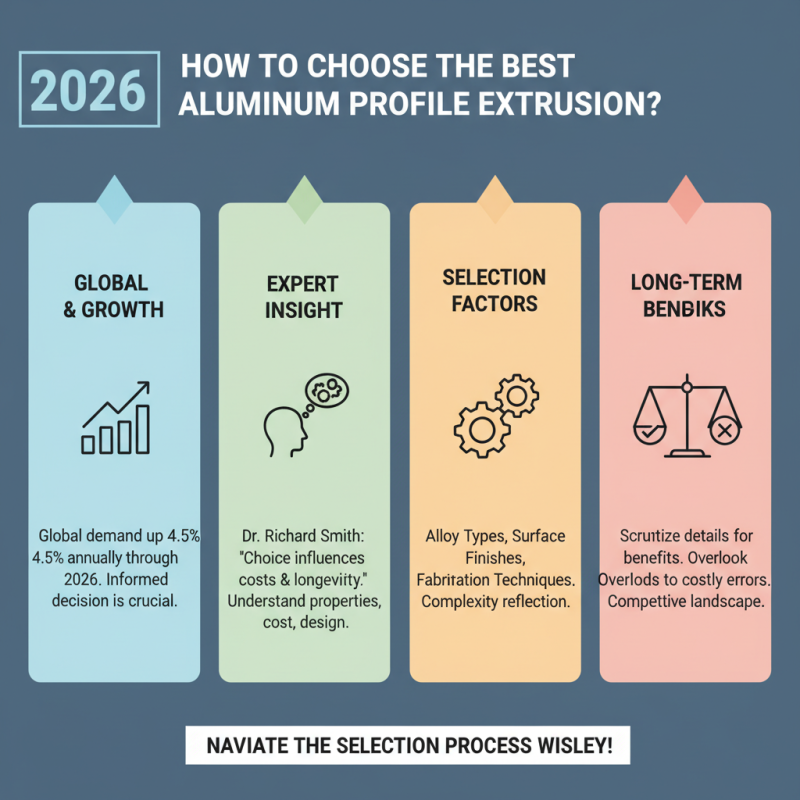
In the world of manufacturing, choosing the right Aluminum Profile Extrusion is crucial. As the industry evolves, so do the requirements for efficiency and sustainability. According to a report by the European Aluminium Association, the global demand for aluminum extrusions is expected to rise by 4.5% annually through 2026. This statistic emphasizes the importance of informed decision-making when sourcing aluminum profiles.
Experts in the field, such as Dr. Richard Smith, a leading figure in aluminum engineering, highlight, “The choice of aluminum profiles can significantly influence both production costs and product longevity.” This insight underscores the significance of understanding material properties, cost implications, and application-specific designs.
Navigating the selection process isn't straightforward. Factors like alloy types, surface finishes, and fabrication techniques can complicate decisions. It's essential to reflect on what will truly meet your project needs. Scrutinizing these details can lead to long-term benefits but often poses challenges. The landscape is competitive, and overlooking minor specifications might lead to costly errors in the future.
Understanding Aluminum Profile Extrusion: Basics and Applications
Aluminum profile extrusion is a key manufacturing process. It involves shaping aluminum alloys into specific cross-sectional profiles. This technique offers versatility, which is vital across various industries, including automotive, aerospace, and construction. According to a recent industry report from Smithers, the global aluminum extrusion market is expected to grow at a CAGR of 5.2% from 2021 to 2026. This growth underscores the increasing reliance on aluminum components in modern applications.
Understanding the basics of aluminum extrusion is crucial. The process begins with heating aluminum billets, followed by forcing them through a die. The result is a continuous length of aluminum profile with the desired shape. These profiles exhibit high strength-to-weight ratios, making them suitable for structural applications. Notably, the ability to customize profiles for specific needs enhances their usability.
Despite its advantages, several challenges exist. Not all aluminum alloys are suitable for extrusion. Selecting the wrong alloy can lead to defects. Moreover, variations in die design can affect the final product's tolerance and finish. Thorough knowledge of these details is essential for manufacturers to ensure quality and reliability in their extruded products. The industry must continually assess these factors to improve production efficiency and meet evolving market demands.
2026 How to Choose the Best Aluminum Profile Extrusion? - Understanding Aluminum Profile Extrusion: Basics and Applications
| Attribute | Description |
| Material Type | 6063 and 6061 are common aluminum alloys used for extrusions due to their excellent properties. |
| Profile Shape | Available shapes include standard, custom, and complex geometry profiles to meet various structural requirements. |
| Surface Finish | Options include anodizing, powder coating, mill finish, and polished, each impacting aesthetics and corrosion resistance. |
| Dimensional Tolerance | Defines the allowable deviations from specified dimensions, critical for ensuring proper fit and function in applications. |
| Load Capacity | Determined by profile design and size, essential for applications requiring strength and stability. |
| Application Areas | Common in construction, automotive, aerospace, and consumer goods for their lightweight and corrosion resistance. |
| Cost Consideration | Pricing varies based on extrusion complexity, finishing options, and order quantity. |
Key Factors to Consider When Selecting Aluminum Profiles for Your Projects
Choosing the right aluminum profile for your project can be daunting. There are many factors to weigh. Understanding these key elements can streamline your decision-making process.
Material properties play a critical role. Consider the strength and weight of the profiles. Some projects require lightweight options. Others need robustness to withstand heavy loads. Check the material grade for durability. You want profiles that can resist corrosion and environmental stressors.
Production capabilities are also significant. Think about the extrusion process. Different methods yield varied results in precision and finish. Profiles with finer tolerances may cost more, but they often save time in assembly. Quality control in manufacturing ensures consistent results, which is vital for large projects.
Tip: Always request samples before making a commitment. Testing the profiles in real conditions can reveal potential issues early. Don't overlook the importance of supplier reliability. An untrustworthy supplier can lead to delays, impacting your entire project timeline.
Analyzing the Strength and Durability of Various Aluminum Alloys
When selecting the best aluminum profile extrusion, understanding different aluminum alloys is crucial. Each alloy has unique characteristics, affecting strength and durability. For instance, 6061 aluminum is widely praised for its excellent mechanical properties. It provides good corrosion resistance and weldability, making it suitable for structural applications. However, it may not perform as well in extremely corrosive environments.
On the other hand, 6063 aluminum is often chosen for architectural applications due to its aesthetic appeal. This alloy offers a balance between strength and lightweight. Yet, while it excels in beauty, its strength might not meet the demands of heavy-duty applications. It's essential to consider the specific requirements of your project and the environment in which the aluminum will be used.
Another commonly used alloy is 7075, known for its superior strength. It is frequently used in aerospace applications where high strength is paramount. However, its susceptibility to stress corrosion cracking means it must be handled with care. Choosing the right aluminum alloy involves evaluating these strengths and weaknesses, ensuring your design does not compromise on performance or safety.
Cost Breakdown: How to Evaluate Aluminum Extrusion Pricing Effectively
Understanding the cost breakdown of aluminum extrusion is crucial for making informed decisions. Pricing can fluctuate due to various factors, including material quality and complexity of the design. Consider the alloy type, as it significantly influences costs. Certain alloys are more expensive but offer better durability.
Labor costs also play a role in overall pricing. The complexity of the extrusion process can increase labor expenses. Longer and more intricate profiles typically require more time and expertise. Also, consider delivery charges when evaluating total costs. Shipping delays can affect project timelines.
Lastly, evaluate the importance of service. A supplier with strong communication can offer a smoother experience. Always ask for samples when possible. This allows you to assess the quality before making a larger commitment. Reflect on previous experiences to improve your choices. Your past can guide you in finding the best partner for your needs.
2026 Aluminum Profile Extrusion Cost Breakdown
Trends in Aluminum Profile Extrusion: Innovations and Industry Standards
The aluminum profile extrusion industry is evolving rapidly. Recent innovations have introduced new manufacturing techniques. These advancements enhance product quality and efficiency. By adopting state-of-the-art extrusion processes, companies can meet diverse customer needs.
Sustainability is a key trend in this industry. Manufacturers are focusing on reducing waste during production. This not only lessens environmental impact but also optimizes resources. Using recycled aluminum is becoming standard practice. This shift reflects growing awareness and responsibility among industry players.
Emerging technologies, like 3D printing, are making waves. Integrating these methods with traditional extrusion opens up new possibilities. However, challenges remain in achieving uniform quality. The question of balancing innovation with cost efficiency is still under debate. It's an ongoing journey toward a more sustainable and efficient future in aluminum profile extrusion.