


Choosing an Outdoor Led Sign in 2026 requires more than comparing screen size and price. It involves visibility, weather resistance, energy use, service access, and content performance. A bright display may attract attention, but excessive brightness can waste energy and reduce viewing comfort. The best choice balances measurable performance with the site’s real conditions.
Industry data supports this growing focus. Grand View Research valued the global digital signage market at approximately $26.7 billion in 2023, with continued growth expected through 2030. PQ Media’s Global Digital Out-of-Home Forecast also identifies digital out-of-home media as a continuing growth area, driven by flexible content and measurable audience exposure. These reports indicate stronger demand for reliable displays, not simply larger screens. However, market forecasts vary. They should guide decisions, not replace site testing.
Look closely at the installation environment. A roadside sign may face direct sunlight, dust, wind, and temperature changes every day. Request measured brightness, pixel pitch, refresh rate, viewing distance, and power consumption. Confirm the cabinet’s outdoor protection rating, such as IP65, and review recognized electrical and structural certifications for your region. Ask how quickly modules, power supplies, and control cards can be replaced. Small details matter. A failed module above a busy entrance can disrupt communication and create avoidable maintenance costs.
This guide explains how to compare an Outdoor Led Sign for visibility, durability, operating efficiency, content control, and long-term value. Some recommendations will remain imperfect, because climate, traffic, budgets, and local requirements differ. Careful testing is still essential.
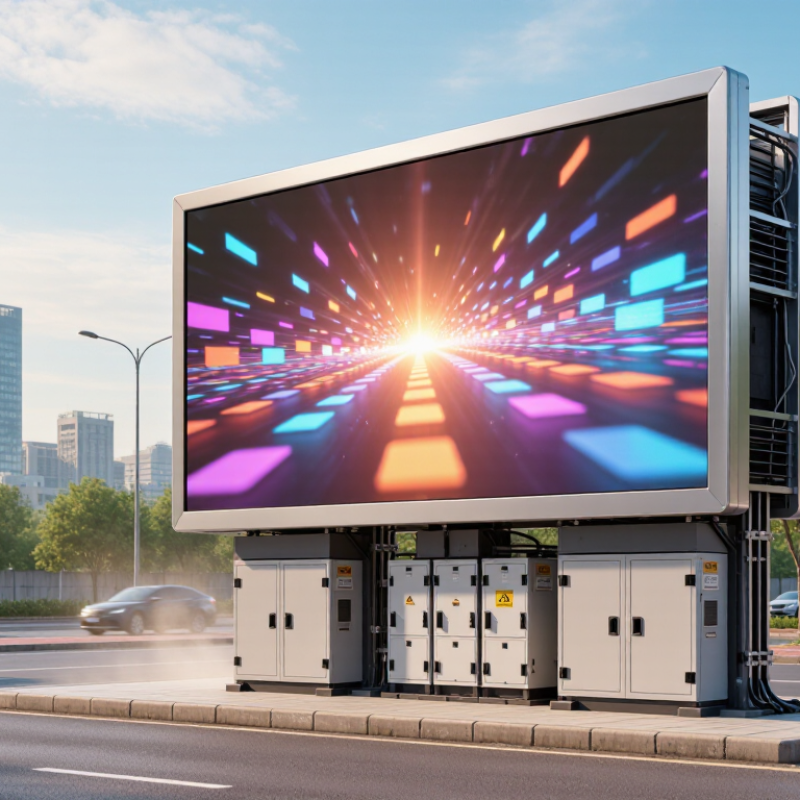
Choosing an outdoor LED sign starts with its job, not its pixel pitch. A roadside board needs rapid recognition. A retail sign may need product detail and changing promotions. A campus display may prioritize schedules and emergency messages. The purpose determines content length, brightness, resolution, and operating hours.
The viewing environment matters just as much. Measure the distance from the nearest viewer, vehicle speed, approach angle, and nighttime ambient light. A driver passing at 50 mph has limited reading time. Large characters and short messages usually outperform dense layouts.
The 2023 edition of the U.S. Federal Highway Administration’s Manual on Uniform Traffic Control Devices emphasizes legibility, contrast, and avoiding distracting displays near roads. Apply that principle carefully, even when your sign is not a traffic-control device.
Sunlight is unforgiving.
Choose automatic brightness control, but verify its nighttime setting on site. Excessive brightness wastes energy and can create glare. The U.S. Department of Energy’s 2024 Solid-State Lighting R&D Opportunities report identifies efficacy and thermal management as continuing LED performance priorities. Look for documented power consumption, operating-temperature limits, and weather protection. IP ratings describe water and dust resistance, not every installation risk.
Test a real message from the farthest viewing point. It may look perfect on a sample panel. Field conditions can disagree. The Outdoor Advertising Association of America reported $9.1 billion in U.S. out-of-home advertising revenue in 2023, showing the medium’s scale, but scale does not guarantee communication. A sign can be bright, sharp, and still poorly matched to its audience.
How to Choose an Outdoor LED Sign in 2026?
Outdoor LED signs demand more than a bright cabinet. Start by matching the display type to your message, location, and maintenance access. A full-color board suits changing promotions, schedules, and video. A single-color display may serve simple prices or opening hours. Fine-pitch panels show sharper detail, but they cost more and reveal image flaws. For roadside viewing, larger-pitch modules can remain readable and more economical. This is where many buyers over-specify.
Pixel pitch measures the distance between LED centers, in millimeters. Smaller pitch creates higher resolution at close range. It does not automatically improve distant readability. Estimate the nearest regular viewer, then compare that distance with the proposed pitch. A practical test helps: display actual artwork at life size and inspect it from the sidewalk or road. Do not judge from a laptop. I have seen crisp samples look weak outdoors because the text was too small.
Brightness should handle direct sunlight, clouds, and nighttime limits. Ask for measured brightness, automatic dimming, and stable viewing angles. Excessive brightness can wash out details and disturb nearby drivers or residents. A west-facing sign may need stronger daytime output than one under an awning. Viewing distance also depends on mounting height, traffic speed, text size, and contrast. Leave room for error. Weather, dust, and aging LEDs change performance. Request test data, service records, and an on-site sample before ordering. Specifications are not the whole story.
How to Choose an Outdoor LED Sign in 2026?
An outdoor LED sign must survive heat, rain, dust, and sudden temperature changes. Check the enclosure rating before comparing brightness. IEC 60529 defines IP65 as dust-tight protection against water jets, not flooding. Coastal sites may also need corrosion-resistant hardware and sealed cable entries. Ask for thermal-cycle, ultraviolet, and water-ingress test records. A confident sales claim is not enough.
Energy use deserves a measured calculation. The International Energy Agency reports that lighting uses about 15% of global electricity consumption. The U.S. Department of Energy has also projected major long-term savings from solid-state lighting in its Energy Savings Forecast. For signs, compare watts per square meter, not brightness alone. Include dimming schedules, nighttime curfews, and standby consumption. A bright sign running unnecessarily can waste more energy than expected.
Reliability depends on more than LED lifetime. Review operating-temperature limits, surge protection, power-supply access, drainage, and replacement procedures. LM-80 and TM-21 documents can support lumen-maintenance claims, but they do not prove complete-sign reliability. I once focused too heavily on advertised lifespan. That was incomplete. Field maintenance records, warranty conditions, and local service response matter more than impressive laboratory numbers. Choose a design that remains readable after rain, dust, and repeated winter starts.
| Evaluation Dimension | Compact Single-Sided Sign | Medium Single-Sided Sign | Large High-Brightness Sign | Double-Sided Sign | Selection Guidance |
|---|---|---|---|---|---|
| Typical display area | Approximately 0.7 m² | Approximately 2.9 m² | Approximately 4.5 m² | Approximately 5.8 m² total | Match the viewing distance, message length, and available mounting area before comparing electrical specifications. |
| Recommended enclosure rating | IP65 front and rear | IP65 front and rear | IP65 minimum; IP66 preferred for exposed sites | IP65 minimum on both display faces | IP65 protects against dust and water jets. It does not mean the sign can be submerged. |
| Corrosion protection | Powder-coated aluminum or treated steel; sealed cable glands | Powder-coated aluminum cabinet; stainless fasteners recommended | Aluminum cabinet with drainage channels and anti-corrosion coating | Sealed aluminum housings; stainless hardware for coastal locations | Use marine-grade fasteners and enhanced coating near salt water or industrial pollution. |
| Operating temperature target | Approximately −20°C to 50°C | Approximately −20°C to 50°C | Approximately −30°C to 50°C with active thermal management | Approximately −20°C to 50°C | Confirm the supplier's tested temperature range, especially for desert heat or freezing climates. |
| Estimated maximum power draw | About 100 W | About 250 W | About 400 W | About 500 W total | Use maximum draw for circuit sizing; actual consumption is usually lower when brightness is automatically reduced. |
| Illustrative annual electricity use | About 438 kWh/year | About 1,095 kWh/year | About 1,752 kWh/year | About 2,190 kWh/year | Calculated at maximum rated power for 12 hours per day and 365 days per year; real use varies with content and dimming. |
| Brightness control | Ambient-light sensor recommended | Automatic dimming strongly recommended | Automatic dimming and scheduled brightness profiles required | Independent brightness monitoring for each face preferred | Dimming improves night-time legibility, reduces glare, and lowers energy use. |
| Thermal management | Passive ventilation or heat spreading | Aluminum heat sink and airflow path | Oversized heat sinks; temperature monitoring; fans only when adequately protected | Separate thermal paths for front and rear modules | Lower internal temperature generally supports longer component life and fewer brightness-related faults. |
| Expected LED service life | Up to approximately 100,000 hours under rated conditions | Up to approximately 100,000 hours under rated conditions | Typically specified up to approximately 100,000 hours; heat and drive current are critical | Up to approximately 100,000 hours under rated conditions | This is an LED degradation rating, not a guarantee that the complete sign will operate maintenance-free for that period. |
| Power quality protection | Surge protection and fuse protection | Surge protection, grounding, and over-temperature shutdown | Coordinated surge protection, grounding, and circuit isolation | Separate protection for each display face | A qualified electrician should size grounding, disconnects, and surge protection for the installation. |
| Recommended maintenance interval | Visual inspection every 6–12 months | Inspection and cleaning every 6–12 months | Inspection at least every 6 months in dusty or coastal areas | Inspection every 6 months; check both faces and all seals | Shorten the interval where dust, salt, vibration, or severe weather is present. |
| Operating reliability score | 4.2 / 5 | 4.4 / 5 | 4.0 / 5 | 4.1 / 5 | Indicative planning score based on enclosure protection, thermal control, electrical safeguards, service access, and component redundancy. |
Notes: Values are practical planning benchmarks for generic outdoor LED sign configurations, not product guarantees. Annual energy calculations use maximum rated power × 12 operating hours per day × 365 days. Verify the final IP rating, electrical load, wind-load certification, operating-temperature range, local installation code requirements, and warranty terms before purchase.
Choosing an outdoor LED sign in 2026 starts with the installation site, not the screen size. Measure viewing distance, wall strength, wind exposure, and available power before comparing specifications. A sign near a coastal road may need stronger corrosion protection and sealed cable entries. Drainage matters too. Trapped water causes quiet, expensive damage.
Ask how content will be controlled each day. A secure cloud dashboard can support scheduled messages, user permissions, and remote health alerts. Local control is useful when internet service is unstable. Set brightness through an ambient-light sensor, but test it at night. Excessive brightness wastes energy and may disturb nearby properties. Confirm supported file formats, approval workflows, and emergency override access. Keep passwords unique. Small details prevent awkward mistakes.
Maintenance requirements should be written into the purchase plan. Check cabinet seals, cooling fans, mounting bolts, and cable glands at scheduled intervals. Clean the display with approved methods, never abrasive tools or excessive water pressure. Keep spare modules and power supplies available if downtime matters. In my field experience, teams often underestimate access equipment and technician travel costs. I have also seen automatic brightness settings perform poorly after installation because nearby lighting changed. That is a useful reminder: test the sign in real conditions, then review its performance after rain, heat, and several weeks of operation.
Choosing an outdoor LED sign in 2026 starts with a realistic budget, not the brightest display available. Include purchase, installation, permits, electricity, software, cleaning, and future repairs. A cheaper cabinet may use more power or make module replacement difficult. That mistake becomes expensive after several rainy seasons. Ask for a written warranty, expected lifespan, spare-part availability, and service response times. Request measured brightness data, not vague claims. Local experience matters here.
Tips: Compare three complete quotations. Check pixel pitch from the viewing distance. Inspect cable seals and drainage paths. Ask whether technicians can replace one failed module without removing the whole sign. Leave room for price changes. I once underestimated lift equipment costs, and the installation budget suffered.
Compliance protects both people and your investment. Confirm local planning permission, electrical certification, structural calculations, and brightness rules before ordering. The sign should suit wind, rain, dust, and temperature changes in its location. Look for a suitable ingress-protection rating, corrosion-resistant materials, automatic brightness control, and safe shutdown features. Use a qualified installer for power connections and mounting. Keep inspection records and maintenance instructions. Some suppliers promise ten-year performance, but actual results depend on heat, operating hours, and maintenance. Read the exclusions carefully. A long warranty is not always a strong warranty.
Set a realistic budget and prioritize compliance, weather resistance, visibility, and long-term operating value.
This illustrative planning model allocates a typical outdoor LED sign budget across the major cost areas. Hardware and installation usually represent the largest share, while permits, electrical work, control systems, and maintenance reserves help protect long-term performance and compliance.
USA / Americas
1507 Capital Ave, Suite 102
Plano, TX 75074
+1 (214) 838-7010
8:00am – 5:00pm (GMT-6)
Australia / Asia Pacific
503 Cross Keys Rd,
Cavan SA 5094
+61 8 7200 3909
9:00am – 5:00pm (ACDST)
© 2025 Green Frog Systems. | Privacy Policy | Terms & Conditions


