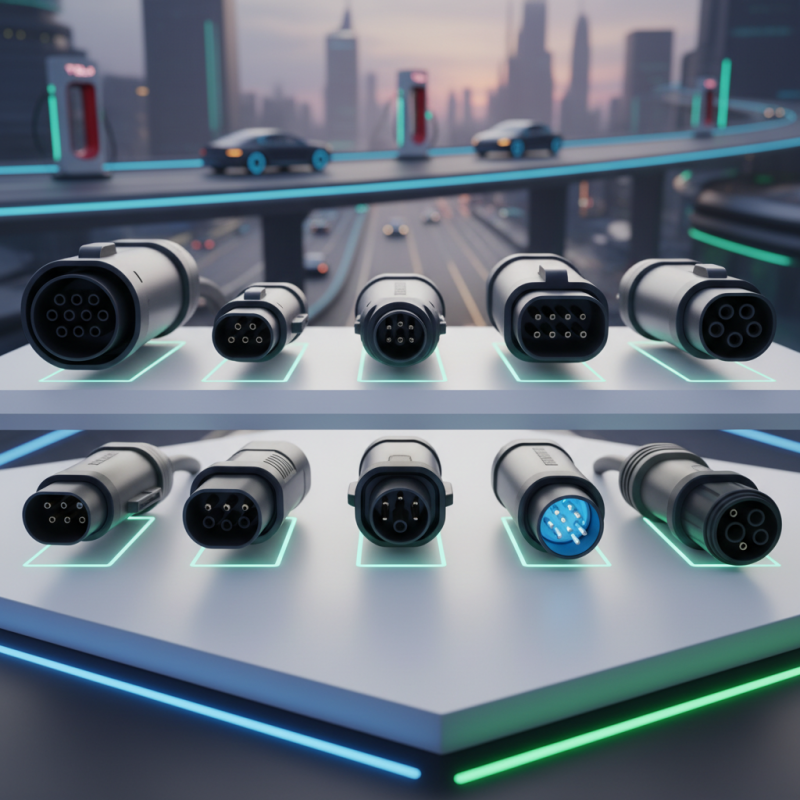
Top 10 Dc Charging Connector Types for Your Electric Vehicle?
As electric vehicles (EVs) become more prevalent, understanding the various Dc Charging Connector types is essential. A DC charging connector is vital for fast charging and efficient energy transfer. In this article, we will explore the top ten DC charging connectors available in the market today.
With many options, it is crucial to recognize the differences among connector types. Each connector has unique specifications and applications. Knowing which connector suits your vehicle can enhance your charging experience and overall efficiency.
Yet, navigating this landscape can be overwhelming. Not every connector is compatible with every EV model. Misunderstanding these differences may lead to inconvenience and frustration. By shedding light on the top DC charging connectors, we aim to equip you with the knowledge needed for informed choices.
Understanding DC Charging: What Makes It Different?
DC charging offers a unique solution for electric vehicle (EV) owners. It delivers power directly to the battery, enabling faster charging times compared to AC charging. According to the International Energy Agency (IEA), DC fast chargers can provide up to 80% charge in just 30 minutes. This is a game changer for users seeking to minimize downtime while on the road.
Understanding DC charging reveals several connector types, each designed for specific EV models and regional standards. The predominant connectors include CCS, CHAdeMO, and Tesla's proprietary design. In 2022, the IEA reported that the number of DC fast chargers worldwide surpassed 40,000. This growth reflects a clearer direction in infrastructure development, as more consumers demand rapid charging solutions. However, the diversity of connectors can lead to confusion among users, highlighting the importance of standardization in the industry.
Despite advancements, challenges remain. Many public charging stations still lack adequate accessibility or are concentrated in urban areas. This can deter potential EV buyers who fear limited charging options. A report by the U.S. Department of Energy indicates that as of early 2023, significant gaps exist in rural charging infrastructure. Bridging this gap will require collaborative efforts among stakeholders to ensure a comprehensive charging network for all.
Overview of Common DC Charging Connector Types
Electric vehicle (EV) charging is evolving rapidly. Understanding the common types of DC charging connectors is crucial for both consumers and industry stakeholders. Currently, there are several widely adopted connector types, with CCS (Combined Charging System) and CHAdeMO leading the pack. CCS has seen significant growth due to its integration with European and American standards. Reports indicate that CCS accounts for over 66% of global DC fast charging stations as of 2023.
CHAdeMO, originating from Japan, represents another significant connector type. It is particularly popular among certain EV models. While it captures a smaller share of the global market, its focus on high-speed charging provides compelling advantages. Additionally, Tesla utilizes its proprietary charging system, which poses a unique challenge for interoperability. The market is increasingly recognizing the necessity for standardized solutions, as current fragmentation can confuse EV drivers.
Emerging connectors, like the GB/T in China, reflect regional differences in charging infrastructure. Research shows that regions with standardized connectors experience faster adoption rates. However, the variety of connector types may slow the transition to a unified EV charging ecosystem. The ongoing development in this sector emphasizes the need for collaboration among stakeholders to enhance reliability and convenience for users.
Comparative Analysis of CCS, CHAdeMO, and Tesla Connectors
When it comes to electric vehicle (EV) charging, selecting the right connector is crucial. The CCS (Combined Charging System) is widely adopted in Europe and North America. It supports both AC and DC charging, making it versatile. CCS is known for its high charging speeds, reaching up to 350 kW. This allows for quicker refueling on long trips. However, the varying standards can be confusing for consumers.
Another popular option is CHAdeMO, initially developed for faster DC charging in Japan. It has a strong presence in Asia and some parts of Europe. CHAdeMO connectors support high currents and can charge vehicles up to 62.5 kW. Yet, the connector’s larger size can pose challenges for some users, especially in tighter charging stations. It is essential to ensure compatibility with your EV.
Tesla connectors are distinct in their design and function. They enable fast charging for Tesla vehicles and use its unique Supercharger network. While this system offers a seamless experience for Tesla owners, it does create limitations for other EVs. Some users express concern over the proprietary nature of these connectors. Each charging system has strengths and limitations, requiring careful consideration from EV owners.
Key Features and Benefits of Each Charging Connector Type
Electric vehicle (EV) charging connectors vary widely. Understanding their key features can boost your charging experience. The Combined Charging System (CCS) is common. It supports AC and DC charging. This versatility makes it a favorite for many EV users. According to a 2022 report by the International Energy Agency, CCS connections deliver peak power from 50 kW to over 350 kW. This gives drivers the flexibility to charge quickly.
Another popular connector is the CHAdeMO standard. It originated in Japan and is known for its reliability. Those connectors support fast DC charging. However, they generally have a lower power output compared to CCS. Many EV owners appreciate this type due to its compatible networks. But, as the industry evolves, some might find limited station availability. Such information could impact usability and convenience.
The Tesla connector is designed for Tesla vehicles, offering supercharging capabilities. It's user-friendly and supports high charging speeds. Despite this, it raises questions about compatibility. Owners of non-Tesla EVs may find it challenging to access the same fast charging network. Industry trends suggest a push towards standardization, which could address these issues. The evolution of charging technologies is significant. Newer connector types are emerging, aiming to enhance the charging landscape further.
Choosing the Right Connector for Your Electric Vehicle Needs
Choosing the right connector for your electric vehicle (EV) needs is crucial. There are several types of DC charging connectors available. Each type has its advantages and specific use cases. Understanding these can enhance your charging experience.
According to recent studies, about 90% of EV users prioritize charging speed. The CCS (Combined Charging System) connector is popular in North America and Europe. It supports fast charging up to 350 kW. However, some users might struggle with compatibility issues in different regions. The CHAdeMO connector is another option. It has earlier adoption, offering charging speeds up to 62.5 kW. While it's reliable, it is less common in new models.
As charging infrastructure expands, the choice becomes complex. Some EV owners may find themselves confused between connectors. Data indicates that 60% of EV owners switch connectors due to accessibility issues. It's essential to review charging networks in your area. Consider the type of connector that best suits your lifestyle. A mismatch in connector type can lead to longer wait times for charging. The right connector not only meets your car's technical requirements but also fits your daily needs.
Top 10 DC Charging Connector Types for Your Electric Vehicle
| Connector Type | Power Rating (kW) | Voltage (V) | Compatibility | Charging Speed (km/h) |
| CHAdeMO | 50 | 500 | Nissan, Mitsubishi | 200 |
| CCS Type 1 | 150 | 400 | Ford, GM, BMW | 300 |
| CCS Type 2 | 350 | 800 | Volkswagen, Audi | 400 |
| Tesla Supercharger | 250 | 480 | Tesla Models | 300 |
| GB/T | 120 | 380 | Chinese Manufacturers | 250 |
| NEMA L14-30 | 30 | 240 | Various | 80 |
| Type 2 | 22 | 400 | European EVs | 120 |
| J1772 | 7.2 | 240 | US Market | 40 |
| Mennekes | 22 | 400 | European EVs | 120 |
| UK Commando | 32 | 400 | UK Market | 70 |