


Temporary & Portable Solar Lighting
How to Choose the Right Lithium Battery Inverter
Choosing a Lithium Battery Inverter is not just a matter of matching a voltage label. The right unit must work with your battery’s specifications, daily loads, and installation conditions. A mismatch can lead to nuisance shutdowns, limited charging, or equipment that never performs as expected.
Start with the battery’s nominal voltage and its manufacturer’s approved charging range. Then compare the inverter’s continuous output with the appliances you plan to run. A refrigerator may draw more power briefly when its compressor starts, so surge capacity matters too. Check the inverter’s charging profile and confirm that it suits the battery chemistry and battery management system (BMS). Some systems communicate directly; others rely on carefully configured settings. Do not assume compatibility from a connector or product name alone.
Measure real needs. Not guesses.
Installation details deserve equal attention. Cable size, ventilation, ambient temperature, and protective devices affect safe, dependable operation. A quiet inverter can still run hot in a cramped cupboard, and long, undersized cables can cause voltage drop. Review the manufacturer’s documentation, warranty conditions, and recommended installation practices. When specifications are unclear, ask the battery and inverter manufacturers or a qualified installer to confirm them before purchase.
Even a well-planned system can reveal an overlooked load or setting after installation. That is worth admitting: sizing estimates are only as good as the information behind them. This guide explains the key comparisons, compatibility checks, and practical trade-offs that help you choose a Lithium Battery Inverter with fewer surprises and a clearer understanding of what your system can reliably do.
Identify Your Lithium Battery System Requirements
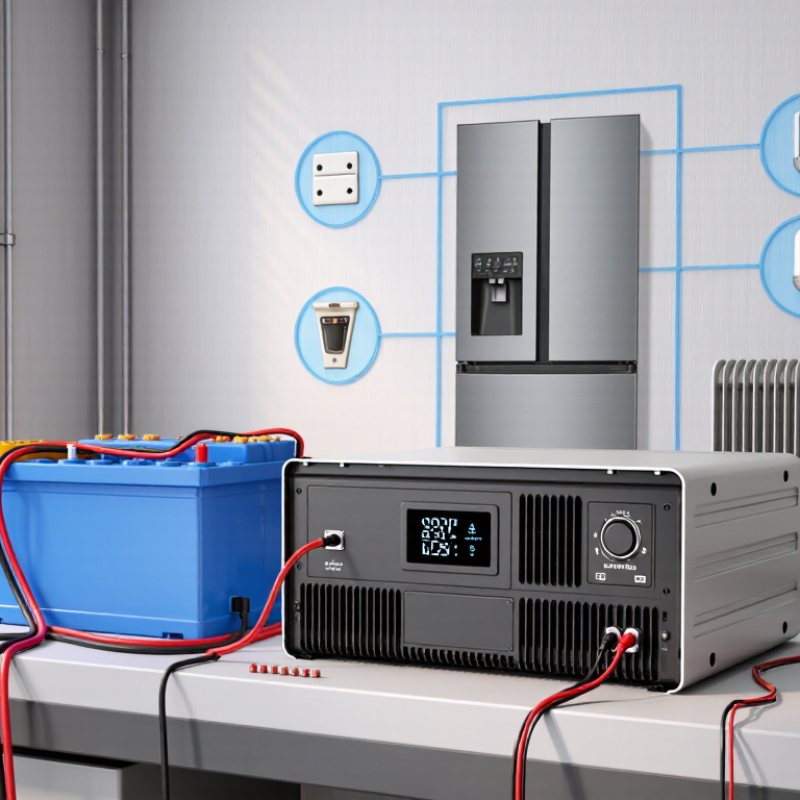
Identify the battery’s nominal voltage, usable capacity, continuous discharge limit, and peak output before comparing inverters. A 48-volt battery cannot connect directly to a 12-volt inverter. Check the battery manual for its permitted charge and discharge currents; these limits matter more than a large capacity number. For example, a 5-kilowatt inverter drawing from a 48-volt bank needs over 100 amps before conversion losses. Thin cables or a low battery-current limit can trigger shutdowns. Small detail. Big consequence.
List the loads that must run together, then note their startup surges. Refrigerators, pumps, and compressors may briefly demand much more power than their running ratings. Size the inverter for both continuous demand and surge duration, not just the total wattage printed on appliances. Also decide whether the system needs backup operation, solar charging, or grid charging. Confirm the inverter’s battery-voltage range, charging profile, and communication compatibility with the battery. A spec sheet can still mislead; I would verify these values against both manuals.
Account for conversion losses when estimating runtime. NREL’s 2024 Annual Technology Baseline uses about 85% round-trip efficiency for utility-scale battery storage. That figure is a planning reference, not a guarantee for a home system; temperature, inverter loading, and wiring change real results. Leave a practical reserve rather than assuming every rated kilowatt-hour is available. A qualified installer can check cable sizing, protective devices, and ventilation for the actual setup. I’d revisit the load estimate after measuring real use, because guesses are often optimistic.
| Requirement | What to Check | Practical Example or Selection Guideline |
|---|---|---|
| Battery chemistry and system voltage | Check the battery label or specification sheet for chemistry, nominal voltage, operating voltage range, and permitted charge voltage. The inverter’s DC input range must suit the complete battery pack. | Lithium iron phosphate (LFP) packs commonly use nominal voltages such as 12.8 V, 25.6 V, or 51.2 V. These are typical values, not substitutes for the battery’s specified operating limits. Do not assume that every lithium battery uses the same voltage profile. |
| Continuous AC output power | List the appliances that may run at the same time and add their running watts. Check the inverter’s continuous rating under the expected installation and temperature conditions. | If simultaneous loads total 2,400 W, choose an inverter rated to supply at least that continuous load, with additional headroom where practical. Appliance nameplate ratings and manufacturer guidance should take precedence over estimates. |
| Surge power | Identify loads with motors or compressors, such as pumps, refrigerators, and power tools. Compare their starting demand and duration with the inverter’s surge rating. | A suitable inverter must support both the required surge wattage and its duration. A high peak rating alone may not be enough if the load needs that power for longer than the inverter permits. |
| Battery discharge current | Confirm that the battery’s BMS continuous-discharge rating, cabling, and protective devices can supply the inverter’s DC input current. | Approximate DC current = AC output power ÷ inverter efficiency ÷ battery voltage. For a 3,000 W load at 90% efficiency from a 48 V battery, the estimate is about 69 A (3,000 ÷ 0.90 ÷ 48). Actual current varies with voltage, load, and inverter performance. |
| Usable battery energy | Estimate daily energy use in kilowatt-hours and account for the battery’s permitted depth of discharge, inverter losses, and any required reserve. | As a simple estimate, 4 kWh of required usable battery energy at an 80% permitted depth of discharge would require 5 kWh nominal capacity (4 ÷ 0.80), before allowing for conversion losses or a backup reserve. Use the battery maker’s limits. |
| Charging profile and charge current | Check that the inverter or charger supports the battery’s specified charge-voltage limits, charge-current limit, and lithium charging instructions. | Set charging values from the battery documentation rather than applying generic lead-acid settings. Confirm that the charger’s maximum current does not exceed the battery’s permitted charge current. |
| BMS communication and protection | Determine whether the battery requires communication with the inverter, such as CAN or RS-485, or can operate with correctly configured voltage and current limits. | Check the supported communication protocol, wiring, and configuration requirements. A communication port alone does not guarantee compatibility; the inverter and battery must support the same protocol and operating functions. |
| AC output and installation type | Match the inverter’s AC voltage, frequency, phase, and intended use to the site and electrical loads. Confirm whether the system is standalone, grid-connected, or designed for backup operation. | For example, a system intended for a 230 V, 50 Hz single-phase supply needs an inverter configured for that supply. Grid connection and backup circuits may require additional equipment and approved installation practices. |
| Expansion and parallel operation | Check whether the battery system and inverter allow additional battery modules or parallel inverter operation, and review any limits on quantity, configuration, or firmware. | Do not assume that batteries can be mixed freely. Confirm that added modules have compatible specifications and are approved for the existing system configuration. |
| Temperature and operating environment | Review the battery and inverter operating-temperature ranges, ventilation needs, enclosure rating, and any low-temperature charge restrictions. | Some lithium batteries restrict or stop charging at low temperatures. If the system may operate in cold conditions, follow the battery manufacturer’s instructions for temperature monitoring, heating, or charge inhibition. |
| Cabling, fusing, and compliance | Size DC cables and protective devices for the system voltage, current, cable length, installation conditions, and applicable electrical requirements. | Use the inverter and battery installation manuals and local electrical codes. Have system protection, grounding, and grid-connected work reviewed or installed by a qualified professional where required. |
