


Temporary & Portable Solar Lighting

How to Choose the Right Energy Storage Connector

Choosing the right Energy Storage Connector is not a cosmetic decision. It affects current flow, temperature rise, installation time, and long-term maintenance. A connector that looks robust on a product sheet may still be difficult to handle in a crowded battery enclosure. Fit, polarity protection, contact resistance, and cable size all deserve close attention. Small details matter.

An illustrative expert voice for this guide—not a quotation from a sourced interview—is energy-storage connector specialist Alex Morgan: “Choose for the real operating conditions, not just the rated current.” That means checking the system’s voltage and current, expected temperature range, vibration exposure, ingress protection needs, and mating cycles. It also means reviewing how technicians will reach and disconnect the connector. A gloved hand, a tight bend in the cable, or a barely visible polarity mark can change the practical choice. Ratings matter. So does the installation.

This introduction sets up a clear framework for comparing connector types, materials, safety features, and manufacturer documentation. It will also consider compatibility with the battery, inverter, and cable assembly, rather than treating the connector as an isolated component. No checklist catches everything; field conditions can expose assumptions that looked sound on paper. That is worth admitting. The goal is a reasoned selection, backed by specifications and application details, not a confident guess.
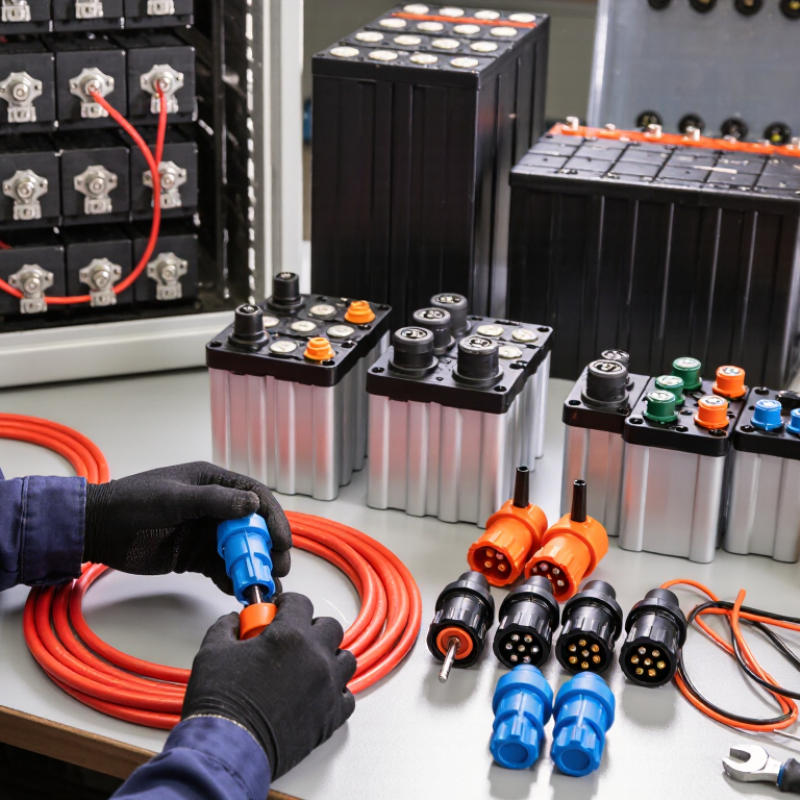
How to Choose the Right Energy Storage Connector

Understanding Energy Storage Connectors and Their Core Functions

How to Choose the Right Energy Storage Connector

Understanding Energy Storage Connectors and Their Core Functions

An energy storage connector joins battery modules, power conversion equipment, and protection circuits into a dependable electrical path. It carries current, maintains polarity, and helps prevent accidental contact with energized parts. It also needs to hold securely through vibration and repeated servicing. Small part. Big consequences.

The International Energy Agency’s Batteries and Secure Energy Transitions report says power-sector battery storage additions reached 42 GW in 2023, over 130% higher than in 2022. That rapid growth makes careful component selection more important, not less.

Check the connector’s rated voltage and current against the actual system conditions, including peak loads and temperature. Then review contact resistance, insulation, ingress protection, cable size, and permitted mating cycles. A connector that fits the housing may still be poorly matched to the electrical load.

Details matter on the installation floor. Confirm that polarity is clearly marked, contacts cannot be touched during normal handling, and the cable bend does not strain the joint. Follow the manufacturer’s documented installation torque and inspection procedure. I would not judge suitability by appearance alone; a solid latch cannot compensate for an underrated contact or a loose crimp. Datasheets help, but real operating conditions can be messier than a neat specification table.

Checking Electrical Ratings and Battery System Compatibility

How to Choose the Right Energy Storage Connector

Checking Electrical Ratings and Battery System Compatibility

Start with the battery’s maximum operating voltage, not just its nominal voltage. A system marked 48 volts may reach a higher voltage when fully charged. The connector’s rated voltage must safely cover that range. Check continuous current and short-duration peak current against the system’s actual load. A rating that looks adequate on paper can fall short in a warm, enclosed cabinet. Small details matter.

Next, match the connector to the cable’s conductor size and the battery’s terminal layout. Confirm polarity, keying, and contact arrangement before installation; a connector that fits physically may still be wired incorrectly. Check the operating temperature range and enclosure protection, especially if the unit will sit near a wall, outdoors, or in a dusty utility room. Fit is not enough. The cable crimp, strain relief, and contact resistance also affect heat buildup. Follow the connector maker’s specified assembly method, and never assume a hand tool produces a reliable crimp.

Review compatibility with the battery management system and the rest of the storage equipment. Verify that the connector supports the required current without excessive temperature rise, and confirm whether it is designed to be disconnected under load. Many are not. A datasheet rarely describes every installation condition, so compare its limits with the actual cable length, enclosure airflow, and expected duty cycle. If any rating or wiring detail remains unclear, pause and verify it with a qualified installer.

Choosing a connector: Select a connector with a DC voltage rating at or above the battery pack’s maximum charge voltage—not just its nominal voltage. Confirm its continuous and peak current ratings also meet the system’s requirements; current depends on the load, and can be estimated as power divided by voltage.

Comparing Connector Types, Materials, and Mechanical Design

Connector choice starts with current, voltage, service access, and fault-clearing needs. Bolted busbar joints suit fixed, high-current racks, while touch-safe plug-in connectors can simplify module replacement. Crimped lugs work well when cable routes need flexibility, but poor tooling can create hidden resistance. Small detail. A joint that feels tight may still heat under sustained load.

The IEA’s Batteries and Secure Energy Transitions report says global battery storage additions reached 42 GW in 2023, over 130% above 2022. More installations make repeatable assembly and easy inspection especially valuable. NREL’s 2024 Annual Technology Baseline uses 85% round-trip efficiency for utility-scale lithium-ion storage. That operating profile makes contact heating worth checking. Select connectors for actual current, ambient temperature, and duty cycle, not nameplate current alone.

Copper provides high conductivity; aluminum can reduce mass, but its oxide layer demands a well-designed contact interface. Plating, spring pressure, and stable clamping help limit resistance as parts warm and cool. Check temperature rise, contact resistance, insulation spacing, ingress protection, and vibration retention against the installation. I would still want a hot-load test after assembly; a clean datasheet cannot reveal every field-made joint.

Evaluating Safety, Environmental, and Installation Requirements

How to Choose the Right Energy Storage Connector

Evaluating Safety, Environmental, and Installation Requirements

A suitable energy storage connector must match the system’s current, voltage, and cable size. Check the equipment documentation rather than relying on appearance. A connector that fits physically may still be unsuitable electrically. Look for secure locking, clear polarity markings, and materials rated for the expected temperature range. Loose contacts can heat up under load. Small details matter.

Environmental conditions shape the choice. Dust, moisture, vibration, and temperature swings can all affect connection reliability. Check the connector’s stated protection ratings and confirm they suit the actual installation location. An indoor cabinet and an exposed outdoor enclosure face different risks. There is no perfect connector for every setup, and a rating alone cannot replace careful inspection.

Tips: Before installation, compare cable dimensions with the connector’s specified range. Follow the manufacturer’s instructions for stripping, crimping, and tightening. Keep tools clean, and inspect the contact for damage. If the fit feels wrong, stop and recheck. A rushed connection is rarely worth it. Also consider access for maintenance; a connector buried behind other equipment may be difficult to inspect later. Review the full system requirements with a qualified installer when specifications are unclear.

Verifying Standards, Quality, and Long-Term Maintenance Needs

Before selecting an energy storage connector, verify that its documented standards match the system’s voltage, current, temperature range, and installation environment. Ask for current certificates and test reports, not just a general claim of compliance. A certificate does not prove suitability for every battery enclosure or operating condition. Check whether the connector’s ratings cover expected peak loads and fault conditions. That matters. Then compare the specified requirements with the project’s actual design and local codes.

Connector quality also depends on details that are easy to overlook. Review contact materials, housing resistance to heat and chemicals, and the sealing method. Inspect samples for consistent molding, secure latches, and clear polarity markings. Look closely. Ask how crimp tools are controlled and how production batches are traceable. For long-term maintenance, confirm whether the connection can be inspected without disturbing nearby cables, and whether replacement parts remain available. Set inspection intervals based on operating conditions, such as dust, vibration, and temperature cycling. No checklist catches every installation mistake; that is worth admitting. Leave enough access to examine the connection, and record signs of discoloration, looseness, or damaged seals.

How to Choose the Right Energy Storage Connector: Verifying Standards, Quality, and Long-Term Maintenance Needs

Selection Area What to Verify Useful Evidence or Reference Practical Selection Check Long-Term Maintenance Consideration
Applicable standards and certification Confirm that the connector is evaluated for its intended DC application, installation type, and destination market. Check the exact product configuration and ratings covered by any certification. Depending on the application and jurisdiction, relevant references may include UL 4128 for DC connectors used in energy storage systems, UL 1977 for component connectors, and IEC 61984 for connector safety and testing. Request current certificates or test documentation and verify that the listed model, accessories, and operating limits match the proposed installation. Do not treat a standard reference as proof of suitability by itself. Keep certification and product documentation with the system records. Recheck requirements when the connector, system design, or applicable regulations change.
Voltage, current, and temperature ratings Compare the connector’s DC voltage and current ratings with the system’s maximum operating conditions, conductor size, ambient temperature, and installation method. Use the connector manufacturer’s rating tables and derating information. System design must also account for applicable electrical codes and equipment requirements. Confirm that ratings apply to the actual cable size, number of loaded contacts, and expected temperature. Do not assume a headline current rating applies in every configuration. Check for discoloration, deformation, or signs of overheating during planned inspections. Investigate abnormal heating rather than continuing operation without assessment.
Insulation and protection against contact Review insulation coordination, creepage and clearance requirements, touch protection, and the connector’s protection rating in its installed condition. IEC 60664-1 addresses insulation coordination for low-voltage systems. IEC 60529 defines IP enclosure protection classifications; the rating must be appropriate to the exposure and installation. Verify whether an IP rating applies when the connector is mated, unmated, or fitted with its specified protective cap. Check that the installation preserves the tested configuration. Inspect seals, caps, and housings for cracks, contamination, or wear. Replace damaged parts with compatible components and follow the documented isolation procedure.
Contact and termination quality Check compatibility with conductor material, cross-section, stranding, and the specified crimping or termination method. Review installation instructions, approved tooling requirements, conductor preparation guidance, and any available contact-resistance or temperature-rise test results. Use the specified tools and process. Confirm that the finished termination is secure and correctly assembled; avoid mixing parts that have not been verified as compatible. Look for loose terminations, corrosion, contamination, or damaged cable insulation during scheduled inspections. Perform electrical checks only using qualified personnel and suitable procedures.
Mechanical fit and mating cycles Assess keying, locking, cable strain relief, vibration exposure, and the connector’s specified mating-cycle capability. Use product drawings, installation instructions, and test data for mechanical retention and endurance. Check the rated mating cycles against the expected service and maintenance activity. Confirm that the connector cannot be incorrectly mated in the intended configuration and that the locking feature engages as specified. Do not force a damaged or misaligned connection. Inspect latches, locks, and contact surfaces for wear or damage. Replace parts that no longer latch or mate reliably, following the system’s safe isolation procedure.
Environmental suitability Match materials and enclosure protection to expected humidity, dust, temperature variation, chemical exposure, and outdoor or coastal conditions. Review the stated operating-temperature range and environmental test evidence. Select corrosion-resistance measures based on the actual site exposure rather than appearance alone. Check that the complete assembled connection—not just the connector body—suits the enclosure, cable entry, and site conditions. Set inspection frequency according to site conditions and the system maintenance plan. Remove contamination only by approved methods; avoid solvents or lubricants unless specified.
Documentation and maintenance planning Ensure that installation, inspection, replacement, and troubleshooting instructions are available to the service team. Useful records include connector part details, wiring diagrams, installation tooling and torque instructions where applicable, inspection findings, and replacement history. Before purchase, confirm that the supplier provides clear instructions and a traceable product identification method. Establish who is authorized to install and service the connections. Follow the equipment and connector instructions and the site’s approved maintenance program. Any torque checks or thermal inspections should be performed under specified safe conditions by qualified personnel.

Note: Applicable standards, ratings, and inspection intervals depend on the system design, installation environment, and local regulations. Verify requirements for the specific project and connector configuration before selection.

(214) 838-7010