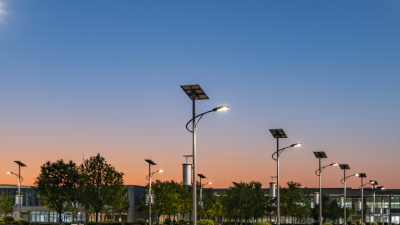


Choosing the best Industrial Solar Lights begins with the site, not the product brochure. A warehouse yard, quarry road, and remote construction entrance require different lighting plans. Each location has different traffic patterns, weather exposure, mounting heights, and safety expectations.
Professor Martin Green, a leading photovoltaic researcher, has observed, “Solar photovoltaics is now the cheapest form of electricity in many parts of the world.” His statement reflects an important reality: efficient solar technology can reduce operating costs, but only when the system matches local conditions. Industrial buyers should examine solar-panel output, battery chemistry, lighting distribution, autonomy hours, and maintenance access. Brightness alone is not enough.
Look closely at the details. A reliable fixture should handle dust, rain, vibration, and temperature changes. IP ratings, corrosion-resistant housings, replaceable components, and documented testing deserve attention. The battery must store enough energy for several cloudy nights, not only a clear summer evening. This is where many comparisons become too simple.
We should also question attractive promises. “Maintenance-free” may sound useful, yet every outdoor system needs occasional cleaning and inspection. A larger panel is not automatically better. Poor placement can leave dark areas beneath loading bays or along perimeter fences. This guide examines performance, durability, installation planning, and long-term value, while admitting one practical limitation: no single Industrial Solar Lights system suits every industrial site. Careful measurements still matter.
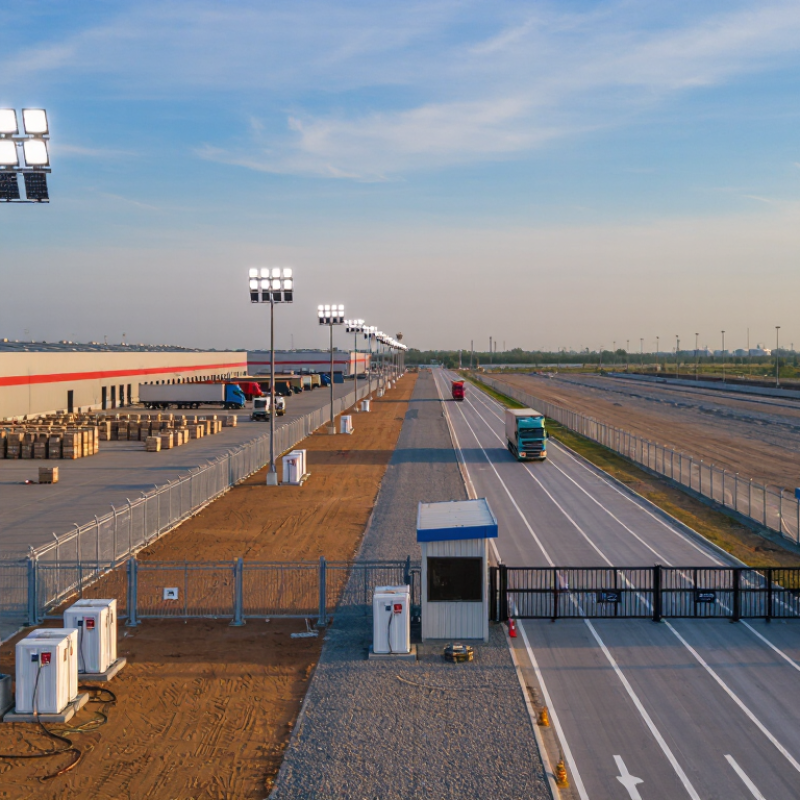
Industrial solar lighting should begin with the site, not the product catalogue. Walk through the area after sunset and record dark zones, vehicle routes, loading points, and emergency access. Measure the required illumination for each task, because a storage yard needs different lighting from a precision work area. Check operating hours, seasonal sunlight, dust, rain, and winter temperatures. A system must provide dependable light during the least favorable conditions, not only on clear summer nights.
Battery capacity, panel placement, and mounting height directly affect performance. Nearby buildings, cranes, or trees may create afternoon shadows. Confirm the panel receives sufficient sunlight throughout the year.
Use corrosion-resistant fixtures where salt, chemicals, or heavy moisture are present. Review local electrical and workplace safety requirements before installation. Photometric calculations can reveal glare problems that a simple visual inspection misses.
Tips: Mark every shadow at different times of day. Request a lighting plan with measured lux levels. Test the battery for several cloudy nights. Leave room for maintenance access. I once assumed a larger panel would solve every problem. That assumption was wrong. Poor tilt, blocked sunlight, and an undersized battery still caused failures. Keep records of energy use, weather, repairs, and nighttime performance. These details help refine the design, although real sites rarely behave perfectly.
How to Choose the Best Industrial Solar Lights?
Comparing Solar Light Types for Different Industrial Areas
Industrial areas need different solar lighting solutions. A loading yard requires broad illumination, while a narrow walkway needs controlled, low-glare light. Solar floodlights suit open storage zones, vehicle entrances, and emergency access routes. Their wide beams reduce dark patches across large surfaces. However, poor mounting angles can waste energy and create harsh shadows.
Solar street lights work better along internal roads and perimeter routes. Models with integrated panels save space and simplify installation. High-mast solar lights can cover large yards, but they need stronger poles and careful structural checks. For doors, stairs, and inspection points, solar wall lights provide focused visibility. Motion sensors can reduce battery use during quiet periods. Dust changes everything.
In practical site assessments, check sunlight exposure, operating hours, weather, and maintenance access. A panel shaded by a warehouse may underperform, even when the product specifications appear strong. Battery capacity should match winter conditions and long overnight shifts. Select a suitable IP rating for dust and water exposure. Also measure illumination at ground level, not only at the lamp.
No option fits every industrial zone. A mixed system often performs better than identical fixtures across the entire site. Still, sensor settings may react poorly to moving machinery or passing animals. Trial installation is useful. Review the lighting after rain, dust accumulation, and several night shifts before expanding the system.
| Solar Light Type | Typical Output and Coverage | Best Industrial Areas | Key Advantages | Important Limitations | Recommended Selection Criteria |
|---|---|---|---|---|---|
| All-in-One Solar Street Light | Approximately 20–120 W LED; suitable for roads, internal drives, and pedestrian routes when pole spacing and mounting height are correctly designed. | Factory roads, logistics parks, warehouse access roads, parking lanes, and perimeter routes. | Integrated panel, battery, LED module, and controller; simplified installation; no trenching or grid connection required; low routine maintenance. | Battery and electronics are housed in one assembly, so component replacement may require servicing the complete unit. Performance depends strongly on solar exposure. | Check photovoltaic sizing, battery capacity, operating autonomy, LED efficacy, pole height, lighting distribution, and local solar conditions. |
| Split-Type Solar Street Light | Approximately 30–150 W LED; flexible system sizing for wider roads and locations requiring a larger solar panel or battery bank. | Heavy-vehicle routes, large industrial campuses, remote yards, and areas with high or variable lighting demand. | Separate components allow larger panels and batteries; easier access to individual components; improved flexibility for system design. | More cables, mounting hardware, and installation work than an all-in-one design. Cable routing must be protected from vehicles and weather. | Evaluate battery chemistry, cable protection, panel orientation, wind loading, service access, and the required number of backup nights. |
| Solar Floodlight | Approximately 20–200 W LED; provides broad-area illumination, with coverage determined by beam angle, mounting height, and target illuminance. | Open storage yards, loading areas, material handling zones, construction compounds, and security-sensitive spaces. | Wide beam options; suitable for irregular open spaces; can be aimed toward gates, loading points, or storage areas. | May create glare or uneven lighting if aimed incorrectly. Higher output settings can reduce overnight runtime during low-sun periods. | Choose beam angle, glare control, mounting position, motion-control settings, ingress protection, and required maintained illuminance. |
| Solar High-Bay Light | Typically 60–200 W LED; designed for high mounting positions, although solar suitability depends on roof, panel, and battery space. | Open-sided warehouses, covered loading bays, agricultural-industrial buildings, and remote high-roof structures. | High-bay optics can provide efficient downward lighting; useful where extending grid power to a structure is expensive. | Indoor or roof-mounted applications may receive insufficient direct sunlight. Battery and panel sizing can become substantial for long nightly operation. | Verify roof solar access, mounting height, temperature range, lighting uniformity, emergency requirements, and battery replacement access. |
| Solar Wall Pack Light | Approximately 10–60 W LED; intended for localized illumination around doors, walls, stairs, and service areas. | Plant entrances, security doors, maintenance corridors, utility buildings, and external wall perimeters. | Compact installation; good for improving visibility at access points; motion sensors can reduce energy consumption and light spill. | Wall orientation and nearby structures can shade the panel. It is not normally suitable as the primary light source for large yards or roads. | Check wall exposure, sensor detection range, mounting height, emergency egress needs, impact resistance, and light distribution. |
| Solar Bollard Light | Generally 3–15 W LED; low-height pathway lighting with short-range distribution. | Pedestrian walkways, landscaped industrial campuses, visitor routes, and low-speed internal paths. | Low visual impact; simple placement; suitable for guiding pedestrians and marking pathway edges without overhead wiring. | Limited mounting height and output; vulnerable to impact from forklifts, vehicles, or material-handling equipment if poorly positioned. | Assess pedestrian traffic, impact protection, spacing, pathway width, battery autonomy, and the risk of shading from buildings or equipment. |
| Solar Area Light with Motion Control | Approximately 30–150 W LED; uses reduced standby output and higher output when motion is detected. | Low-traffic yards, remote storage areas, perimeter zones, and facilities requiring security lighting after working hours. | Can extend battery runtime by reducing output during inactive periods; provides higher light levels when people or vehicles are detected. | Sensor settings may cause nuisance activation or delayed response. Continuous full-output lighting may not be available throughout the night. | Set detection range, hold time, standby level, trigger sensitivity, camera compatibility, and minimum security illumination requirements. |
| Solar Hazardous-Area Light | Output varies by certified design; usually selected for localized lighting rather than unrestricted high-output area lighting. | Selected zones near fuel storage, chemical processing, gas facilities, and other areas with potentially explosive atmospheres. | Can provide lighting where grid cabling is difficult; may reduce the need for new electrical infrastructure in remote locations. | Only products with the correct hazardous-area certification and temperature classification should be used. Procurement and engineering requirements are stricter. | Confirm hazardous-area classification, certification, surface temperature, battery protection, emergency requirements, and approval by the site safety engineer. |
Note: Output ranges are typical planning ranges for commercial solar LED products, not guaranteed performance values. Final selection should be based on a photometric layout, local solar-resource assessment, required operating hours, battery autonomy, mounting conditions, and applicable workplace lighting standards.
How to Choose the Best Industrial Solar Lights?
Brightness should be judged at ground level, not by advertised lumens alone. In industrial yards, measure average illuminance, uniformity, glare, and mounting height. IES RP-8 guidance supports task-based lighting design, while the U.S. Department of Energy reports that modern LED packages can exceed 200 lumens per watt under controlled conditions. Real fixtures perform lower. Dust, lenses, temperature, and optics reduce useful output.
Battery capacity must match the required autonomy, not just one bright evening. A practical design compares watt-hours with daily load, winter sunlight, and cloudy-day reserves. NREL’s 2024 PV Reliability Scorecard identifies roughly 0.5% to 0.8% annual module degradation as a common range in field evaluations. Battery aging is less predictable. Heat can shorten service life, especially inside dark metal enclosures. Lithium batteries often offer better usable capacity, but their protection systems and low-temperature limits need checking.
Solar panel performance depends on orientation, shading, and charging time. The IEA PVPS Trends in Photovoltaic Applications 2024 report recorded about 447 gigawatts of new solar capacity worldwide in 2023, showing rapid technical growth but not identical site conditions. Request measured charging data, temperature ratings, and photometric files. A lower-power light with better optics may outperform a brighter unit. That detail is easy to miss. Field trials still matter, because published laboratory figures rarely survive dust, snow, and partial shade unchanged.
Industrial solar lights must survive weather, vibration, dust, and repeated temperature changes. Check the housing’s ingress protection rating, corrosion resistance, and mounting strength before comparing brightness. The U.S. Department of Energy reports that quality LED systems can reach 50,000 hours, but heat and poor drivers can shorten real service life. Durability depends on the whole system.
Installation needs are easy to underestimate. Measure daily sunlight at the planned pole location, not beside it. Nearby buildings, trees, and seasonal shadows can reduce charging performance. Confirm wind loading, foundation depth, cable routes, and battery access. The IEA PVPS Task 13 report identifies an average photovoltaic degradation rate of about 0.5% annually, although field results vary. Design for gradual output loss. Perfect calculations rarely survive a messy site.
Tips: Keep panels away from dust-producing equipment and inspect them after storms. Choose a battery compartment that technicians can reach without removing the entire fixture. Record nighttime runtime, charging voltage, and visible corrosion during inspections. DOE guidance often references long LED lifetimes, yet batteries usually need earlier attention. That difference matters. One practical mistake is treating “maintenance-free” as a permanent promise. It is not. A six-month inspection schedule may be reasonable, but harsh coastal or industrial locations may require more frequent checks.
This indicative benchmark compares common industrial solar-light configurations across durability, installation practicality, and maintenance requirements. Higher scores indicate a more suitable option for demanding outdoor applications.
The scores are planning benchmarks based on typical field considerations: corrosion-resistant housing, weather and impact protection, battery service life, installation time, cleaning access, and annual maintenance effort. Actual performance depends on climate, mounting conditions, sunlight availability, and product specifications.
How to Choose the Best Industrial Solar Lights?
Balancing Energy Efficiency, Costs, and Long-Term Value
Industrial solar lighting should be judged by total value, not panel size alone. A bright fixture can waste money if it dims before dawn. Measure illumination across driveways, loading bays, and walkways. Ask for photometric data, battery capacity, and tested operating hours. In my site reviews, winter performance often exposes optimistic specifications. Cloudy weeks matter more than one sunny afternoon.
Compare purchase costs with installation, electricity, cleaning, battery replacement, and lift equipment. A lower-priced unit may need earlier battery service. Check the battery chemistry, expected cycle life, and replacement access. Confirm the light’s IP rating for dust and rain. Independent test reports can reveal performance gaps. Motion sensors may reduce energy use, but poor settings can leave workers in darkness. A practical design keeps safe baseline lighting and increases output during movement. I once approved an aggressive dimming schedule. Complaints followed. The energy savings were real, but the site felt unreliable.
Tips: Request a 12-month energy simulation for your location. Compare usable lumens, not advertised lumens. Inspect a working installation at night. Read warranty exclusions carefully. Include weather data and maintenance labor in the payback calculation. If the figures depend on perfect sunshine, reconsider them.
USA / Americas
1507 Capital Ave, Suite 102
Plano, TX 75074
+1 (214) 838-7010
8:00am – 5:00pm (GMT-6)
Australia / Asia Pacific
503 Cross Keys Rd,
Cavan SA 5094
+61 8 7200 3909
9:00am – 5:00pm (ACDST)
© 2025 Green Frog Systems. | Privacy Policy | Terms & Conditions