How to Choose Kitchen Pendants in 2026
Kitchen Pendants can shape how a kitchen looks and works. They bring focused light to an island, breakfast bar, or sink, while adding a visible design feature. But the right fixture is not simply the one that looks best online. Ceiling height, island length, room brightness, and everyday tasks all affect the choice. Details matter.
In 2026, shoppers will find familiar forms alongside new finishes, adjustable designs, and energy-conscious lighting options. This guide explains how to compare pendant styles, choose suitable sizes, plan spacing, and select bulbs and light output for real kitchen use. It also covers practical details often missed in product photos, such as glare, cleaning, dimmer compatibility, and whether a shade blocks sightlines across the room. Measure twice.
A useful starting point is to note the island’s dimensions and ceiling height, then consider how people move and work nearby. For example, a wide metal shade may suit a spacious island but feel heavy in a compact kitchen. A clear glass pendant can look lighter, though it may show dust and fingerprints more readily. There is no perfect fixture for every home. Even careful planning can leave one detail uncertain, such as how warm a bulb will feel after dark. The aim is to make a well-informed choice that balances appearance, comfort, and reliable everyday lighting.
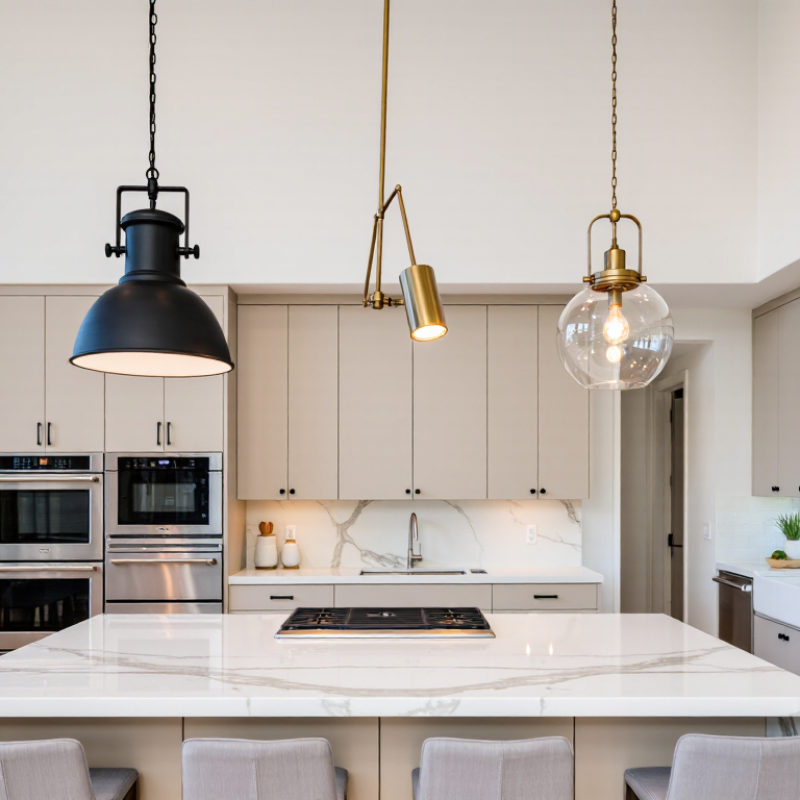
Identify Your Kitchen Layout and Lighting Needs in 2026
How to Choose Kitchen Pendants in 2026
Identify Your Kitchen Layout and Lighting Needs in 2026
Start with the plan. Note the island, sink, cooking area, and main walking routes before comparing pendant shapes. In a galley kitchen, a row of fixtures may brighten a narrow work zone but crowd the sightline. Over an island, two or three pendants can spread light more evenly, depending on its length and the fixture size. A peninsula or breakfast table may need a different arrangement.
Measure the ceiling and counter. Pendants are commonly hung about 30 to 36 inches above an island, but tall ceilings, large fixtures, and seated views can change what feels comfortable. Check that doors open freely and that people can see across the room. A quick paper mock-up at the proposed height can reveal awkward glare before installation. It is easy to overlook.
Think about what the kitchen lacks. If under-cabinet lights already illuminate the counters, pendants can add focused light and soften the room’s overall feel. If they are the main task lighting, choose shades that direct useful light downward without leaving dark patches. Dimmable fixtures help shift from meal preparation to evening dining, but confirm compatibility with the dimmer and light source. Warm light often feels inviting; a cooler tone may make detailed tasks easier for some people. Needs vary. When wiring must move or the ceiling is unusually high, get an electrician’s advice before finalizing placement.
Choose Pendant Size and Hanging Height for Your Space
Start by measuring the island’s usable length and width, not the whole kitchen. For one pendant, choose a shade that feels proportional without blocking sightlines. A broad island can take a larger fixture. For two or three pendants, divide the island into balanced zones and leave clear space near each end. As a practical starting point, keep pendant centers about 30 inches apart, then adjust for shade width and task needs. Measure twice. The familiar sizing rules are estimates; a chunky shade can feel crowded even when the math says it fits.
Measure hanging height from the countertop to the pendant’s lowest point. Many kitchens work well with the bottom roughly 30 to 36 inches above the counter, but ceiling height and fixture size matter. Raise it if it interrupts eye contact across the island, or lower it slightly when focused prep light matters and clearance remains comfortable. Tall cooks may need more clearance. Check the view from the sink and doorway, not just from a stool. A cardboard mock-up at the proposed height can reveal glare before installation. Perfect symmetry is tempting, but an off-center island may call for a small adjustment. That can look better.
How to Choose Kitchen Pendants in 2026 — Choose Pendant Size and Hanging Height for Your Space
| Kitchen Layout | Suggested Pendant Size | Quantity and Spacing | Suggested Hanging Height | Planning Tips |
| Small island, about 4 ft long | Two pendants, approximately 8–10 in wide each | Center the fixtures over the island; allow about 24–30 in between centers where the fixture size permits. | 30–36 in from the countertop to the bottom of each pendant | Check that the pendants do not crowd the island ends or block views across the kitchen. |
| Medium island, about 6 ft long | Two pendants, approximately 10–14 in wide, or three smaller fixtures | Space fixtures evenly and keep the outer fixtures visually balanced within the island ends. | 30–36 in from the countertop to the bottom of each pendant | Two larger pendants create a simpler look; three smaller pendants can spread light more evenly. |
| Large island, about 8 ft long | Three pendants, approximately 12–16 in wide each | Arrange in an even row; leave enough room between shades so they do not overlap visually. | 30–36 in from the countertop to the bottom of each pendant | Confirm the combined fixture width and spacing fit the island before choosing the final size. |
| Peninsula or narrow counter | One or two compact pendants, approximately 8–12 in wide | Center one fixture over a short counter, or align two evenly along a longer counter. | 30–36 in from the countertop to the bottom of each pendant | Choose a compact profile where people walk or work close to the counter edge. |
| High ceiling, 9–10 ft | Choose a fixture size that remains in proportion to the island and room | Use the same even layout as for the island length; adjust suspension length as needed. | Begin with 30–36 in above the countertop; a modest increase may suit taller ceilings. | Prioritize clear sightlines and comfortable task lighting rather than raising fixtures automatically. |
| Dining table within or beside the kitchen | Use a fixture sized to the table; keep it visually centered over the tabletop | Center one fixture or arrange multiple fixtures evenly along the table’s length. | About 30–36 in from the tabletop to the bottom of the fixture | Check seated sightlines and avoid placing a pendant where it interferes with nearby cabinet doors. |
Measurement note: Hanging heights are starting points, not fixed requirements. Measure from the countertop or tabletop to the lowest part of the fixture, and adjust for fixture shape, ceiling height, and clear sightlines. Before installation, follow the fixture instructions and applicable electrical codes.
Compare Bulb Types, Brightness, and Color Temperature
For kitchen pendants, compare the light source as well as the fixture’s shape. LEDs use relatively little energy, last a long time, and come in many color temperatures. Check that the bulb is replaceable if the pendant does not have an integrated light source. Halogen bulbs render colors naturally but produce more heat. Compact fluorescent bulbs use less energy than older incandescent bulbs, though their color and dimming performance can vary. Small detail: the shade matters. A deep or dark shade can send less light onto the counter.
Brightness is measured in lumens; watts mainly describe energy use. For food preparation, consider how much light reaches the work surface, not just the bulb’s lumen rating. A pendant’s height, shade, and distance from the counter all affect the result. Several fixtures may spread light more evenly than one bright bulb. Not always. Existing ceiling lights and under-cabinet lighting change what you need, so test the room after dark before choosing final brightness.
Color temperature is measured in kelvins. Around 2700–3000 K tends to feel warm, while 3500–4000 K looks more neutral and can make a busy work area feel clearer. A dimmable LED can offer flexibility, but confirm that the bulb and dimmer are compatible. I find this choice less simple than it sounds: warm light can feel inviting, yet it may shift how food colors appear. Compare samples in your own kitchen, since wall finishes and daylight can change the effect.
How to Choose Kitchen Pendants in 2026
Compare the approximate power different bulb types use to produce the same brightness.
How to read this: Each option provides about 800 lumens, but LEDs use less power. Check lumens for brightness; choose color temperature separately: around 2700K for warm light, 3000K for warm-neutral light, or 3500–4000K for a more neutral look. Actual bulb performance varies by product.
Select Materials and Shapes That Suit Your Kitchen
Choose a pendant material that responds to your kitchen’s daily mess, not just its color palette. Clear glass keeps sightlines open above a small island, but fingerprints and cooking residue show quickly. Wipe it often. Opal glass softens glare and suits a calm, even look, while metal shades direct light downward and feel visually heavier. Brushed finishes tend to disguise small marks better than polished ones. Still, no finish stays spotless near a busy stove.
Shape should echo the room’s proportions. A broad dome can anchor a long island, while narrow cylinders work well in a row without blocking conversation. Leave enough visual space between pendants and upper cabinets; sketching their outlines on paper can reveal awkward overlaps before installation. Check bulb compatibility and heat guidance, too.
The U.S. Department of Energy reports that LED bulbs use at least 75% less energy and last up to 25 times longer than incandescent bulbs.
That efficiency helps, but color temperature still matters: warm light can make wood and food feel inviting, while very cool light may look stark at dinner. The right choice is not always the most dramatic one.
Check Installation, Dimming, and Energy-Efficiency Requirements
How to Choose Kitchen Pendants in 2026
Before choosing a pendant, check the ceiling box, wiring, and fixture weight. A heavy shade may need stronger support than an existing box provides. Measure the island and note nearby cabinets, doors, and sightlines. The bottom of a pendant should light the worktop without blocking conversation. Installation details matter. If wiring or support is uncertain, ask a qualified electrician to inspect it before purchase.
Tips: Write down the ceiling height, island length, and available clearance. Check whether the fixture includes the parts needed for your ceiling type. Small details can prevent a frustrating return.
For dimming, confirm that both the light source and dimmer are designed to work together. Some LED combinations flicker, buzz, or refuse to dim smoothly. Test the lowest setting if possible; a soft glow is useful during dinner, while brighter light helps with chopping. Compare energy use by looking at lumens and watts, not watts alone. Lumens indicate light output; watts show electricity use. Choose an efficient output that still makes the countertop easy to see. Color temperature also affects the room: warm light can feel inviting, but may make food colors less clear. It is easy to over-focus on appearance. Check specifications, and accept that the perfect balance may take a little adjustment.