What Is the Best Waterproof Outdoor LED Screen from China?
Choosing the best waterproof outdoor LED screen from China requires more than comparing pixel pitch or factory prices. The global LED display market continues to expand. MarketsandMarkets projects growth from approximately USD 7.4 billion in 2022 to USD 11.1 billion by 2027, with an 8.4% compound annual growth rate. This trend reflects rising demand for stadium boards, roadside advertising, retail façades, and public information systems.
Weather resistance comes first.
A reliable waterproof outdoor LED screen should offer at least IP65 protection on the front surface, tested under IEC 60529 conditions. Rear protection may require IP54 or stronger, depending on the cabinet design. In direct sunlight, 5,000 to 8,000 nits is common. However, higher brightness can increase heat, energy use, and maintenance pressure. The best specification is not always the highest one.
Steve Smeallie, President of Watchfire Signs, has stated, “The best outdoor display is the one that performs reliably in the environment where it is installed.” That principle deserves attention when evaluating Chinese manufacturers. Ask for EMC documentation, aging-test records, module sealing details, spare-parts policies, and real installation references. A factory video is useful, but it proves very little alone.
Rain is only one challenge.
Salt air, dust, freezing temperatures, ultraviolet exposure, and unstable power can damage a display gradually. Some buyers focus too heavily on low procurement cost. That assumption can fail after one rainy season. This guide compares cabinet construction, brightness stability, thermal design, warranty terms, control systems, and after-sales support, helping buyers judge performance beyond attractive quotations.
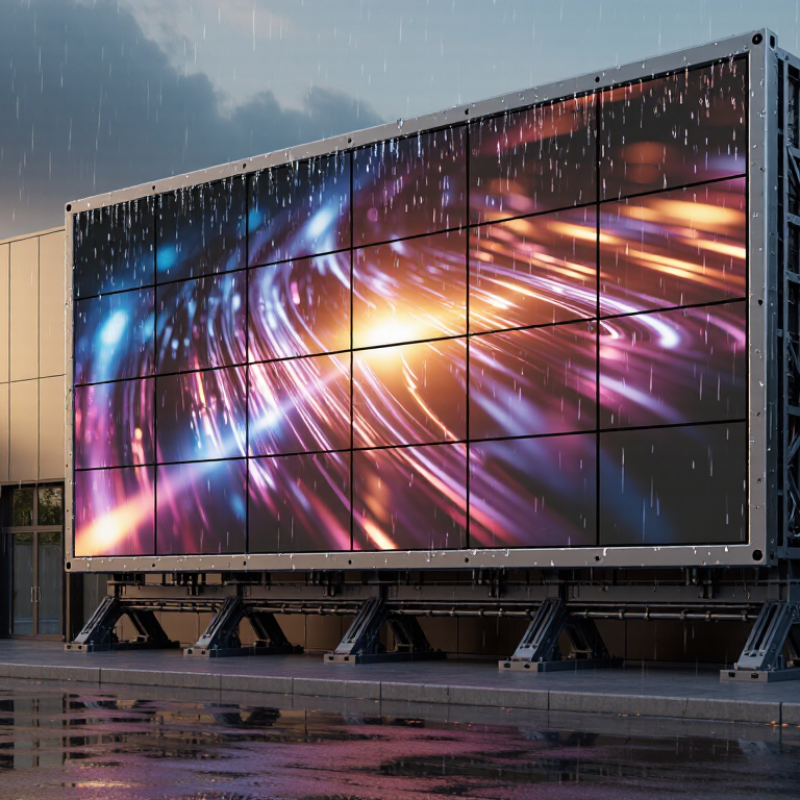
What Defines a Waterproof Outdoor LED Screen?
What Is the Best Waterproof Outdoor LED Screen from China?
What Defines a Waterproof Outdoor LED Screen?
A waterproof outdoor LED screen must resist more than ordinary rain. Its protection begins with the IP rating defined by IEC 60529. IP65 means dust-tight protection and resistance against water jets from any direction. IP66 offers stronger water-jet protection, while IP67 also supports temporary immersion. The rating matters, but it is not the whole story. A screen can pass a factory test and still fail after poor installation.
Sealed modules, drainage paths, corrosion-resistant cabinets, and protected cable entries are essential. Field inspections often reveal water collecting beneath cabinet doors or around loose connectors. Small gaps become serious problems during wind-driven rain. A reliable design should also manage heat, because waterproof sealing can restrict ventilation. That trade-off is easy to underestimate.
The global LED display market is projected to grow from approximately 9.1 billion dollars in 2024 to 14.6 billion dollars by 2029, according to MarketsandMarkets’ 2024 report. This growth increases product choice, but it can also hide quality differences. Ask for IP test records, temperature tests, salt-spray results, and clear warranty conditions. Check both front and rear protection ratings. Do not accept a single “waterproof” claim without test details. Even careful buyers can miss drainage design. That is where practical review still matters.
Which Waterproof Features Matter for Outdoor LED Displays?
Waterproofing is not a decorative upgrade for an outdoor LED screen. It determines whether the display survives rain, dust, heat, and repeated maintenance.
IEC 60529 classifies IP65 as dust-tight and protected against water jets. IP66 handles stronger water jets, while IP67 allows temporary immersion.
For most fixed outdoor installations, IP65 or IP66 is practical. IP67 sounds safer, but it does not replace correct drainage.
Look beyond the rating. Check sealed cabinet joints, covered ventilation paths, waterproof cable glands, and corrosion-resistant screws. A reliable cabinet should drain water instead of trapping it behind the modules. Front and rear maintenance panels also need durable gaskets. Small gaps become serious problems after temperature changes. I have seen displays pass a spray test, then fail after months of condensation. That difference matters.
Thermal control deserves equal attention. A 2024 industry market report estimated the global LED display market at more than 7 billion US dollars, increasing pressure for longer outdoor operating life. However, market growth does not guarantee product quality. Ask for test records based on IEC 60529, salt-spray results, and aging checks. The report may look impressive. The evidence matters more. Also inspect power supplies and signal connectors, because one unsealed connector can damage an otherwise protected screen.
How to Compare Chinese Outdoor LED Screen Manufacturers
When comparing Chinese outdoor LED screen manufacturers, start with weather protection, not price.
The best screen must withstand rain, dust, heat, and repeated temperature changes. Ask for the product’s IP rating and complete test documentation. IP65 protection is common for outdoor cabinets, but installation quality still matters. Water can enter through loose doors, damaged seals, or poor cable connections. Request photos of sealing details and drainage design. Do not trust labels alone.
Next, examine technical performance under real outdoor conditions. Check brightness, refresh rate, viewing distance, color consistency, and energy use. A screen facing direct sunlight needs stable brightness control. Ask whether brightness remains consistent across different modules. Request a working sample, not only digital images. Watch it for several hours. Look for flicker, uneven colors, noisy fans, or hot cabinet surfaces. A perfect sample may still hide production variation, so ask about factory inspection records and batch testing.
Manufacturer reliability needs equal attention. Review engineering experience, warranty terms, spare-part availability, and remote troubleshooting procedures. Confirm who handles installation guidance and how quickly technical teams respond. Response times matter. A low quotation may exclude control systems, steel structures, shipping protection, or replacement modules. I have seen buyers focus on pixel pitch and overlook maintenance access. That mistake becomes expensive later. Compare written specifications, sample results, certifications, and after-sales commitments together. The strongest supplier is not always the cheapest one. Sometimes, a smaller technical detail reveals more than a polished sales presentation.
What Specifications Suit Different Outdoor Installation Environments?
Choosing the best waterproof outdoor LED screen depends on the installation environment, not only the display size. In roadside projects, I usually recommend 5,000–7,000 nits for clear daytime viewing. A pixel pitch of 6–10 mm suits long viewing distances. Smaller pitches may waste budget when viewers stand far away.
Sports venues need different specifications. A 3–6 mm pixel pitch can preserve detail for closer spectators. A refresh rate above 3,840 Hz helps reduce flicker during camera filming. For exposed locations, select at least IP65 protection on the front and rear. Strong cabinets, secure locks, and tested wind-load performance are essential. Coastal installations need corrosion-resistant materials because salt air reaches small gaps. That detail is often underestimated.
Tips: Check sunlight direction, viewing distance, wind pressure, and maintenance access before ordering. Keep spare modules nearby.
Temperature control also matters. Screens should operate reliably through local heat, rain, and cold cycles. Automatic brightness adjustment can reduce glare at night and limit unnecessary power use. In my experience, installation teams sometimes focus heavily on waterproof ratings while overlooking drainage and cable sealing. That can create failures after heavy rain. A higher specification is not always better; it must match the site, audience, and service plan. Test the screen outdoors before final acceptance. Small defects become expensive later.
How to Select and Maintain the Best Waterproof LED Screen
Selecting the best waterproof outdoor LED screen starts with the site, not the sales brochure. Measure viewing distance, sunlight exposure, wind, and installation height. For open-air venues, choose a tested enclosure rating, such as IP65 on the front and IP54 or higher on the rear. Ask for independent test reports, not only printed claims. Confirm that brightness remains readable at noon without causing harsh glare after sunset. A screen can look impressive indoors and fail outdoors. That mistake is common.
Examine the cabinet structure, drainage paths, connectors, and corrosion-resistant materials. Sealed modules should have replaceable gaskets and accessible power supplies. Ask how technicians replace one damaged module without removing an entire wall. Check refresh rate, viewing angle, color consistency, and operating temperature range. Request a sample panel and observe it for several hours in direct sunlight. I also inspect cable bends and mounting bolts. Small details often reveal weak installation planning. Coastal moisture is easy to underestimate.
Maintenance should follow a written schedule. Remove dust with a soft, dry brush, then inspect seals after heavy rain or strong wind. Never spray water directly into ventilation openings. Check fans, connectors, grounding, and cabinet locks every few months. Record abnormal pixels, flicker, condensation, and temperature readings. Replace worn seals promptly. Do not wait for failure. Software diagnostics can reveal voltage changes before visible faults appear. Still, remote alerts cannot replace physical inspection. Maintenance plans may look excellent on paper, but staff need practical training and spare modules nearby. A simple plan can be more dependable.
What Is the Best Waterproof Outdoor LED Screen from China?
How to Select and Maintain the Best Waterproof LED Screen
Practical Maintenance Guidance
A reliable outdoor LED screen should be checked on a regular schedule, even when it has an IP65 or higher enclosure rating. Monthly cleaning and drainage checks help prevent dust, salt, and standing water from affecting image quality. Seal, cable, grounding, and cabinet inspections should be performed at longer intervals, while brightness and color calibration can normally be reviewed annually. Actual intervals should be adjusted for local weather, pollution, humidity, and operating hours.