2026 Best Solar Street Light Options for Your Needs?
As urban areas evolve, the demand for efficient lighting solutions rises. Solar street lights have gained popularity due to their sustainability and cost-effectiveness. Expert Lisa Chang, a leading authority in renewable energy solutions, states, “Solar street lights are not just eco-friendly; they redefine the way we illuminate our cities.”
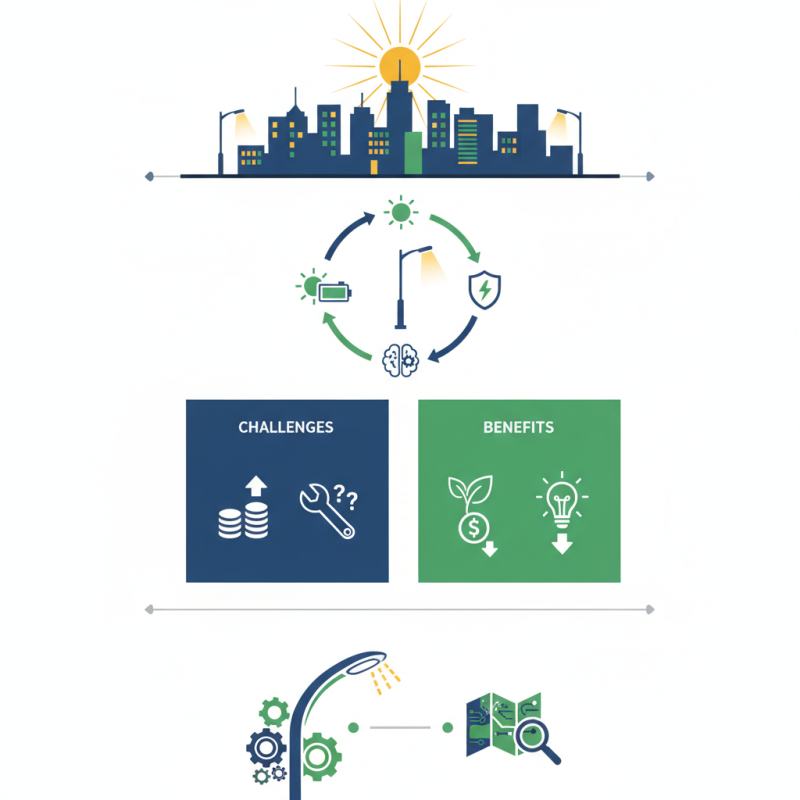
Transitioning to Solar Street Light technology poses challenges. Many municipalities grapple with installation costs and maintenance. Solar street lights function differently compared to traditional lighting. They harness solar energy, which can be inconsistent based on location and weather patterns. These factors require serious consideration during the selection process.
Choosing the best options can be overwhelming. Numerous brands offer varied features, making comparisons tricky. It’s crucial to assess the right balance between energy efficiency and durability. Understanding the specific needs of your community plays a vital role in decision-making, especially in ensuring public safety at night. The ongoing advancements in Solar Street Light technology, though promising, call for continuous reflection on their implementation and benefits.
Key Features to Consider When Choosing Solar Street Lights
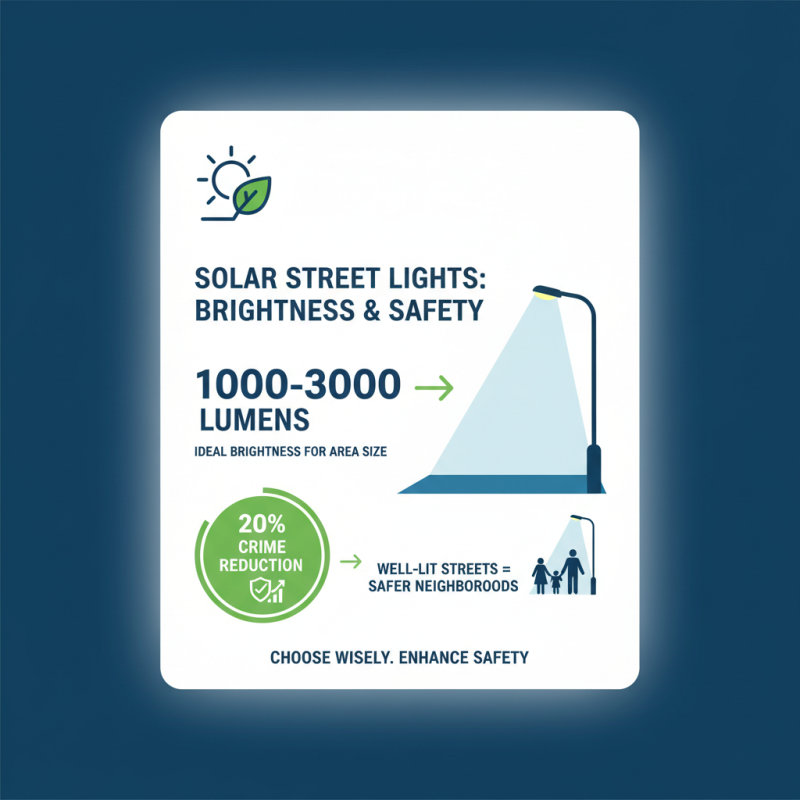
When selecting solar street lights, key features must guide your choice. Brightness is vital. The ideal lumens range from 1000 to 3000, depending on the area size. Data shows well-lit streets can reduce crime by 20%. Hence, adequate brightness improves safety in neighborhoods.
Battery capacity is another crucial factor. Many systems incorporate lithium-ion batteries for better durability. Reports indicate effective batteries have a lifespan of over five years. These can fully charge in roughly six hours of sunlight. Optimize energy usage by considering models with motion sensors. They can save energy by adjusting brightness based on activity levels while still providing safety.
Installation ease should also factor into decisions. Features like solar panel adjustability and all-in-one design simplify setup. Some users express frustration when installation proves too complicated. Regular monitoring is often overlooked. Checking the solar panel for dirt and debris can enhance efficiency. Remember, neglecting maintenance can lead to decreased performance over time.
Top 2026 Solar Street Light Brands and Models Available in the Market
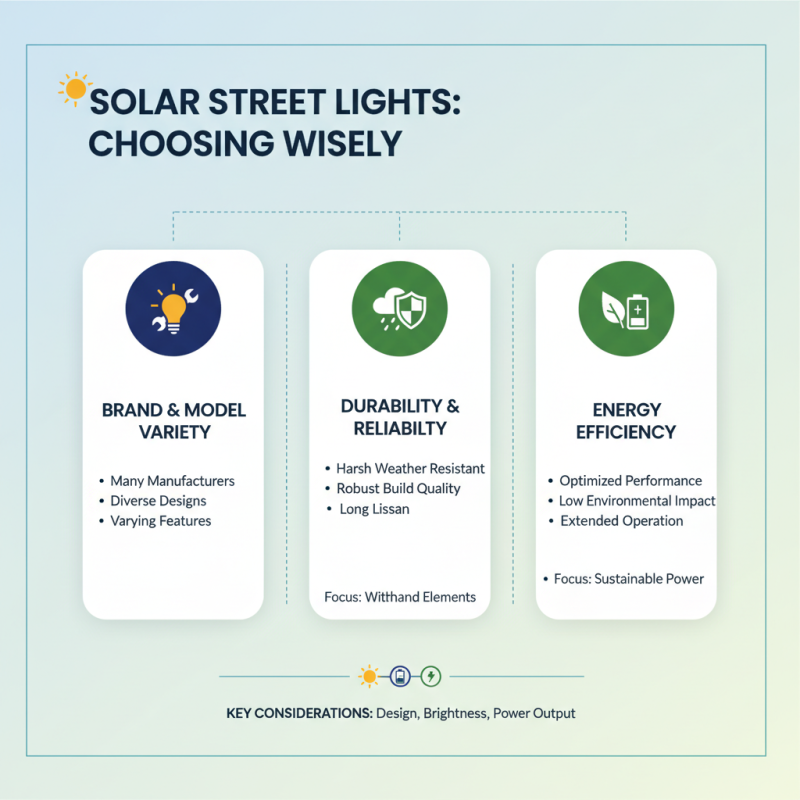
When choosing solar street lights, consider various brands and models currently available. Certain manufacturers focus on durability, ensuring their lighting solutions withstand harsh weather. Others emphasize energy efficiency, promoting long-lasting performance with minimal environmental impact. Each option varies in design, brightness, and power output.
It's important to assess your specific needs. For example, some systems feature integrated batteries for all-night illumination. However, these may require more frequent replacements. Solar panels can differ too, affecting charging efficiency and, ultimately, the light's performance. Installation can be a challenge, often leading to frustration.
Researching user reviews helps identify potential issues. Feedback reveals certain models may struggle during prolonged cloudy days. Pay attention to this aspect, as it could impact performance in diverse climates. Additionally, consider maintenance and part replacements. These factors often get overlooked but play a crucial role in ensuring longevity and reliability.
Comparative Analysis of Solar Street Light Technologies
When exploring solar street light technologies, several key factors emerge. Each technology offers unique benefits and challenges. For example, LED solar lights are energy-efficient and long-lasting, but they can be more expensive upfront. Some may find installation daunting, requiring specific knowledge or tools.
On the other hand, solar post lights are simpler to install. They often don’t require special wiring. However, their illumination capacity might be lower than that of LED options. This trade-off could lead to dimly lit streets in some areas.
Another consideration is the solar panel quality. High-quality solar panels convert sunlight into energy more efficiently. However, cheaper panels may lead to performance issues, especially in shaded regions. It's essential to think critically about these trade-offs, weighing cost against long-term efficiency and durability.
Understanding Solar Panel Efficiency and Its Impact on Street Lighting
Solar panel efficiency plays a crucial role in street lighting systems. Higher efficiency means more energy converted from sunlight. Typical panels today achieve 15-20% efficiency. However, this varies significantly based on technology and location. Regions with abundant sunlight will benefit immensely. A study from the National Renewable Energy Laboratory indicates that improvements in solar panel efficiency can lead to significant cost reductions.
Designing solar street lights must consider these efficiencies. A system with a 20% efficiency can outperform one with only 15%, especially in harsh weather conditions. The difference is not just in performance; it also affects the long-term energy cost. Some areas see energy savings of up to 25% when switching to higher efficiency panels.
However, not all solar panels address every environmental factor. Some struggle in cloudy regions or areas with heavy rainfall. It's essential to balance efficiency with practicality in design. Usage patterns may shift, too, causing interruptions. While efficiency is key, the implementation needs to consider local climate intricacies. Understanding these nuances is vital for sustainable and effective street lighting solutions.
Cost-Benefit Analysis of Installing Solar Street Lights in Urban Areas
The cost-benefit analysis of installing solar street lights in urban areas reveals both significant advantages and potential drawbacks. According to a report by the International Renewable Energy Agency, solar street lights can reduce energy costs by up to 80%. This figure stems from the elimination of traditional electricity bills associated with conventional street lighting. Municipalities can redirect these savings into other community projects, enhancing urban life.
However, the initial investment in solar street lights may be daunting. The upfront costs can range from $2,000 to $5,000 per unit. This might deter some cities from adopting this technology. Maintenance is another area that requires attention. While solar street lights need less maintenance than conventional options, battery replacements every 3 to 7 years can incur additional costs.
Moreover, the efficiency of solar lights can be affected by geographic and climate factors. Areas with prolonged cloudy weather may experience reduced effectiveness. Cities need to weigh these factors carefully. Each location has unique challenges that can impact the overall benefits of switching to solar. Thus, a thorough evaluation is essential before making investment decisions.
Cost-Benefit Analysis of Solar Street Lights in Urban Areas