
Choosing the best Sodium Hypochlorite Generator in 2026 depends on more than its advertised capacity. The right system must match the site’s daily demand, water quality, available space, and operating routine. A unit that performs well in a laboratory may behave differently beside a humid pump room, where salt handling, ventilation, and maintenance affect reliability. Details matter.
This guide compares the practical factors behind a sound purchase: production rate, solution strength, energy use, controls, construction materials, and access to technical support. It also considers how clearly suppliers document performance and routine service needs. Look for evidence, not just promises. Site references, operating data, and a realistic maintenance plan can help buyers judge whether a generator suits their conditions.
No single model is best for every facility. A compact system may suit a small water-treatment operation, while a larger installation may need more automation and redundancy. Buyers should also account for feed-water changes and the staff time required for checks, cleaning, and calibration. These are easy to underestimate. I would not treat a polished brochure as proof of long-term performance; actual results depend on installation and daily care. The sections that follow offer a measured way to compare options and identify questions worth asking before selecting a Sodium Hypochlorite Generator.
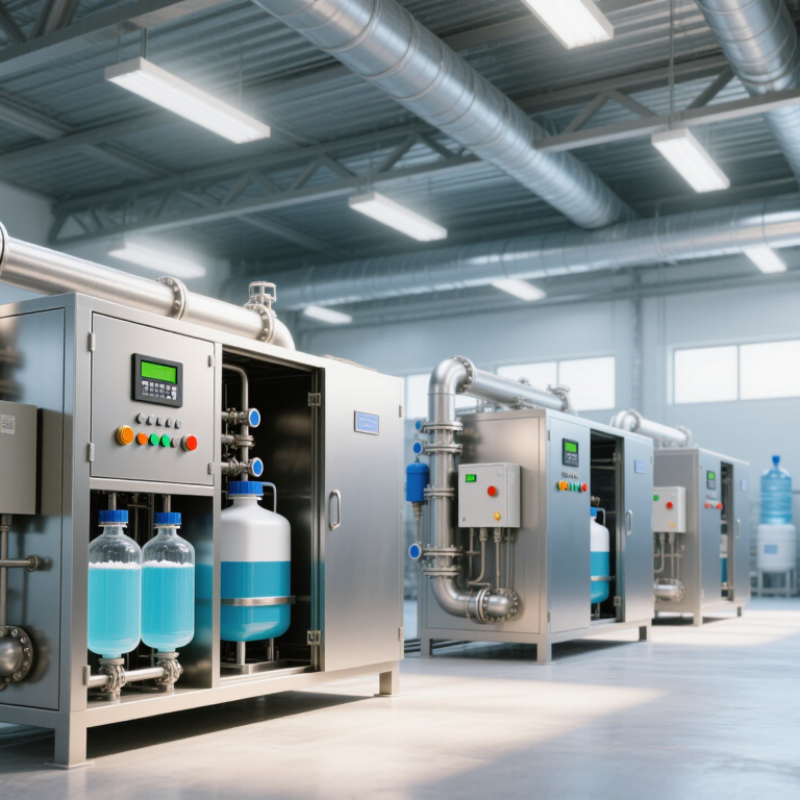
A sodium hypochlorite generator makes disinfectant on site from salt, softened water, and electricity. Inside its electrolytic cell, direct current converts brine into a dilute hypochlorite solution. Hydrogen is also produced, so safe ventilation and suitable controls matter. The unit typically includes a brine tank, cell, power supply, and dosing pump. It is not simply a salt tank with wires.
The World Health Organization’s Guidelines for Drinking-water Quality describe operational chlorine benchmarks, including at least 0.5 mg/L free chlorine after 30 minutes of contact when pH is below 8, and at least 0.2 mg/L at delivery. These are water-treatment benchmarks, not generator specifications; actual targets depend on water quality and applicable guidance.
Small details matter. Salt purity, flow stability, and regular cell inspection affect output. A clean-looking system can still produce inconsistent strength.
Tips: Check output with a suitable test method, not the control panel alone. Keep ventilation clear, record readings, and inspect for scale. Generator capacity should match peak demand, not just average use. One easy mistake is oversizing the unit; low, intermittent operation may make control less steady.
The best sodium hypochlorite generator in 2026 depends on daily demand, water quality, and operator capacity. Small facilities often use batch systems, which make a measured volume of dilute disinfectant when needed. They suit wells, small water-treatment plants, and sites with modest, predictable use.
Simple, but not always ideal. Demand can rise faster than a batch can be made.
Continuous brine electrolysis systems produce solution as needed and are commonly used at municipal plants, hospitals, and industrial facilities. They require dependable salt, softened water, ventilation, and routine cell maintenance. Larger seawater electrochlorination units serve coastal cooling-water systems and desalination intakes, where seawater is the feedstock. That changes the design substantially.
A tidy capacity rating can hide real differences in salinity, temperature, and maintenance needs. I would compare output under local operating conditions, not just the maximum figure on a specification sheet. Storage tanks, dosing controls, and trained operators matter too; the generator is only one part of the treatment system.
Key Criteria for Comparing Sodium Hypochlorite Generators in 2026
A generator’s headline output is only part of the comparison. Check whether its rated capacity matches peak demand, and ask how output changes with water temperature, salt quality, and electrode wear. In a plant room, scaling and clogged strainers can turn a tidy specification into extra maintenance. Small details matter. Compare electricity and salt use per unit of available chlorine, not just the purchase price. Also check how easily operators can verify concentration and adjust dosing when demand shifts.
Disinfection performance depends on the whole treatment process. The World Health Organization’s Guidelines for Drinking-water Quality recommend at least 0.5 mg/L free chlorine after 30 minutes of contact at pH below 8, with at least 0.2 mg/L at delivery. These are operating benchmarks, not a substitute for site-specific validation. The U.S. Environmental Protection Agency’s Alternative Disinfectants and Oxidants Guidance Manual also discusses the operational considerations of hypochlorite systems. Review its guidance alongside local water chemistry and the intended duty cycle. Ask suppliers for test records covering output stability, alarms, and routine service intervals. Not on paper alone. A short trial under actual site conditions may reveal maintenance demands that a brochure misses.
Key criteria for comparing sodium hypochlorite generators
The percentages are suggested procurement weights, not measured product ratings or market data. Adjust them to match your application, and compare verified manufacturer specifications for capacity, available chlorine concentration, energy and salt consumption, safety compliance, and maintenance requirements.
Choosing a sodium hypochlorite generator starts with actual site demand, not a catalog’s headline output. Gather daily water volume, target residual, operating hours, and seasonal peaks. A plant serving a quiet weekday may face a very different load during summer. Small details matter.
Estimate required chlorine production from flow and dose, then check the system’s available run time. A generator that meets average demand but cannot recover after peak use may leave operators relying on extra storage or manual adjustments. Build in a reasonable capacity margin, but avoid oversizing without reason; low utilization can increase capital and maintenance costs. Not always.
Match features to conditions on site. Confirm salt purity and water quality requirements, electrical supply, ventilation, and room for safe access. Automated output control and alarms can help staff respond to changing demand, while clear production and fault logs make performance easier to verify. Ask how electrodes are cleaned or replaced, what routine checks take, and whether local technicians can support the equipment. The least expensive unit is not necessarily the easiest to run. Compare total operating needs, not just rated capacity. Leave room for uncertainty: demand records are imperfect, and a site visit may reveal a constraint the spreadsheet missed.
It uses salt, softened water, and electricity to make dilute disinfectant on site. Its cell also produces hydrogen.
Common parts include a brine tank, electrolytic cell, power supply, and dosing pump. It needs more than salt and wires.
A batch system can suit wells or small plants with steady, modest demand. Demand spikes may outpace production. Not always.
It makes solution as needed and can serve larger facilities. It relies on dependable salt, softened water, ventilation, and regular cell care.
Compare rated output with peak demand, not only average use. Check performance under local temperatures and water conditions.
Use a suitable test method and keep written readings. A control panel alone may not confirm the actual solution strength.
Inspect electrodes for scale and strainers for clogs. Record service intervals. A clean-looking unit can still produce uneven output.
The article cites at least 0.5 mg/L free chlorine after 30 minutes at pH below 8, and 0.2 mg/L at delivery. These are benchmarks, not generator specifications; site conditions matter.
Salt and electricity use, dosing controls, storage, and operator training all matter. I would still question a maximum-output figure without a site trial.
USA / Americas
1507 Capital Ave, Suite 102
Plano, TX 75074
+1 (214) 838-7010
8:00am – 5:00pm (GMT-6)
Australia / Asia Pacific
503 Cross Keys Rd,
Cavan SA 5094
+61 8 7200 3909
9:00am – 5:00pm (ACDST)
© 2025 Green Frog Systems. | Privacy Policy | Terms & Conditions


